


William Aird: Why Did Mammalian Red Blood Cells Give Up Their Nucleus?
William Aird, Professor of Medicine at Harvard Medical School, shared a post on LinkedIn:
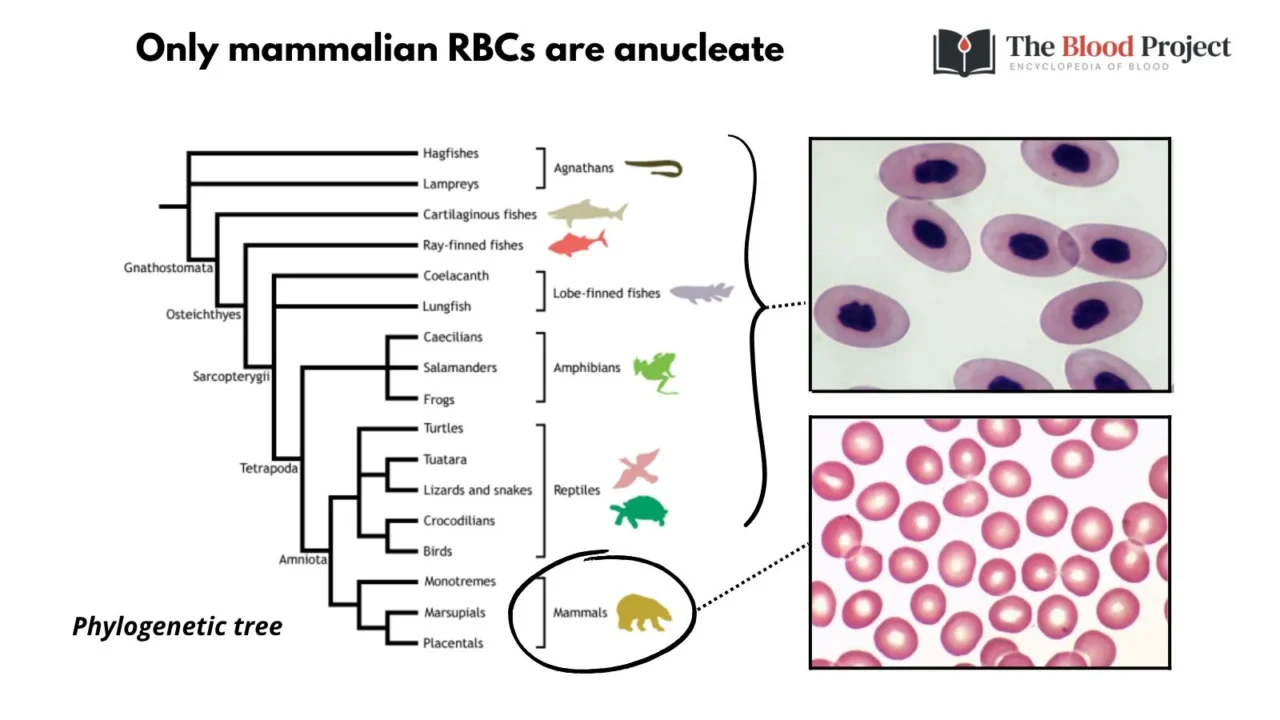
“Why did mammalian red cells give up their nucleus?
Most cells protect their nucleus.
Mammalian red cells do the opposite.
They eject it.
At first glance, this looks like a loss.
No DNA, no repair, no division. A finite lifespan.
But it is better understood as a trade-off.
Removing the nucleus allows the cell to remove something else too:
its mitochondria.
And with that, a potential conflict of interest.
A red cell that carries oxygen but also consumes it would compete with the tissues it serves.
By giving up mitochondria, the red cell commits fully to delivery.
It does not use the oxygen it transports.
It gives it away.
That same simplification has other consequences:
- more space for hemoglobin
- greater deformability in narrow capillaries
- fewer intracellular obstacles to diffusion
- educed capacity to support viral replication
But the central idea is this:
the red cell becomes a specialist by subtraction.
It gives up autonomy to eliminate internal competition and to optimize a single function.
Not every organism makes this choice.
Other vertebrates retain nucleated red cells.
Their constraints are different.
Mammals chose another path.
One that favors efficiency of delivery over cellular independence.
What looks like loss is the elimination of internal conflict.”
Read more on The Blood Project.
Find more posts featuring William Aird on Hemostasis Today.
-
May 26, 2026, 12:32Behçet Syndrome and Thrombosis: When Inflammation Becomes a Clot
-
May 26, 2026, 12:29Priya Prasad: When Blood Becomes the Battlefield – Transfusion Medicine Saves Lives
-
May 26, 2026, 12:21Mavis Agnes Kisakye: Uganda at the WFH Regional Conference on Blood Disorders
-
May 26, 2026, 12:19Megan Adediran: Giving Hope to People Living with Bleeding Disorders
-
May 26, 2026, 11:36Abid Ur Rahman: Understanding the Coagulation Cascade and Hemostasis
-
May 26, 2026, 11:35Isaac Okello: The Real Sickle Cell Crisis Is Not Only the Disease Itself
-
May 26, 2026, 11:34Ziad Omar: PTT and aPTT Testing – Reading the Intristic Pathway of Coagulation
-
May 26, 2026, 11:33Megan Griffiths: Advancing the Understanding of Risk and Outcomes in Pulmonary Hypertension
-
May 26, 2026, 11:30Samantha Pasca: How Should We Manage Cardiovascular Disease in Patients With Hemophilia?