

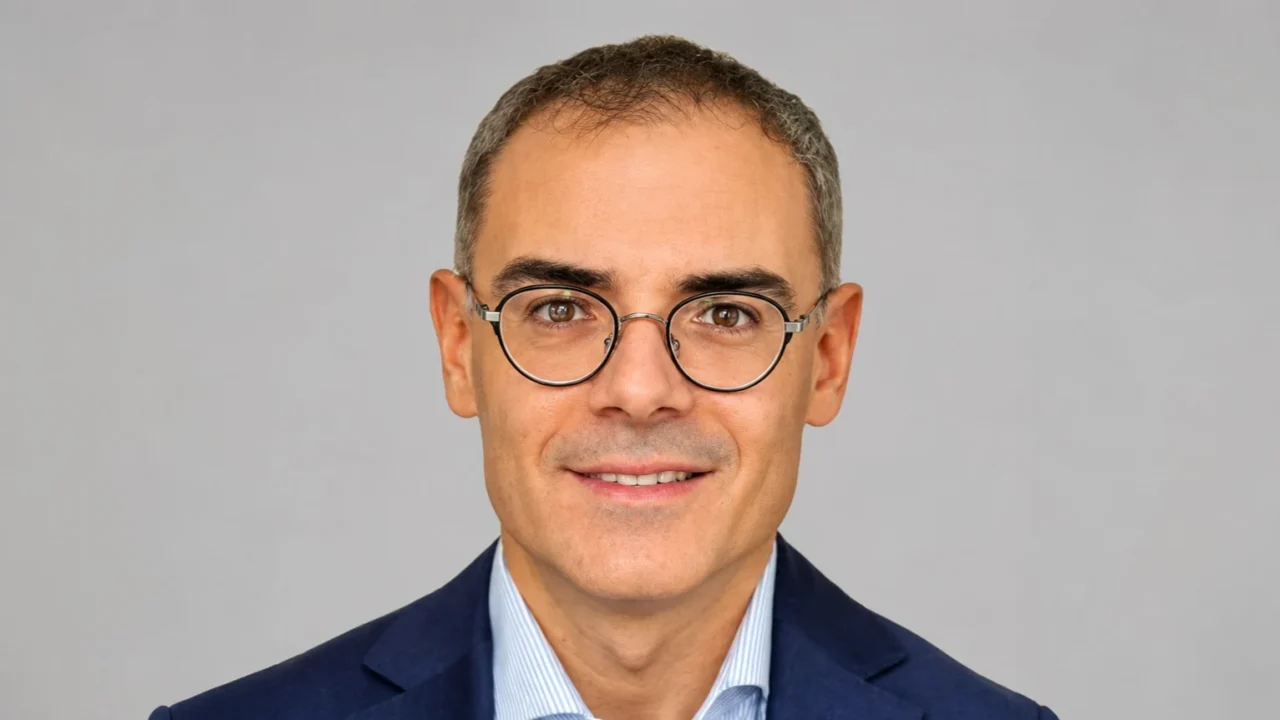
Yaariv Khaykin: Can Some Patients Safely Stop Blood Thinners After AF Ablation?
Yaariv Khaykin, Associate Professor at Temerty Faculty of Medicine, University of Toronto, President and Physician Leader of Pace Cardiology, shared on LinkedIn about a recent article by Mohsin Raj Mantoo, published in Indian Pacing and Electrophysiology Journal, adding:
“One of the most common questions I get from patients after a successful AF ablation:
‘Can I stop my blood thinner?’
A new meta-analysis of over 242,000 patients (3 randomized trials with 7 observational studies) offers some of the strongest data we’ve had on this topic.
The findings:
- Stopping anticoagulation after the blanking period was not associated with increased thromboembolic events compared with continuing it (RR 0.93, 95% CI 0.86–1.02).
- Major bleeding was significantly lower in the discontinuation group (RR 0.38).
- Intracranial hemorrhage was reduced by roughly 77% (RR 0.23).
These numbers are striking — but I want to be careful here. Current guidelines still recommend basing anticoagulation on CHA2DS2-VASc score rather than rhythm status, and that’s appropriate given the limitations of observational data and the small randomized sample sizes.
What this analysis does, though, is strengthen the case for larger, properly powered randomized trials. For patients with low-to-moderate stroke risk who achieve durable sinus rhythm, the risk-benefit equation of lifelong anticoagulation deserves re-examination.
This is a conversation I have almost daily in clinic. The data are moving in a direction that may eventually give us more individualized answers — and that’s what patients are asking for.”
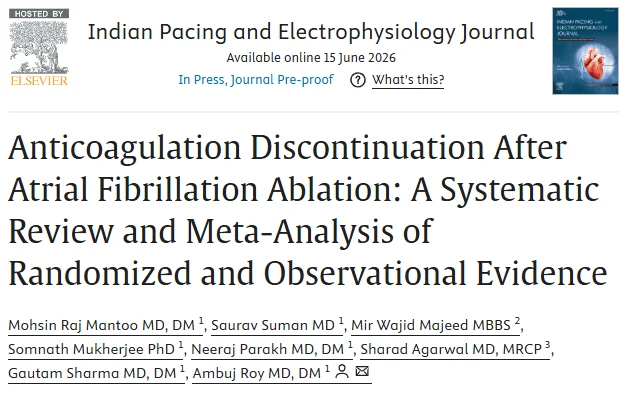
Title: Anticoagulation Discontinuation After Atrial Fibrillation Ablation: A Systematic Review and Meta-Analysis of Randomized and Observational Evidence
Authors: Mohsin Raj Mantoo, Saurav Suman, Mir Wajid Majeed, Somnath Mukherjee, Neeraj Parakh, Sharad Agarwal, Gautam Sharma, Ambuj Roy
Stay updated on all scientific advances with Hemostasis Today.
-
Sep 25, 2026, 05:24Isabelle Mahé: Reduced-Dose Apixaban in Extended CAT Treatment
-
Sep 25, 2026, 05:15Maria Cherska: High Cholesterol Isn’t Always Diet or Lifestyle – Sometimes It’s Genetic
-
Sep 25, 2026, 05:07Nancy Braithwaite: BBTS Specialist Certificate in Transfusion Science Practice
-
Sep 24, 2026, 18:43Hugh Nguyen: Honored to Accept the Friend of Singapore Red Cross Award
-
Sep 24, 2026, 18:42Titilope Fasipe: Proud to Support American Society of Hematology’s SCD Initiative
-
Sep 24, 2026, 18:34Ifeanyichukwu Ifechidere: Why Coagulation Samples Can Be “Too Valuable to Throw Away”?
-
Sep 24, 2026, 18:33Aswin K. Mohan: When a Superpower Hears the Call for Blood
-
Sep 24, 2026, 18:31Mercy Lung’aho: Anemia Is Not Only An Iron Problem
-
Sep 24, 2026, 18:29Nick Hanson: Before a Dementia Diagnosis Check Vitamin B12