


Nadeem Rais Explains: A Clinical Comparison of AntiPlatelets vs AntiCoagulants
Nadeem Rais, Clinical Pharmacist at NMC Healthcare, shared a post on LinkedIn:
“AntiPlatelets vs AntiCoagulants
Blood clot prevention is not one-size-fits-all. Two major drug classes act at different stages of thrombosis.
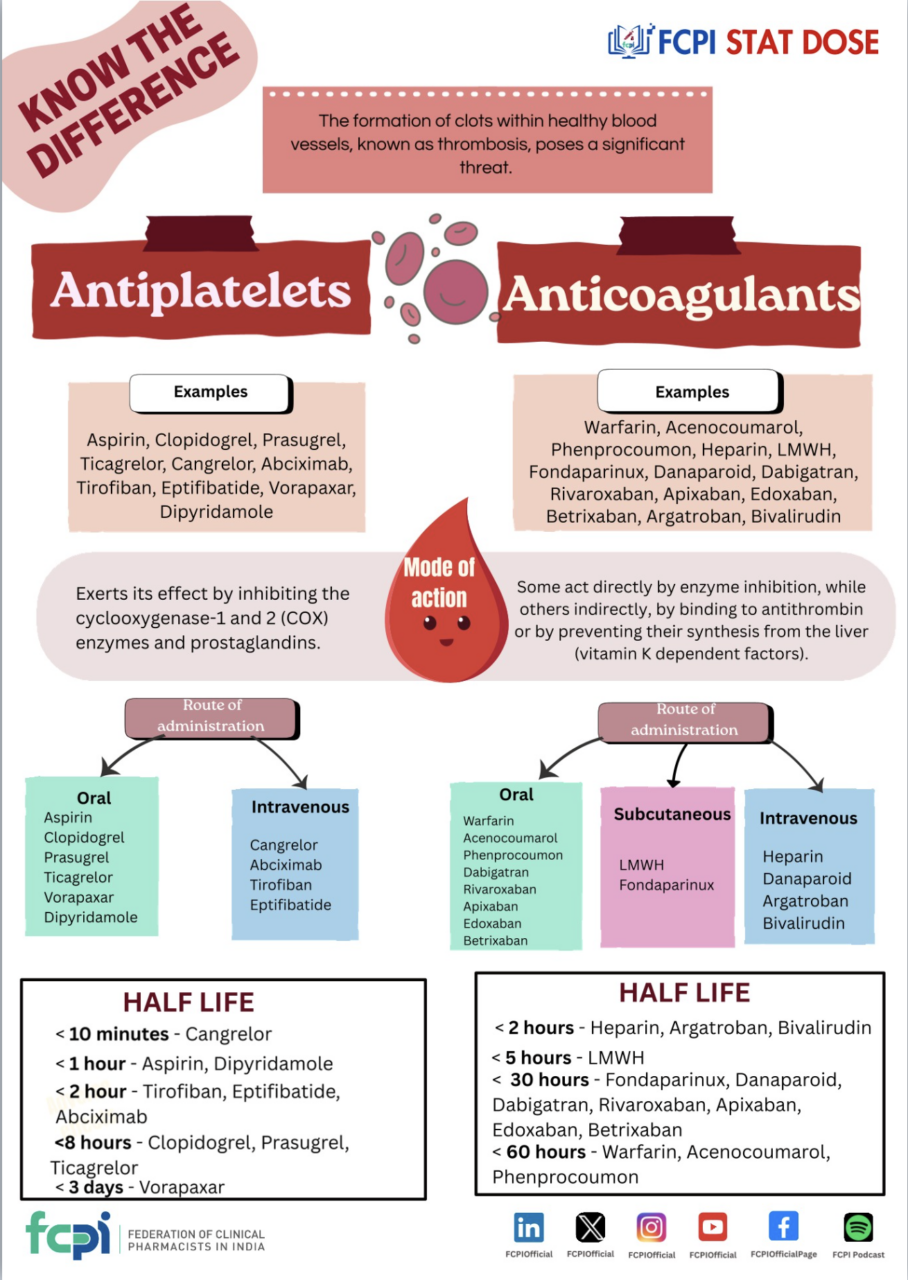
• 𝗔𝗻𝘁𝗶𝗣𝗹𝗮𝘁𝗲𝗹𝗲𝘁𝘀
Drugs that inhibit platelet activation and aggregation.
𝙈𝙚𝙘𝙝𝙖𝙣𝙞𝙨𝙢 𝙊𝙛 𝘼𝙘𝙩𝙞𝙤𝙣: They block platelet-to-platelet interaction at sites of vascular injury.
𝘾𝙤𝙢𝙢𝙤𝙣 𝘿𝙧𝙪𝙜𝙨:
▪ Aspirin (Acetylsalicylic Acid)
▪ Clopidogrel (Adenosine Diphosphate Receptor Inhibitor)
▪ Prasugrel (P2Y12 Receptor Inhibitor)
▪ Ticagrelor (Reversible P2Y12 Inhibitor)
𝙈𝙖𝙟𝙤𝙧 𝙄𝙣𝙙𝙞𝙘𝙖𝙩𝙞𝙤𝙣𝙨:
▪ Myocardial Infarction (Heart Attack)
▪ Ischemic Stroke
▪ Post Percutaneous Coronary Intervention (PCI)
𝙏𝙝𝙧𝙤𝙢𝙗𝙪𝙨 𝙏𝙮𝙥𝙚: Platelet-rich clots. Also called white clots.
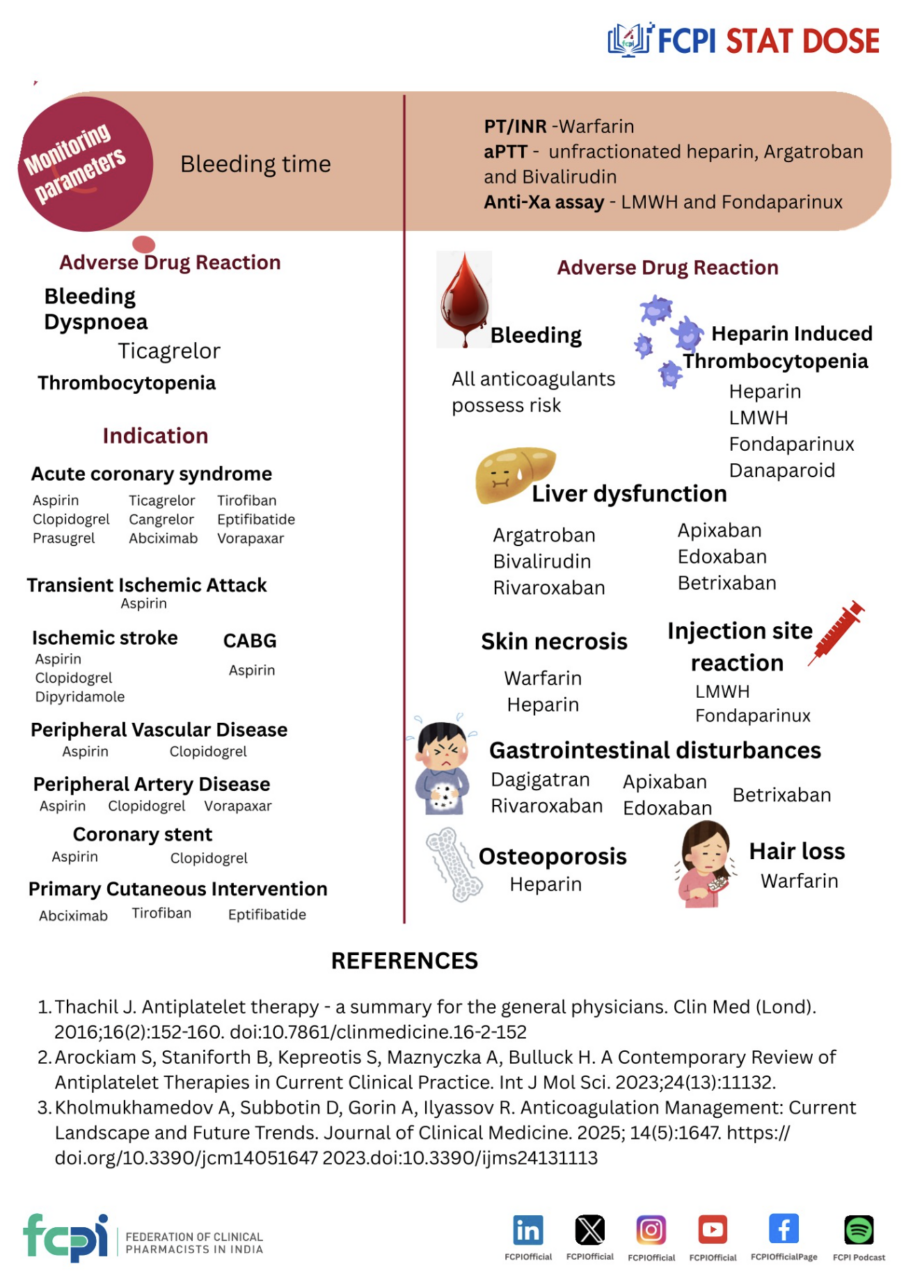
𝙈𝙤𝙣𝙞𝙩𝙤𝙧𝙞𝙣𝙜: Routine laboratory monitoring is usually not required.
• 𝗔𝗻𝘁𝗶𝗖𝗼𝗮𝗴𝘂𝗹𝗮𝗻𝘁𝘀
Drugs that inhibit clotting factors in the coagulation cascade.
𝙈𝙚𝙘𝙝𝙖𝙣𝙞𝙨𝙢 𝙊𝙛 𝘼𝙘𝙩𝙞𝙤𝙣: They slow or stop fibrin formation.
𝘾𝙤𝙢𝙢𝙤𝙣 𝘿𝙧𝙪𝙜𝙨:
▪ Heparin (Indirect Thrombin Inhibitor)
▪ Warfarin (Vitamin K Antagonist)
▪ Dabigatran (Direct Thrombin Inhibitor)
▪ Rivaroxaban (Factor Xa Inhibitor)
▪ Apixaban (Factor Xa Inhibitor)
𝙈𝙖𝙟𝙤𝙧 𝙄𝙣𝙙𝙞𝙘𝙖𝙩𝙞𝙤𝙣𝙨:
▪ Deep Vein Thrombosis (DVT)
▪ Pulmonary Embolism (PE)
▪ Atrial Fibrillation (AF)
𝙏𝙝𝙧𝙤𝙢𝙗𝙪𝙨 𝙏𝙮𝙥𝙚: Fibrin-rich clots. Also called red clots.
𝙈𝙤𝙣𝙞𝙩𝙤𝙧𝙞𝙣𝙜:
▪ Warfarin requires International Normalized Ratio (INR) monitoring
▪ Direct Oral Anticoagulants usually do not require routine monitoring
𝗞𝗲𝘆 𝗖𝗹𝗶𝗻𝗶𝗰𝗮𝗹 𝗗𝗶𝗳𝗳𝗲𝗿𝗲𝗻𝗰𝗲
→ AntiPlatelets act early at platelet level
→ AntiCoagulants act later at coagulation factor level
Credit: Federation of Clinical Pharmacists in India (FCPI)
Repost to share with your peers
Follow Nadeem Rais, PhD for more”
Follow the latest in Hemostasis Today.
-
Oct 5, 2026, 15:31Irma Bagdoniene: Multidisciplinary Management of High-Risk Familial Hypercholesterolaemia and CAD
-
Oct 5, 2026, 15:00Serena Williams and Pulmonary Embolism: From Personal Crisis to Lessons in Venous Thromboembolism
-
Oct 5, 2026, 14:55Marco Moscarelli: 3D Reconstruction Enhances Volumetric Assessment of Post-TAVI Thrombosis
-
Oct 5, 2026, 13:24Abdul Muqtadir Abbasi: Diagnostic Pearls for Evaluating Isolated Thrombocytopenia in Residents
-
Oct 5, 2026, 13:16Katerina Pavenski: Rethinking What ‘Normal’ Means for Iron Deficiency
-
Oct 5, 2026, 13:09Rick Matthews: Balancing Established VTE Partnerships with Innovative Interventional Technologies
-
Oct 5, 2026, 13:01Nawsherwan Mohammad: Recognizing TTP Before the ADAMTS13 Result Arrives
-
Oct 5, 2026, 12:51Bruno Pougault: The Hidden Challenges Behind Anti Xa Testing
-
Oct 5, 2026, 12:41Syed Huzaifa Khan: Rethinking CTRP12 as a Biomarker for In Stent Restenosis