


Balqees M Al Rafayah: What is Hemophilia?
Balqees M Al Rafayah, Lab supervisor at Mutah University, shared on LinkedIn:
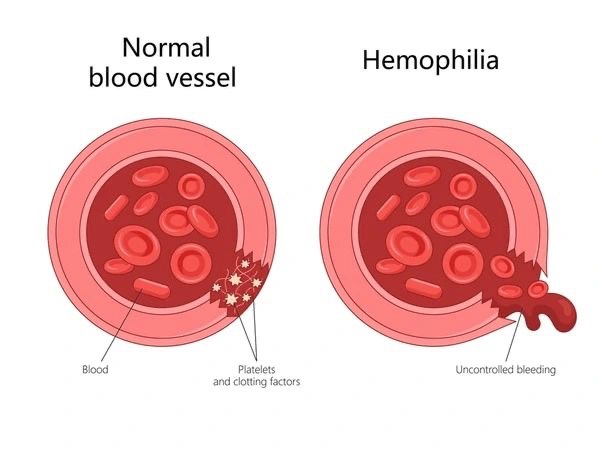
”What is hemophilia?
• A hereditary bleeding disorder in which the blood does not clot properly due to a deficiency of one of the clotting factors.
• It is inherited either as a sex-linked (X-linked) recessive trait — more common in males while females are carriers — or as an autosomal recessive disorder in the case of Hemophilia C.
– How many types of hemophilia are there and what are they?
There are three main types of hemophilia: Hemophilia A, Hemophilia B, and Hemophilia C.
Each type is caused by a deficiency in a specific clotting factor.
Hemophilia A:
• Also known as classical hemophilia.
• It is the most common hereditary clotting factor deficiency.
• Caused by an X-linked recessive mutation.
• Results from a deficiency in clotting factor VIII.
• Symptoms may include:
– Joint and soft tissue bleeding
– Spontaneous hematuria
– Excessive bruising
Hemophilia B:
• Also known as Christmas disease.
• Caused by an X-linked recessive mutation.
• Results from a deficiency in clotting factor IX.
• Symptoms are similar to Hemophilia A:
– Joint and soft tissue bleeding
– Spontaneous hematuria
– Excessive bruising
Hemophilia C:
• A rare form of hemophilia.
• Inherited as an autosomal recessive disorder.
• Caused by a deficiency in clotting factor XI.
• Usually results in milder symptoms, such as:
– Nosebleeds
– Easy bruising”
Stay updated with Hemostasis Today.
-
Oct 19, 2026, 10:41Hisham Fahmi: SCD – Should Gene Editing Begin Before Organ Damage?
-
Oct 19, 2026, 10:33Pallavi Madhiraju: YARTEMLEA Faces Another European Rejection Despite FDA Approval
-
Oct 19, 2026, 10:28Brig Tathagata Chatterjee: Acute Leukemias in AYAs at the Japanese Society of Hematology Conference
-
Oct 19, 2026, 10:27Heather M. Johnson: Join the Discussion on Optimizing the CTEPH Diagnostic Pathway
-
Oct 19, 2026, 10:18Flora Peyvandi: Unravelling the Complexity of VWF Through Genetics
-
Oct 19, 2026, 09:55High DOAC Adherence in Patients With Ischemic Stroke and AF – International Journal of Stroke
-
Oct 19, 2026, 08:20Cory Dugan: The IRONWOMAN Trial Individual Responses to IV Iron Therapy in Active Women
-
Oct 19, 2026, 07:36Johannes Kaesmacher: Cerebral No-Reflow After Thrombectomy Toward a Standardized Definition
-
Oct 19, 2026, 07:33Beth Psaila: Highlights from IACH Annual Meeting and MPN Horizons