

ISBT on Age-Appropriate Platelet Transfusion Thresholds: New Insights from the 2025 AABB Guidelines
International Society of Blood Transfusion (ISBT) shared an enlightening post on LinkedIn:
“DID YOU KNOW? A new series by the Pediatric Subgroup of the Clinical Transfusion Working Party
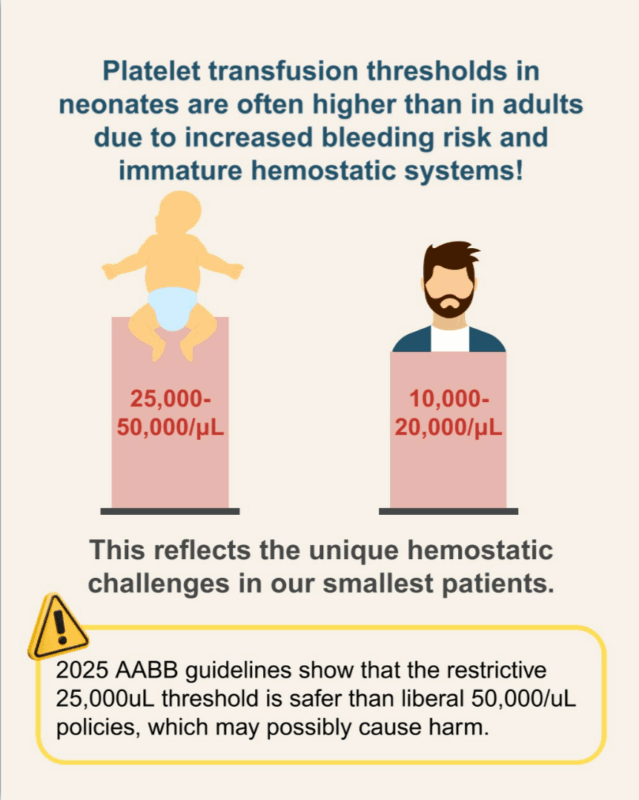
In neonates, platelet transfusion thresholds are often higher than in adults due to immature hemostatic systems and a greater risk of bleeding.
Preterm infants may require platelet counts of 25,000–50,000/μL, depending on clinical condition, while stable adults typically require only 10,000–20,000/μL.
According to the 2025 AABB Guidelines, a restrictive threshold of 25,000/μL is now considered safer than the previously used liberal 50,000/μL threshold, which may increase risk.
This highlights the importance of age-appropriate transfusion strategies that reflect the unique physiology of neonates.
Reference: Metcalf RA, Nahirniak S, Guyatt G, et al. Platelet Transfusion: 2025 AABB and ICTMG International Clinical Practice Guidelines. JAMA. 2025. doi:10.1001/jama.2025.7529”
Find the reference here:
Follow the newest insights in platelet science with Hemostasis Today.
-
Sep 23, 2026, 13:58The New B12 Diagnostic Algorithm: From Serum Cobalamin to Functional Deficiency
-
Sep 23, 2026, 13:56Noha Soror: Preparing for Hematology and Medical Oncology Board Certification
-
Sep 23, 2026, 13:46Ugochi Ogu: What Can Platelet Proteomics Reveal about Pain and Neurocognitive Vulnerability in Sickle Cell Disease?
-
Sep 23, 2026, 13:42Melissa Hollo: Connecting Obesity and Anemia for Earlier Maternal Risk Intervention
-
Sep 23, 2026, 13:16Beverley Hunt: Advances in Haemostatic Management of Postpartum Haemorrhage
-
Sep 23, 2026, 13:13Ioanna Mela: Recruiting a Research Associate on DNA nanotechnology
-
Sep 23, 2026, 13:04Ben Samelson-Jones: Do Gene Variants Drive PK Differences in FIX-Fusion and N9-GP Therapies?
-
Sep 23, 2026, 12:57Shelly Reed: Advocating for HTCs and CDC Funding with the Hemophilia Federation of America
-
Sep 23, 2026, 12:51Domenico Girelli: How Verona Hospital Transformed ED Anemia Care with Patient Blood Management