


Colm Dougan on The Blood Infection That Changed Medicine
Colm Dougan, Product Support Analyst at Accenture, shared on LinkedIn:
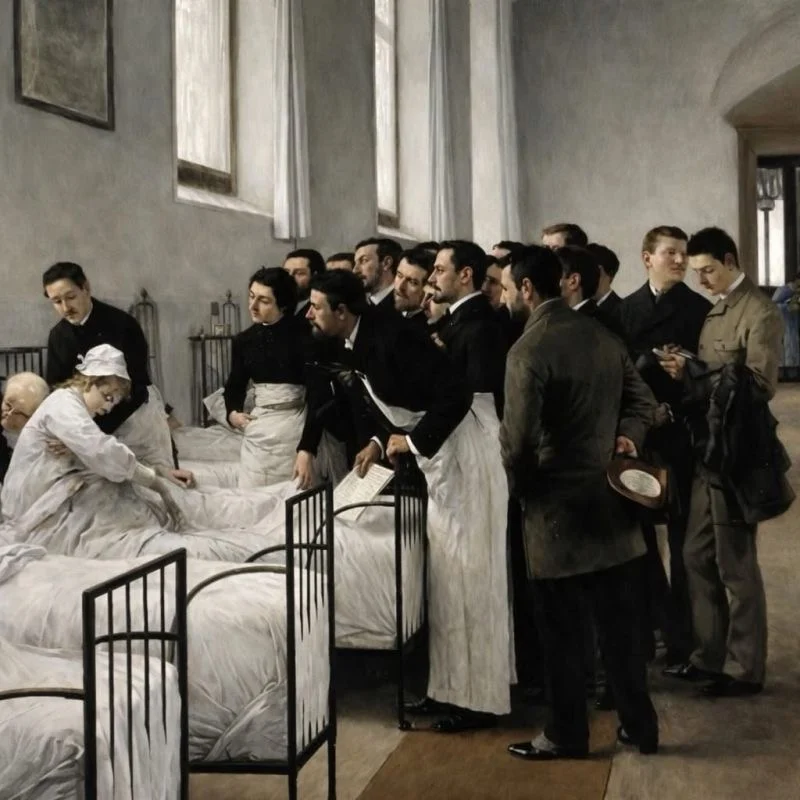
”In 19th-century Vienna, maternity wards had a terrifying nickname: “the antechambers of hell.”
And it wasn’t an exaggeration.
Every third woman who walked in hoping to give life… never walked out again.
Childbed fever was a ruthless executioner: hours of painful labor, then sudden blood infection — and death in agony.
But in 1847, a young doctor named Ignaz Semmelweis noticed something that everyone else refused to see.
In the ward run by highly trained physicians, women were dying three times more often than in the ward where births were handled by ordinary midwives. Pregnant women literally begged on their knees not to be placed with the “medical experts.” Some would rather give birth on the cold pavement outside the hospital than enter that ward.
Semmelweis kept searching for the reason — and found the horrifying truth:
The doctors themselves were bringing death.
They came straight from autopsies in the morgue. No gloves. No disinfection.
At best, they wiped their hands on a cloth… and then used those same hands to examine women in labor.
Semmelweis was crushed by what he discovered. He wrote:
“Only God knows how many women have gone prematurely to their graves because of me.”
This wasn’t just science to him — it was personal guilt.
So he made a rule: everyone must wash their hands in a chlorine solution.
And the results were shocking. Death rates collapsed. Lives were saved almost overnight.
You’d think this would be celebrated as a breakthrough.
Spoiler: it wasn’t.
Because for the medical elite, admitting Semmelweis was right meant admitting something unbearable:
they had unknowingly killed thousands of women.
So they protected their pride instead of their patients. They mocked him. Isolated him. Called him insane.
Semmelweis’ despair turned into a scream. He wrote open letters to Europe’s leading surgeons, calling them murderers.
He posted public notices begging people to demand that doctors wash their hands.
But the world answered with silence and contempt.
And the ending of this story is almost too cruel to believe.
His colleagues tricked him into a psychiatric institution.
When he realized the trap and tried to escape, he was brutally beaten by guards. A few days later, he died from the very thing he spent his life fighting:
sepsis.
The man who gave humanity the idea of disinfection died from filth and violence.
That’s where the term “Semmelweis reflex” comes from — the instinctive rejection of new knowledge when it threatens the comfort of what we already believe.
Humanity didn’t widely adopt handwashing until half a century later.
The price of that delay? Millions of lives that could have been saved… with something as simple as a bowl of chlorinated water.
So remember this the next time you hear a truth that feels “inconvenient.”
Sometimes the inconvenient truth is the one that saves lives.”
Stay updated with Hemostasis Today.
-
Sep 30, 2026, 14:13Ashok Choudhury: Portal Vein Thrombosis and Outcomes in Cirrhosis
-
Sep 30, 2026, 13:57Leslye Conde Bazán: When Conventional Imaging Is Not Enough – The Role of IVUS
-
Sep 30, 2026, 13:41Huda Salah Eldin: The Challenge of Balancing Antithrombotic Therapy After PCI
-
Sep 30, 2026, 13:29Abdus Salam: What Can CT Venography Reveal About the Veins?
-
Sep 30, 2026, 13:03Amira Mohy: Diagnostic Flow Cytometry Panels for Hematological Malignancies
-
Sep 30, 2026, 12:52Paul Watton: Could Repetitive Head Impacts Leave a Molecular Memory?
-
Sep 30, 2026, 12:41The Journey to ISTH 2027 Starts in Vancouver
-
Sep 30, 2026, 11:36Basit Ali: A Closer Look at CT Venography
-
Sep 30, 2026, 11:16Christina Pohlman: Could aPL Levels Help Predict Stroke Recurrence?