

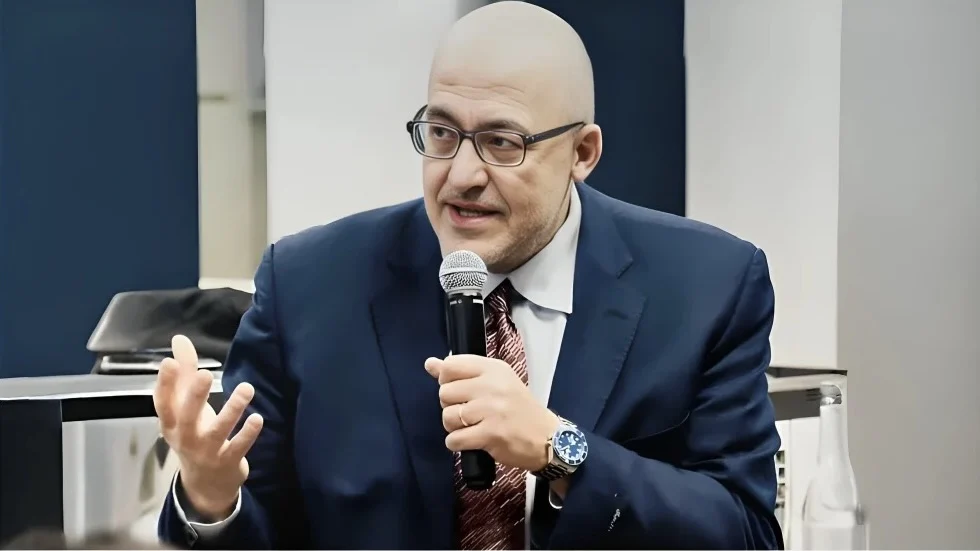
Filippo Cademartiri: What Happened When Guidelines Shifted Against Aspirin for Primary Cardiovascular Prevention
Filippo Cademartiri, Consultant Advanced Cardiovascular Imaging at UPMC Salvator Mundi International Hospital, posted on LinkedIn about a recent article by Stephanea Roeser et al, published in American Journal of Preventive Cardiology:
”Aspirin use is declining – but not always for the right reasons
This 2025 population-based study examines what happened when guidelines shifted against aspirin for primary cardiovascular prevention – and how people actually responded in real life.
What the study did
Researchers conducted three large telephone surveys (2015, 2017, 2019–2020) across five U.S. states, including 8,197 adults without prior cardiovascular disease. The goal: track aspirin use, cessation, and reasons for stoppingduring a period of changing evidence and guidelines.
Key trends
Aspirin use for primary prevention was:
39% in 2015
41% in 2017
decreased 34% in 2019–20
The proportion of people stopping aspirin rose from 14–15% to 22%
So yes – use declined, but slowly and incompletely.
Why did people stop?
Among those who quit:
- Doctor’s advice was the leading reason (38% by 2019–20)
- Negative media coverage surged dramatically (from 4% to 29%)
- Bleeding, side effects, or ‘doesn’t work’ were less common drivers
Notably, guidelines alone had little immediate impact. The biggest behavioral shift followed high-profile media coverage of aspirin trials – not the 2016 USPSTF recommendations.
The hidden problem
Despite updated evidence:
- One-third of older adults still use aspirin for primary prevention
- Many self-prescribe, enabled by low cost and easy access
- Fewer than half ever discussed aspirin with a clinician
Meanwhile, abrupt aspirin discontinuation may increase short-term CV risk, a nuance often lost in public messaging.
Bottom line
Guidelines don’t change practice on their own.
Clinician conversations matter more than headlines.
The aspirin story isn’t just about evidence – it’s about how evidence is communicated, interpreted, and acted upon.”
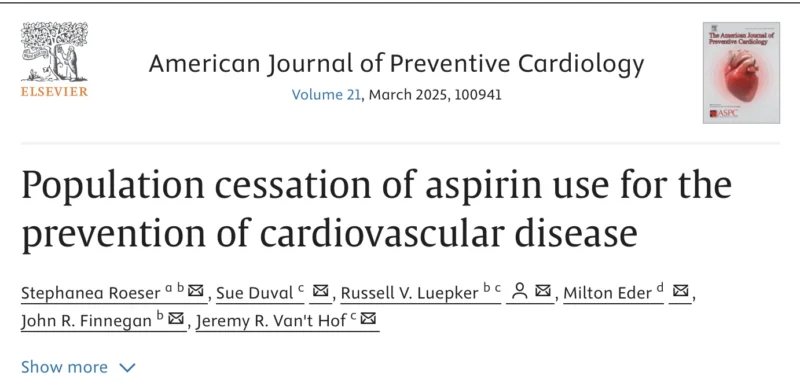
Title: Population cessation of aspirin use for the prevention of cardiovascular disease
Authors: Stephanea Roeser, Sue Duval, Russell V. Luepker, Milton Eder, John R. Finnegan, Jeremy R. Van’t Hof
Read the Full Article on American Journal of Preventive Cardiology
Stay updated with Hemostasis Today.
-
Sep 29, 2026, 03:53Nahrwan Masaoodi: Iron Deficiency Can Exist Without Anemia
-
Sep 29, 2026, 03:38Muhammad Yousaf: Iron Deficiency Beyond Diet
-
Sep 29, 2026, 03:21Parvez Ahmed Chowdhury: Synthesizing Aspirin in the Organic Chemistry Lab
-
Sep 29, 2026, 03:12Ahmed Hamandi: Building the Future of Hematopoietic Transplantation in Iraq
-
Sep 29, 2026, 03:09M V Chandrakanth: Aspirin in CRC – Old Drug, New Precision Oncology?
-
Sep 29, 2026, 03:07Caroline Pothet: Advancing Treatment Development in Sickle Cell Disease and Thalassaemia
-
Sep 29, 2026, 02:53Astha Jain: Thalassemia Care Through a Public Health Lens
-
Sep 29, 2026, 02:50Emma Groarke: Starting a New Career Path in Homeland
-
Sep 28, 2026, 19:14Aditya Sharma: An Outstanding Start to the Final Day of VSS 2026!