


Gurpreet Kaur Sagoo: The Power of AI Based Morphological Fingerprinting in Predicting Myelofibrosis Progression
Gurpreet Kaur Sagoo, Professor at Armed Forces Medical College, shared a post on LinkedIn about a recent article she and her colleagues co-authored, published in Indian Journal of Hematology and Blood Transfusion, adding:
“Morphometric analysis of megakaryocytes plays a central role in diagnosing and subclassifying Philadelphia-chromosome negative Myeloproliferative Neoplasms (MPNs), as specific cellular and spatial abnormalities distinguish Essential Thrombocythemia (ET), Polycythemia Vera (PV), and Primary Myelofibrosis (PMF).
While manual histopathological evaluation is a standard World Health Organization (WHO) requirement, digital morphometry and machine learning workflows on bone marrow trephine biopsies provide precise, reproducible, and automated quantification of these parameters to avoid subjective variation.
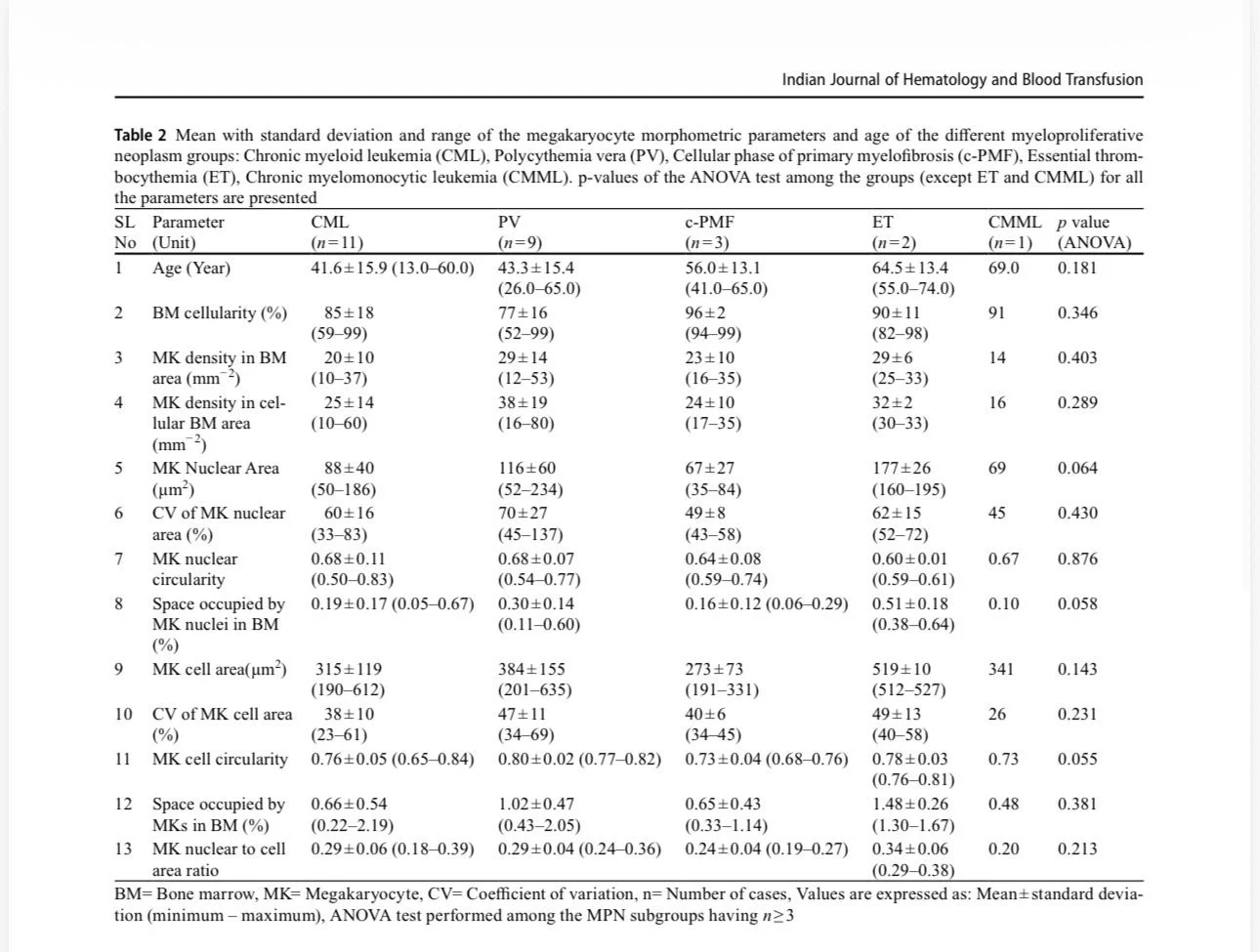
Primary Morphometric Parameters Analyzed Digital image analysis systems typically measure several core quantitative indicators from H&E or immunohistochemically stained sections:
- Cellular Size and Area: Calculated via the cytoplasmic major diameter and total cytoplasmic area.
- Nuclear Area and Perimeter: Measures the total footprint of the nucleus and its boundary length.
- Nuclear-to-Cytoplasmic (N:C) Ratio: Derived by dividing the nuclear area by the overall cytoplasmic area.
- Nuclear Shape Indices: Quantified via the Nuclear Roundness Factor and Nuclear Contour Ratio to capture the irregularity or lobation profile.
- Topographical Clustering and Density: Quantitative spatial alignment mapping whether cells form loose or tight clusters (3 or more juxtaposed cells) and their spatial distance from bone trabeculae or blood sinuses.
- Advanced and Predictive Morphometric markers:
Megakaryocytic Activation (M-ACT Index):
A specialized morphometric index scored on the coexistence of megakaryocytic emperipolesis (intact neutrophils passing through megakaryocyte cytoplasm), tight cluster count, and dense collagen fiber perimeters.
High M-ACT indices mathematically correlate with higher JAK2 V617F allele burden and predict rapid progression to secondary myelofibrosis.
AI-Based Morphological Fingerprinting: Advanced neural networks extract up to 9 distinct megakaryocytic phenotypes from bone marrow images based on shape variations, generating cohort-wide radar plots.
This high-throughput tool isolates true MPNs from reactive mimics (like immune thrombocytopenia or reactive thrombocytosis) with an area under the curve (AUC) accuracy of up to 0.95.”
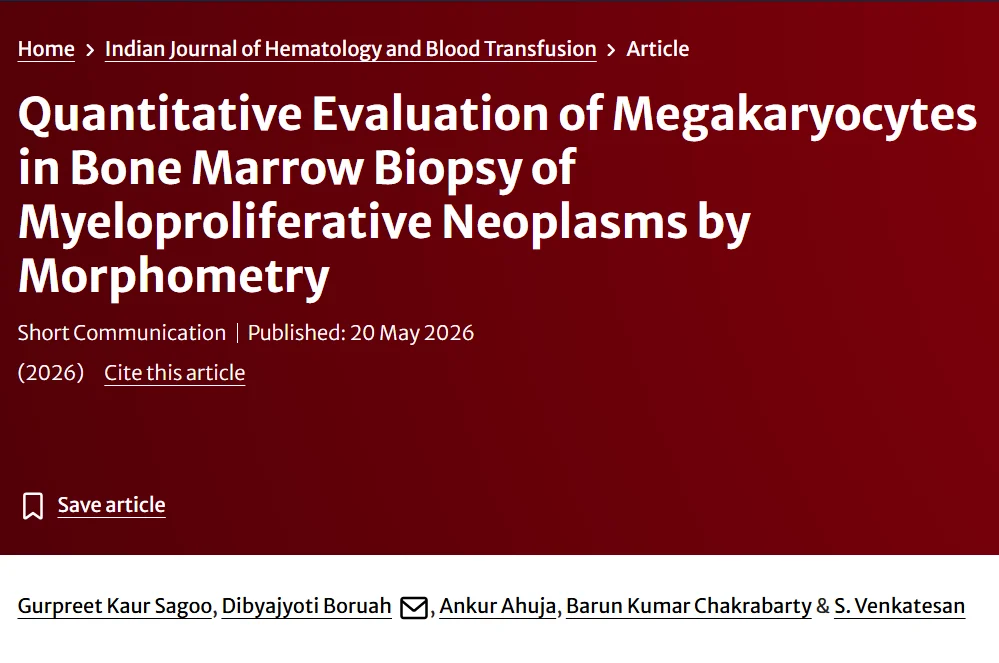
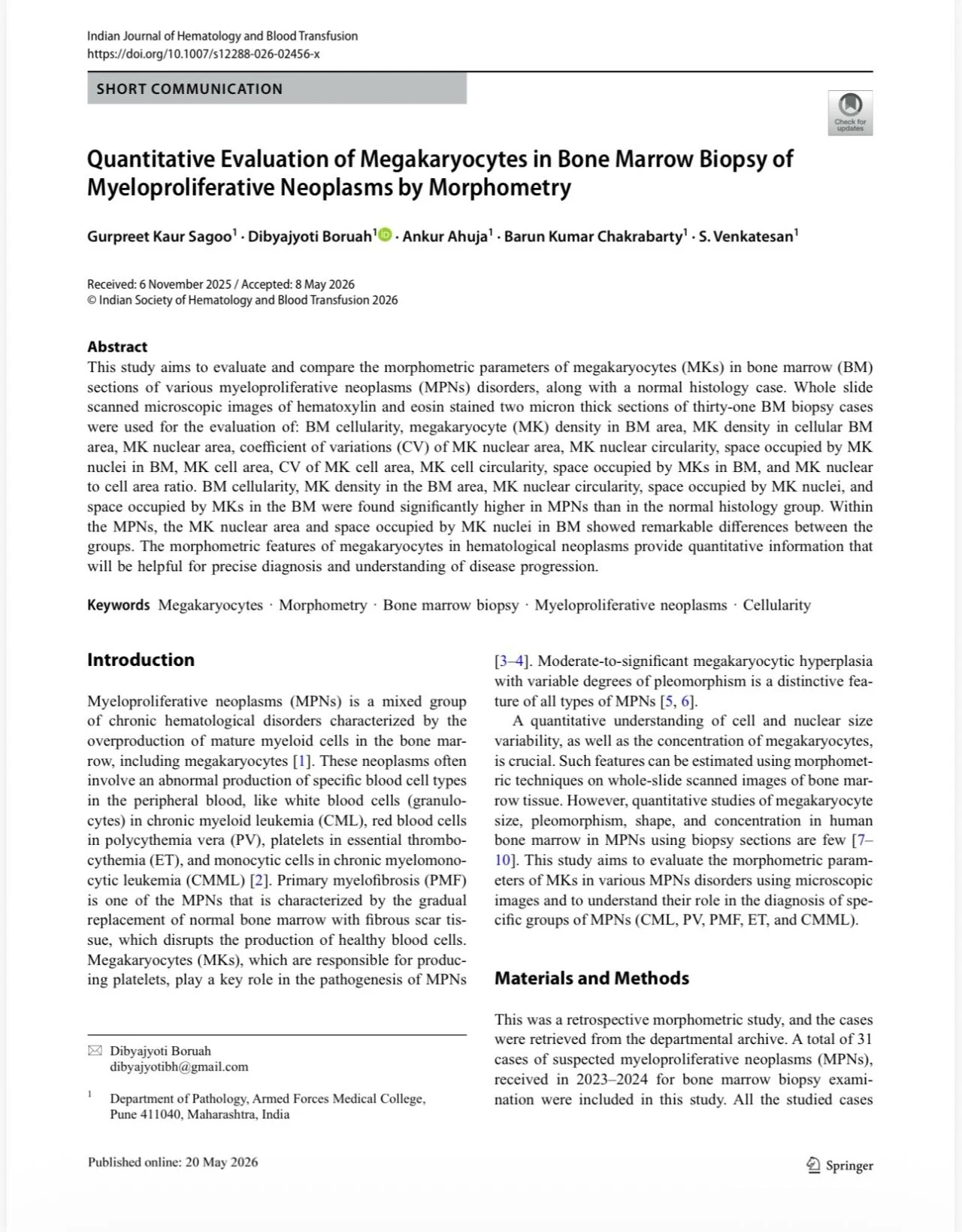
Title: Quantitative Evaluation of Megakaryocytes in Bone Marrow Biopsy of Myeloproliferative Neoplasms by Morphometry
Authors: Gurpreet Kaur Sagoo, Dibyajyoti Boruah, Ankur Ahuja, Barun Kumar Chakrabarty, S. Venkatesan
Stay updated on all scientific advances with Hemostasis Today.
-
Oct 19, 2026, 07:36Johannes Kaesmacher: Cerebral No-Reflow After Thrombectomy Toward a Standardized Definition
-
Oct 19, 2026, 07:33Beth Psaila: Highlights from IACH Annual Meeting and MPN Horizons
-
Oct 19, 2026, 07:29Wolfgang Miesbach: Can Losartan Activate Brown Fat? – Nature Study Explores New Therapeutic Link
-
Oct 19, 2026, 07:22Ruben Mesa: Honored to Speak at the Tandem MPN Meetings of IACH
-
Oct 19, 2026, 07:19Saneha Anjum Shaikh: Parul University Partners with Raktasevak Bike Ride 2026 for Blood Donation Drive
-
Oct 19, 2026, 07:09Alejandro González Veliz: No ST Elevation Does Not Guarantee an Open Coronary Artery
-
Oct 19, 2026, 06:02Thomas Dayspring: Vascular Resilience – What Is It and How Can We Measure It?
-
Oct 19, 2026, 05:53Kevon Dindial: Collaboration for Better Childhood Cancer Outcomes
-
Oct 19, 2026, 05:44Mavis Agnes Kisakye: Raising Awareness about Haemophilia and Other Blood Disorders at Luweero General Hospital