

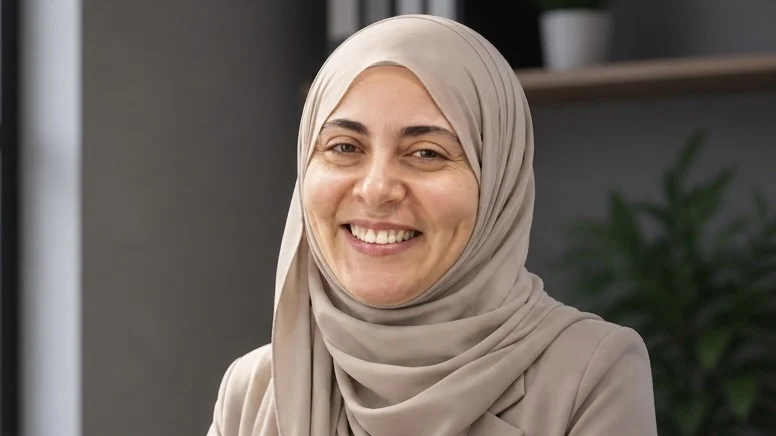
Heba Youssef: Off-Label Doesn’t Mean Off-Guidelines
Heba Youssef, Clinical Nutrition Pharmacist at Helwan General Hospital, shared a post on LinkedIn about a recent article by Adam Cuker et al., published in Blood Advances, adding:
“Off-label doesn’t mean off-guidelines.
I was following a HIT case recently, and the same question kept surfacing: do we wait and manage cautiously, or move before thrombosis has a chance to develop?
Apixaban was part of the answer – but only if we follow the protocol correctly from the very first dose.
The initial dose is 10 mg twice daily, continued for 7 days or until platelet recovery, whichever is longer. After that, we transition to the maintenance dose of 5 mg twice daily.
The part that’s easy to overlook is the switch from a non-heparin parenteral anticoagulant: if the patient has completed greater than or equal to 7 days and platelets have recovered, we can start directly at 5 mg.
But if it’s been less than 7 days, we continue 10 mg until a total of 7 days of non-heparin anticoagulation is reached, then step down.
In HIT without thrombosis, some experts favor starting at 5 mg from the outset in selected patients – a reminder that this isn’t a one-size-fits-all algorithm.
Duration isn’t fixed either: 4 weeks to 3 months for HIT without thrombosis, extending to 3-6 months when thrombosis is present (HITT).
And the lesson I keep coming back to: DOACs are not first-line in hemodynamically unstable patients or those with life- or limb-threatening thrombosis. In these situations, we start with a parenteral non-heparin anticoagulant first, then consider transitioning.
The pearl I take from every case like this: a protocol isn’t just a set of dosing numbers — it’s a complete decision map that protects the patient at every turning point.”
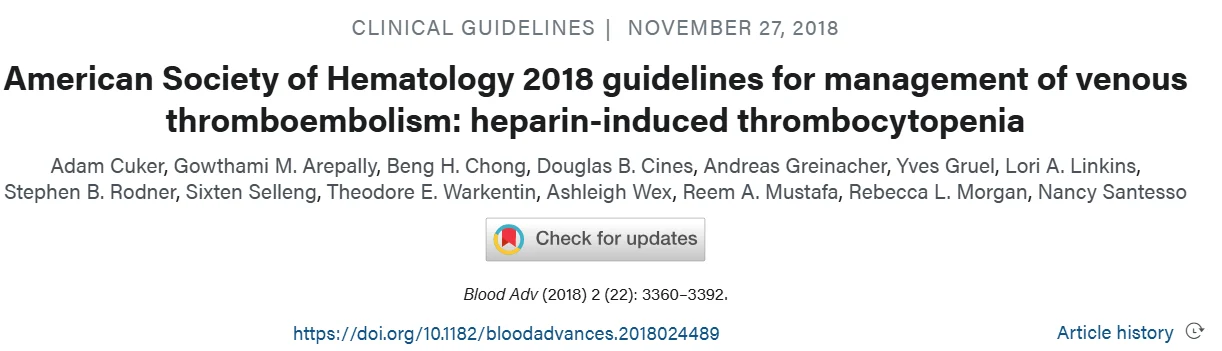
Title: American Society of Hematology 2018 guidelines for management of venous thromboembolism: heparin-induced thrombocytopenia
Authors: Adam Cuker, Gowthami M. Arepally, Beng H. Chong, Douglas B. Cines, Andreas Greinacher, Yves Gruel, Lori A. Linkins, Stephen B. Rodner, Sixten Selleng, Theodore E. Warkentin, Ashleigh Wex, Reem A. Mustafa, Rebecca L. Morgan, Nancy Santesso
Stay updated with Hemostasis Today.
-
Sep 22, 2026, 15:27Zia Ullah: RBC-Derived Extracellular Vesicles as Potential Biomarkers of Thrombotic Risk in Dengue
-
Sep 22, 2026, 15:01Lesley Van Wyk: What Each Iron Markers Actually Mean
-
Sep 22, 2026, 14:37Chokri Ben Lamine։ Saudi Arabia Leads A New Milestone In Hemophilia A Care
-
Sep 22, 2026, 13:58Giulia Passaniti: Dual Inferior Vena Cava Anatomy in Tetralogy of Fallot
-
Sep 22, 2026, 13:35Michael Miyamoto: Scaling Guideline Based Lipid Management in Community Practice
-
Sep 22, 2026, 13:15Suvro Sankha Datta: Developing Blood Group Genotyping Platform Using a Gold-Oligo
-
Sep 22, 2026, 13:07Caitlin Raymond: The Plasma Chaser in Therapeutic Plasma Exchange
-
Sep 22, 2026, 09:18Shamee Shastry: How Transfusion Medicine Research Is Evolving in India
-
Sep 22, 2026, 09:11Tarique Shahzad Chachar: Why Warfarin Remains the Gold Standard for Mechanical Heart Valves