


Heghine Khachatryan: Arterial and Venous Thrombosis May Require Different Approaches in Neonates
Heghine Khachatryan, Editor-in-Chief of Hemostasis Today, Head of Hemophilia and Thrombosis Center at Yeolyan Hematology and Oncology Center, shared a post on LinkedIn about a recent article, by Marie-Pier Desjardins, published in Thieme, adding:
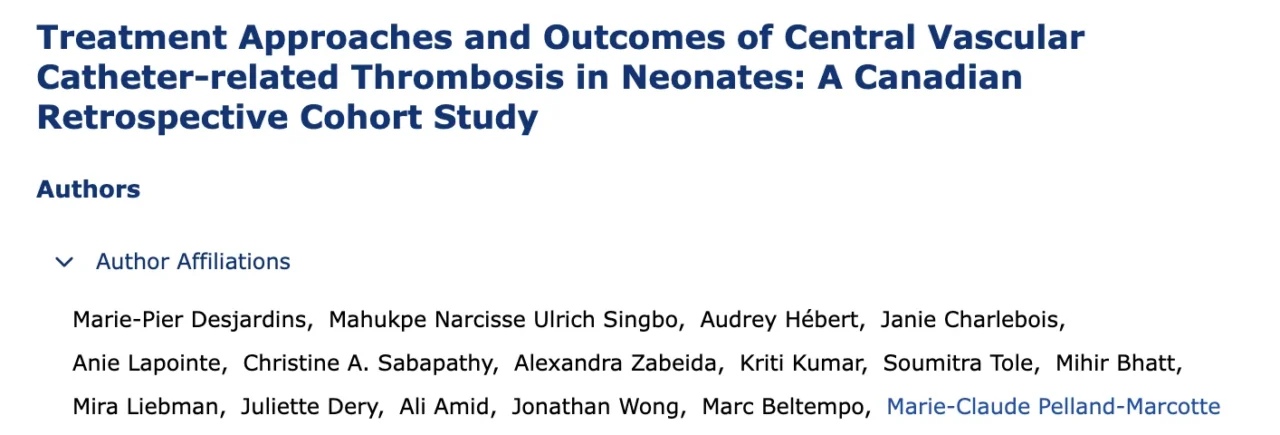
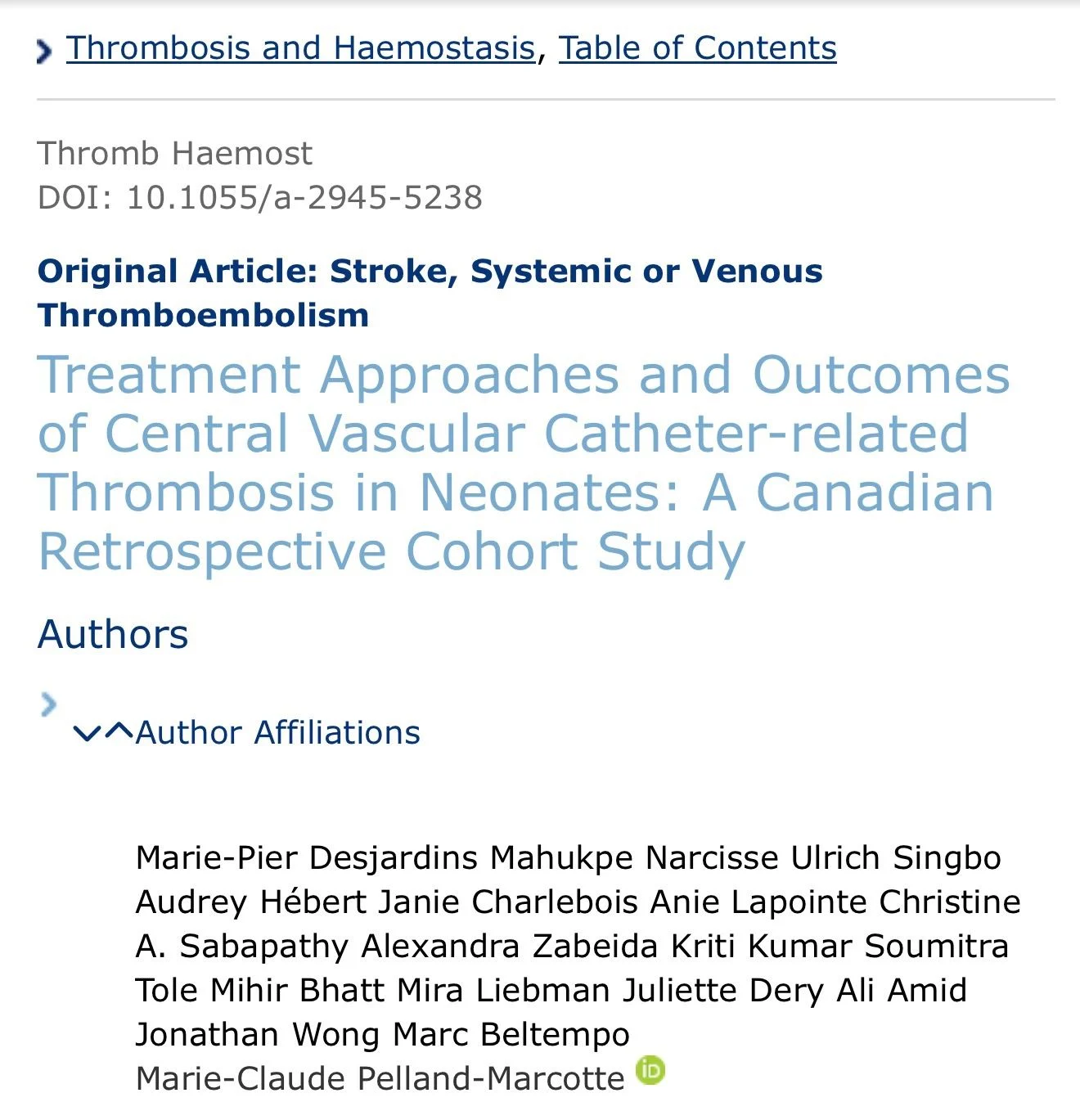
“Treatment Approaches and Outcomes of Central Vascular Catheter-related Thrombosis in Neonates
New Study Neonatal Catheter Associated Thrombosis: Arterial and Venous Events May Require Different Approaches
A large Canadian multicenter cohort of 497 neonates provides important new insight into catheter-associated thrombosis in the neonatal population.
Among reported events, approximately 83percent were venous and 16percent arterial.
A particularly relevant finding was the apparent difference in response to anticoagulation according to thrombus location:
- In venous catheter associated thrombosis, anticoagulation was not significantly associated with a higher likelihood of complete thrombus resolution or a lower risk of progression.
- In contrast, in arterial thrombosis, anticoagulation was associated with a significantly greater probability of complete resolution.Importantly, anticoagulation was not associated with a statistically significant increase in clinically relevant bleeding.
Clinical perspective
These findings support a more individualized approach to neonatal catheter associated thrombosis and highlight an important point: outcomes observed in arterial thrombosis should not automatically be extrapolated to venous events.
However, this was a retrospective study. The results should therefore not be interpreted as evidence to routinely withhold anticoagulation in symptomatic neonatal VTE.
Treatment decisions should remain individualized, taking into account:
- arterial versus venous location
- thrombus extent and progression
- clinical symptoms and organ compromise
- catheter status and ongoing indication
- bleeding risk and potential thrombotic complications
The study adds an important layer of nuance to neonatal thrombosis management and reinforces the need for prospective studies capable of defining which neonates benefit most from anticoagulation.
Reference:
Desjardins MP et al. Thrombosis and Haemostasis. Published online September 11, 2026.”
Title: Treatment Approaches and Outcomes of Central Vascular Catheter-related Thrombosis in Neonates: A Canadian Retrospective Cohort Study
Authors: Marie-Pier Desjardins, Mahukpe Narcisse Ulrich Singbo, Audrey Hébert, Janie Charlebois, Anie Lapointe, Christine A. Sabapathy, Alexandra Zabeida, Kriti Kumar, Soumitra Tole, Mihir Bhatt, Mira Liebman, Juliette Dery, Ali Amid, Jonathan Wong, Marc Beltempo, Marie-Claude Pelland-Marcotte
Stay updated on all scientific advances with Hemostasis Today.
-
Nov 8, 2026, 19:31Anna Kajaste-Rudnitski: Presenting AAV-Induced p53 Signalling in Human CNS Cells at ESGCT 26
-
Nov 8, 2026, 19:29David McIntosh: Cybersecurity Matters, but Blood Availability Remains the Bigger Challenge
-
Nov 8, 2026, 19:26Wenxue Ma: An Integrative Framework for Macrophage-Mediated Therapeutic Resistance in Cancer
-
Nov 8, 2026, 19:25Yildiz Yigit: Presenting a Polycythemia Vera Case at the MPN Subcommittee Session
-
Nov 8, 2026, 18:56Denis Oduor: Strengthening the Regulation and Delivery of Blood Transfusion and Transplantation Services
-
Nov 8, 2026, 18:28Raghavendra Rao: A Narrative Review on Chronic Venous Disease during Pregnancy
-
Nov 8, 2026, 17:57Dhiren Patel: PLD1-Derived Phospholipids Regulate NAD Kinase and ROS Production in Neutrophils
-
Nov 8, 2026, 17:48Andra T.: What Causes Antiphospholipid Syndrome? – Four Steps, not One Cause
-
Nov 8, 2026, 17:38Nasrin Samadi: Can a Normal Clotting Test Be Misleading?