


Iryna Yaryhina: Moving Beyond Episomal Fixes Toward Genomic Durability for Hemophilia
Iryna Yaryhina, Research Engineer at Pharmaceutical company «Zdorovye», shared on LinkedIn about a recent article by Nishal Kumarasamy et al, published in :
”Gene Editing for Hemophilia: Moving Beyond Episomal Fixes Toward Genomic Durability
Most approved gene therapies for hemophilia rely on AAV-mediated gene addition.
This approach works, but it remains limited by episomal expression, immune responses, and declining durability, especially for FVIII.
In a recent Frontiers in Bioengineering and Biotechnology review, ‘Exploring gene editing as a potential therapeutic strategy for hemophilia,’ the authors provide a systematic overview of how genome editing aims to address these fundamental constraints.
Instead of adding a functional gene copy, gene editing directly modifies the genome.
The goal is mutation correction, stable integration, or rebalancing of coagulation pathways.
Key highlights:
- A comparative analysis of ZFNs, TALENs, and CRISPR/Cas9, with clear discussion of efficiency, specificity, and translational readiness.
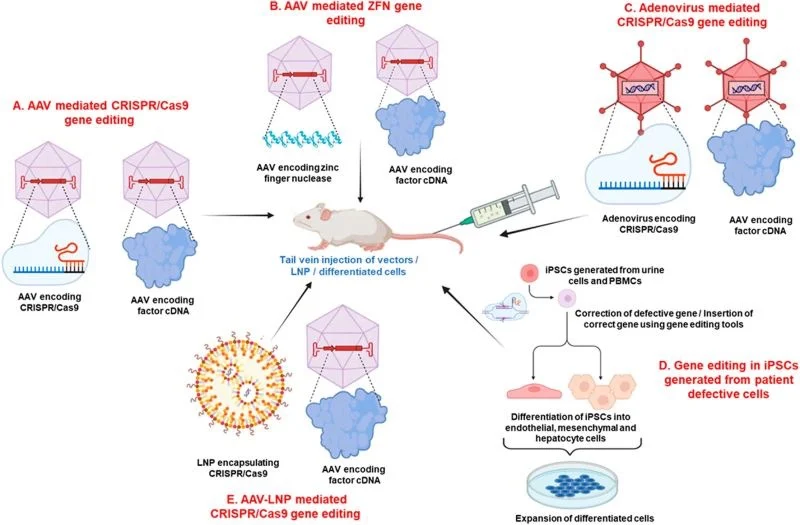
- Multiple editing strategies, including HDR and NHEJ, safe-harbour integration (albumin, AAVS1, H11), and direct correction of F8 and F9.
- The rise of base editing and prime editing for precise, double-strand-break–free correction of point mutations.
- AAV–LNP hybrid delivery approaches and CRISPR-based rebalancing strategies targeting anticoagulant pathways such as antithrombin.
- Early in vivo CRISPR clinical trials for hemophilia B, signalling a shift toward potentially permanent genomic correction.
Why this matters:
Hemophilia exposes a core limitation of classical gene therapy.
Expression without genomic integration rarely translates into long-term durability.
Genome editing reframes treatment as cell-heritable correction, while introducing new engineering constraints related to delivery, immune compatibility, and long-term safety.
Importantly, this review does not oversell the technology.
It maps the real biological and translational bottlenecks that will determine whether gene editing becomes clinically transformative or remains largely preclinical.”
Title: Exploring gene editing as a potential therapeutic strategy for hemophilia
Authors: Nishal Kumarasamy, Balaji Balakrishnan
Read the Full Article on Frontiers
Stay updated on all scientific advances with Hemostasis Today.
-
Oct 9, 2026, 16:23David Boone: Distinguishing Stroke Prevention from Rhythm Control in Atrial Fibrillation
-
Oct 9, 2026, 15:27Mohamed Hegazi: Geostatistical Modelling Maps Global β-Thalassaemia Carrier Prevalence
-
Oct 9, 2026, 15:15Maha Othman: Uncovering the Consensus on TXA in TBI – Call for Collaboration on a Landmark Umbrella Review
-
Oct 9, 2026, 15:07Daniel D. Han: How Inhalation Product Exposure Impairs Cardiac and Platelet Recovery After MI
-
Oct 9, 2026, 14:58William Toole: How Ultrasound-Guided PRP Therapy Relieves Joint and Tendon Pain
-
Oct 9, 2026, 14:50Shayan Mohammadmoradi: In Corpus Christi for the 20th Midwest Platelet Conference
-
Oct 9, 2026, 14:37Tariq Tramboo: High Platelet Concentrate for Osteoarthritis Knee – Recent Meta-Analyses
-
Oct 9, 2026, 14:26Yousma Khan: Hematology Series – Beyond RBCs, WBCs and Platelets
-
Oct 9, 2026, 14:13Jesus Ardila Novoa: Why the WHO’s Historic Essential Medicines List Decision Is Just the Beginning