


María Florencia Giannini: Diagnosis and Management of VTE in Pregnancy and Postpartum
María Florencia Giannini Cardiologist at Moron Municipal Hospital shared a post on LinkedIn about a recent article by Brandon C. Maughan et al, publsihed in Obstetrical and Gynecological Survey.
“Venous thromboembolism (VTE), which includes deep vein thrombosis (DVT) and pulmonary embolism (PE), is a major cause of maternal morbidity and mortality during pregnancy and the postpartum period.
The risk of VTE increases progressively during pregnancy and is highest in the first weeks after delivery.
Pregnancy is a hypercoagulable state due to increased coagulation factors, reduced natural anticoagulants, and venous stasis caused by hormonal changes and uterine compression.
Risk factors include prior VTE, inherited or acquired thrombophilia, cesarean delivery, obesity, immobilization, infection, and certain medical conditions.
Most pregnancy-related DVTs occur in the left lower extremity, often involving the iliofemoral veins.
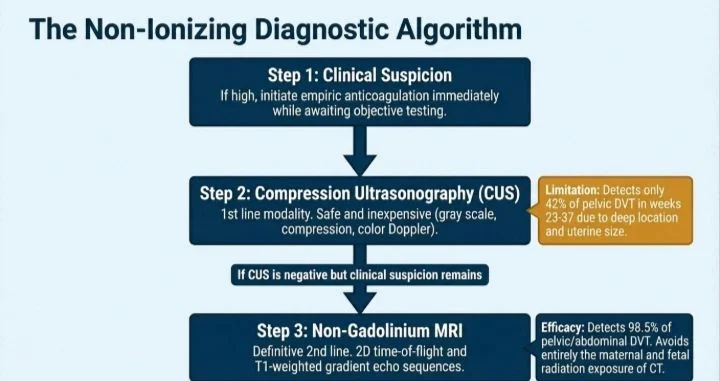
Diagnosis is challenging because normal pregnancy symptoms may mimic VTE.
Compression ultrasound is the first-line imaging test for suspected DVT.
For suspected PE, CT pulmonary angiography (CTPA) or ventilation-perfusion (V/Q) scanning are the main imaging modalities.
Treatment differs from the non-pregnant population.
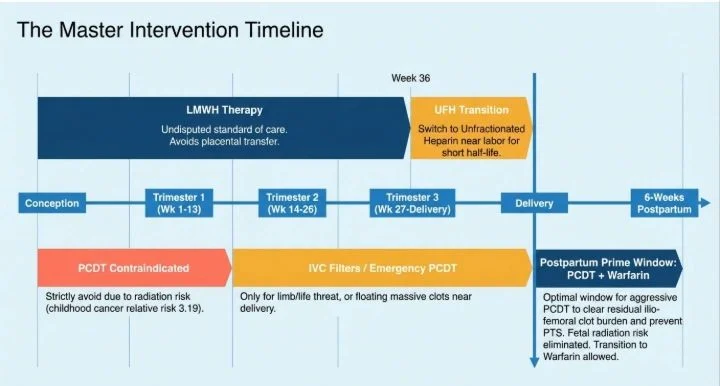
Low-molecular-weight heparin (LMWH) is the preferred anticoagulant because it does not cross the placenta and has a favorable safety profile.
Direct oral anticoagulants and warfarin are generally avoided during pregnancy.
In severe cases, such as massive PE or limb-threatening DVT, thrombolysis or invasive interventions may be required.
Overall, early recognition and appropriate management of VTE in pregnancy are critical to improve maternal and fetal outcomes.”
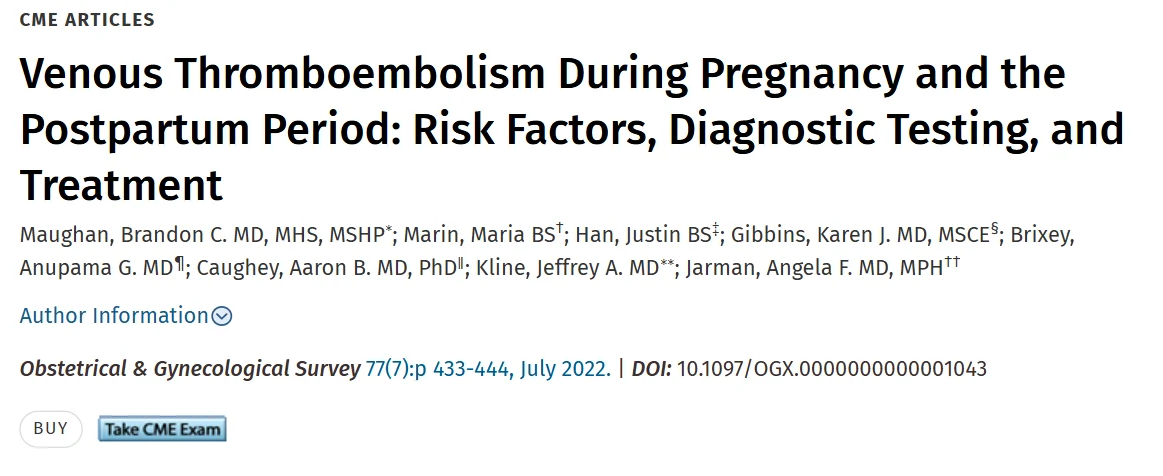
Title: Venous Thromboembolism During Pregnancy and the Postpartum Period: Risk Factors, Diagnostic Testing, and Treatment
Authors: Brandon C Maughan, Maria Marin, Justin Han, Karen J Gibbins, Anupama G Brixey, Aaron B Caughey, Jeffrey A Kline, Angela F Jarman
Read the Full Article on Obstetrical and Gynecological Survey
Stay updated with Hemostasis Today.
-
Sep 28, 2026, 18:48Orly Leiva: Rethinking JAK Inhibitor Cardiovascular Safety in MPNs
-
Sep 28, 2026, 18:42Wael Saad: Honored to Be Part of Portal and Mesenteric Vein Thrombosis Session at CIRSE 2026
-
Sep 28, 2026, 18:35Alejandro González Veliz: The Unbroken Connection Between Heart and Brain
-
Sep 28, 2026, 16:43Scott Sutton: Community and Connection in Immune Thrombocytopenia
-
Sep 28, 2026, 16:24Pankti Solanki: ISBT Recognized JAMA as the 49th Human Blood Group System
-
Sep 28, 2026, 15:52Kassa Tameru: Antithrombotic Management in GI Bleeding and Elective Endoscopy
-
Sep 28, 2026, 15:51Chengappa Kavadichanda: How Do aPLs Change Over Time in Early Lupus?
-
Sep 28, 2026, 15:18Linda Shore-Lesserson: Celebrating 25 Years of PBM at the SABM Meeting
-
Sep 28, 2026, 14:45Access Real-Time Bleeding Disorder Guidelines with the New WFH Resource Hub – WFH