


Mohammed V.H.: Altered INR and Bleeding Risk With Torsemide and Warfarin
Mohammed V.H., Senior Clinical Pharmacist at Aster MIMS Calicut, shared on LinkedIn about a recent article he and his colleagues co-authored, published in Indian Journal of Pharmacology, adding:
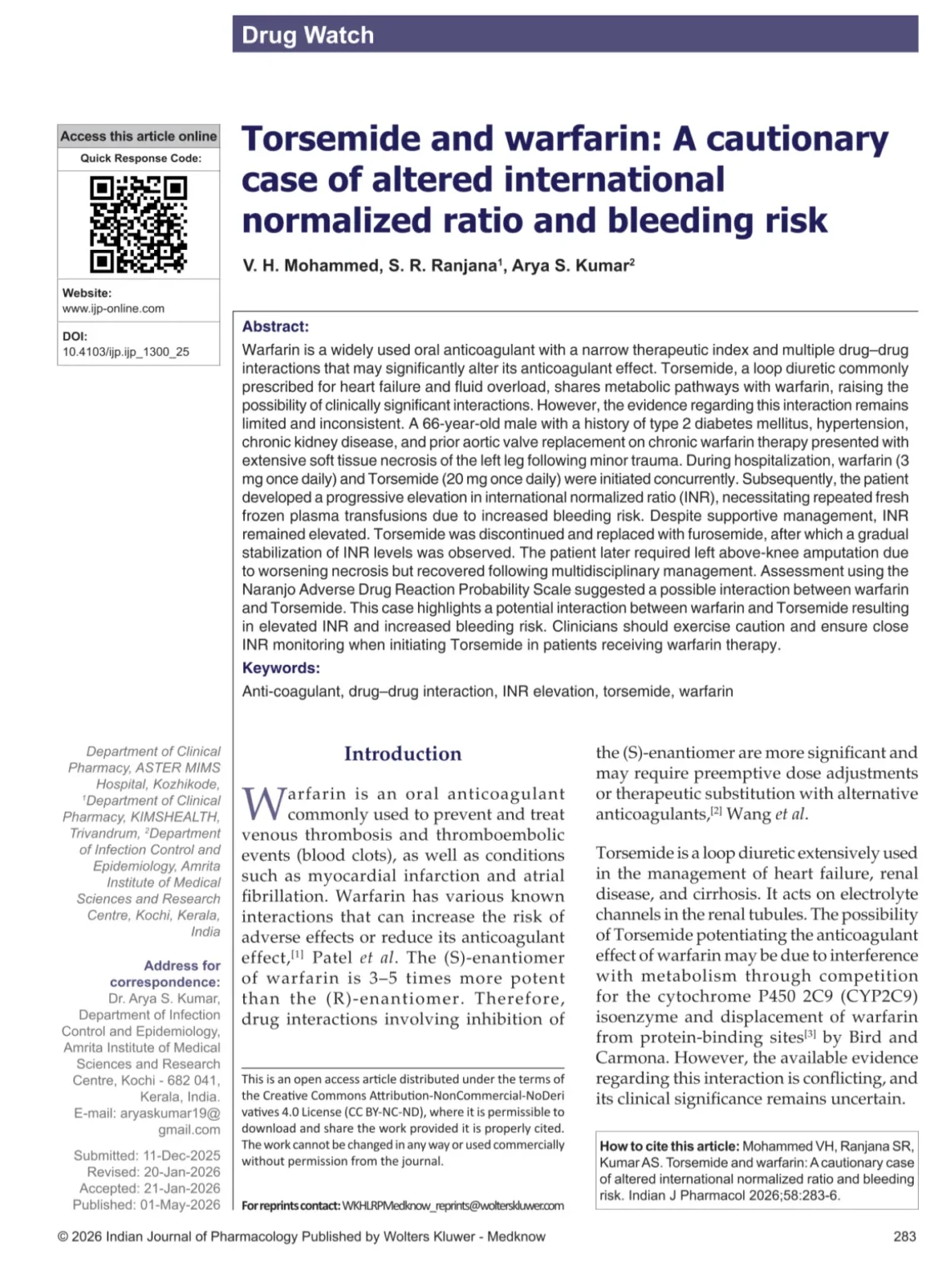
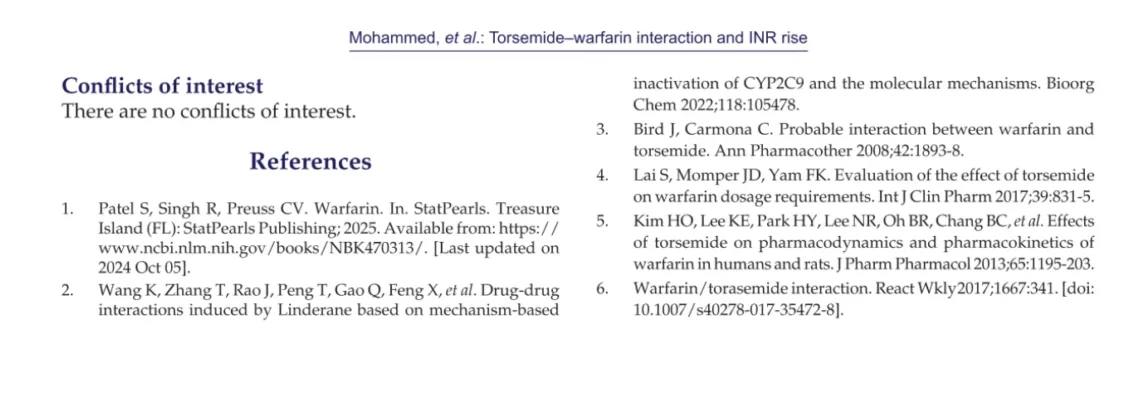
“I’m pleased to share that our case report titled ‘Torsemide and Warfarin: A Cautionary Case of Altered International Normalized Ratio and Bleeding Risk’ has been published in the Indian Journal of Pharmacology.
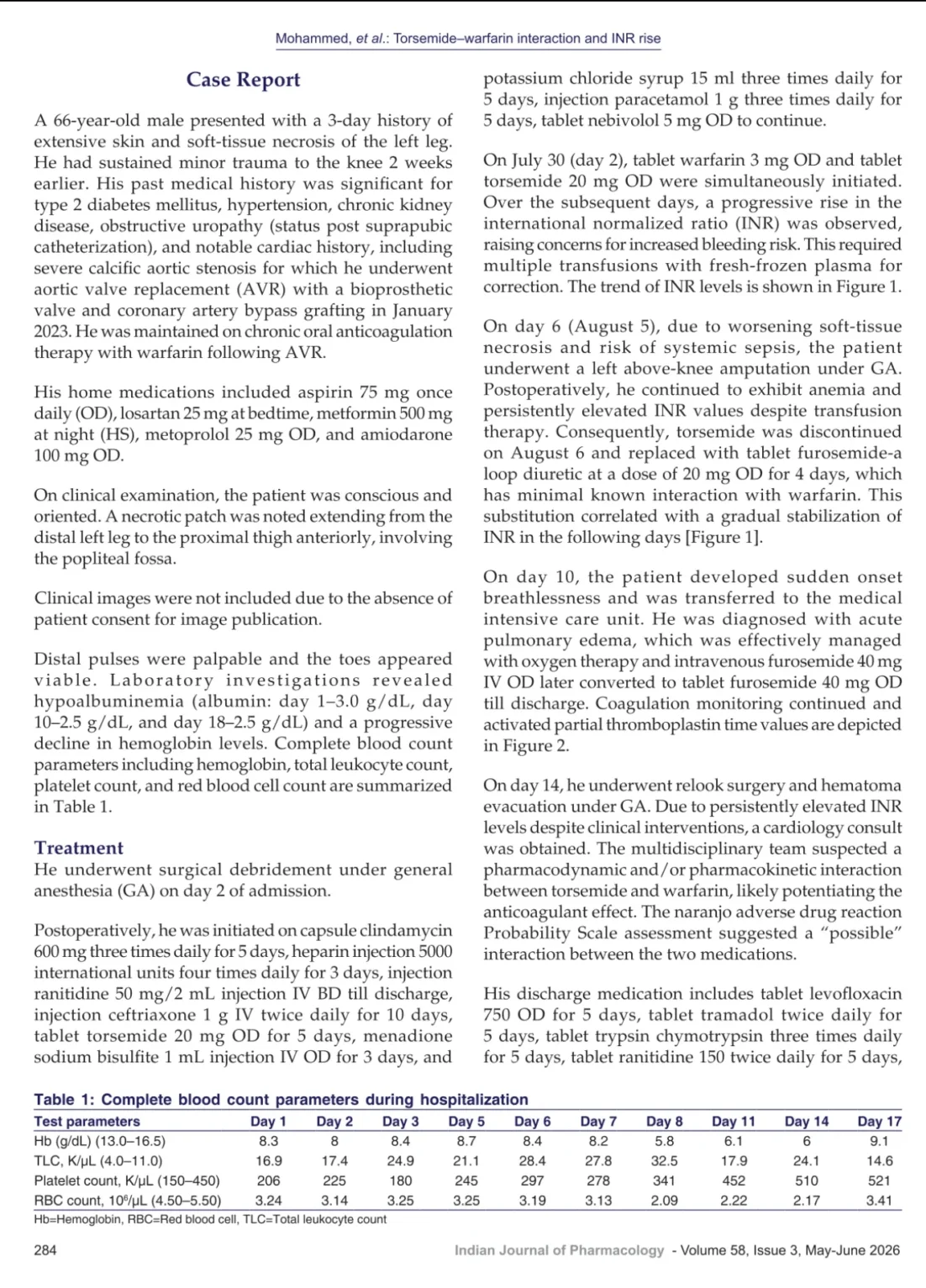
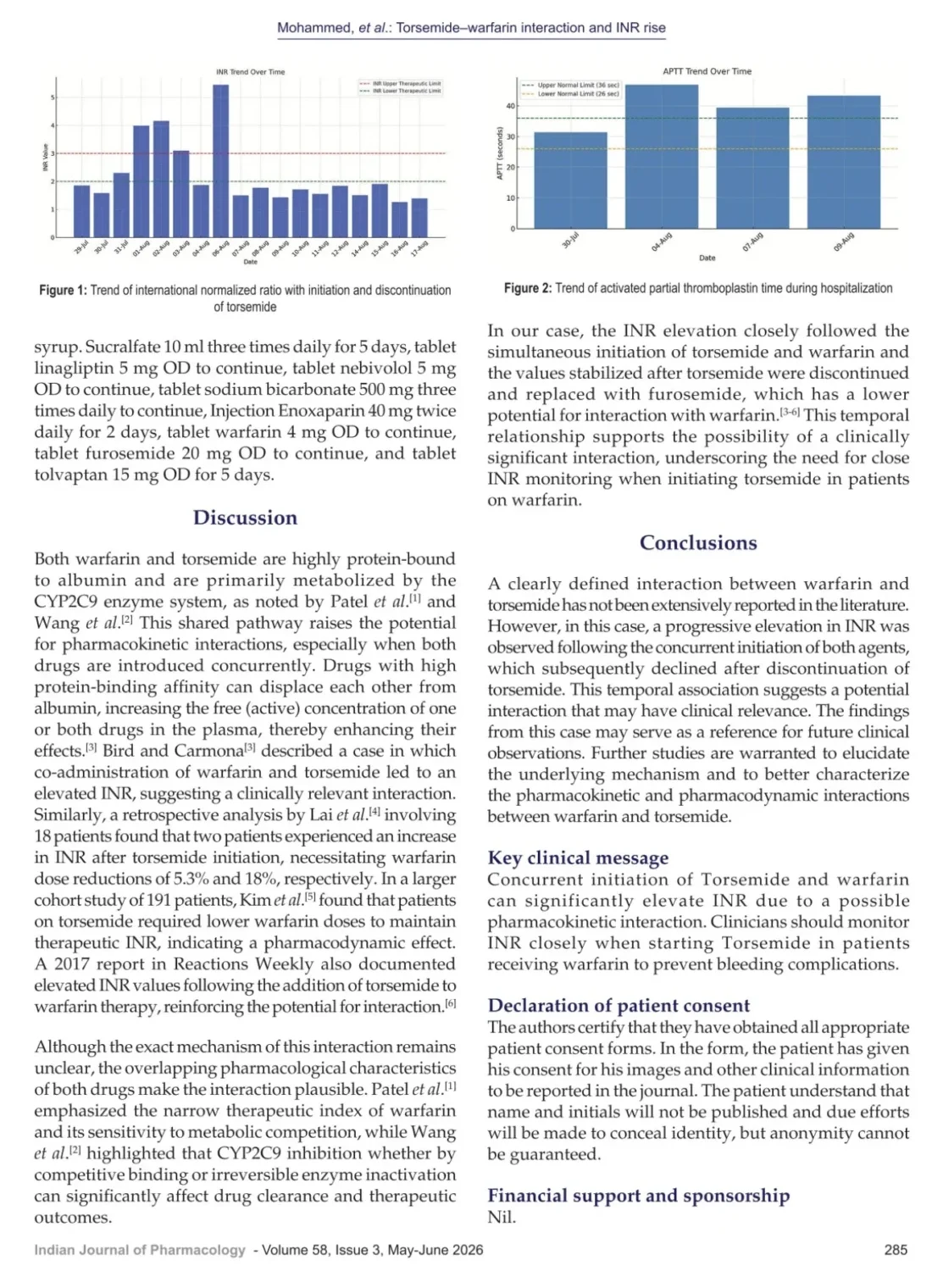
This report highlights a clinically significant drug interaction between torsemide and warfarin, emphasizing the importance of close INR monitoring and vigilance to prevent potential bleeding complications.
It serves as a reminder of how even commonly used medications can have impactful interactions in real-world practice.
I would like to acknowledge and thank my co-authors Ranjana S.R. and Arya S. Kumar for their valuable contributions and collaboration in bringing this work to publication.
Looking forward to continued learning and contributing to safer pharmacotherapy practices.”
Title: Torsemide and warfarin: A cautionary case of altered international normalized ratio and bleeding risk
Authors: Mohammed, V. H., Ranjana S. R., Kumar Arya S.
Stay updated on all scientific advances with Hemostasis Today.
-
Nov 16, 2026, 15:35Jim Hoffman: Could Blood Purification Change the Fight Against Cancer?
-
Nov 16, 2026, 15:16How Do Artificial Hearts Affect Platelet Function? – Platelets Journal
-
Nov 16, 2026, 15:10Assessing Coagulation Activation in DOAC – Treated Patients – JTH
-
Nov 16, 2026, 15:00Davide Antonio Mei: Should Anticoagulation Continue After AF Ablation?
-
Nov 16, 2026, 14:55Danielle Boyle: Beyond Platelet Counts – Why Patient Stories Matter
-
Nov 16, 2026, 14:28Jan Sloves: The Future of Vascular Ultrasound
-
Nov 16, 2026, 13:49Bahman Rasouli: A Rare Vascular Manifestation of Recurrent Papillary Thyroid Carcinoma
-
Nov 16, 2026, 13:28Muhammad Danyal: Platelet Patterns in Hepatitis B and C
-
Nov 16, 2026, 12:52Frank Nocken: Alzheimer’s Research Expands Beyond Amyloid-Based Treatments