


Ney Carter Borges: Non-HDL Cholesterol vs ApoB Both Matter for ASCVD Risk
Ney Carter Borges, Member Cardiologist of Global Physician Association at Cleveland Clinic Florida, shared a post on LinkedIn about a recent article by Camilla Ditlev Lindhart Johannesen et al. published in JAMA Cardiology, adding:
“Non-HDL Cholesterol vs ApoB: Both Matter for ASCVD Risk
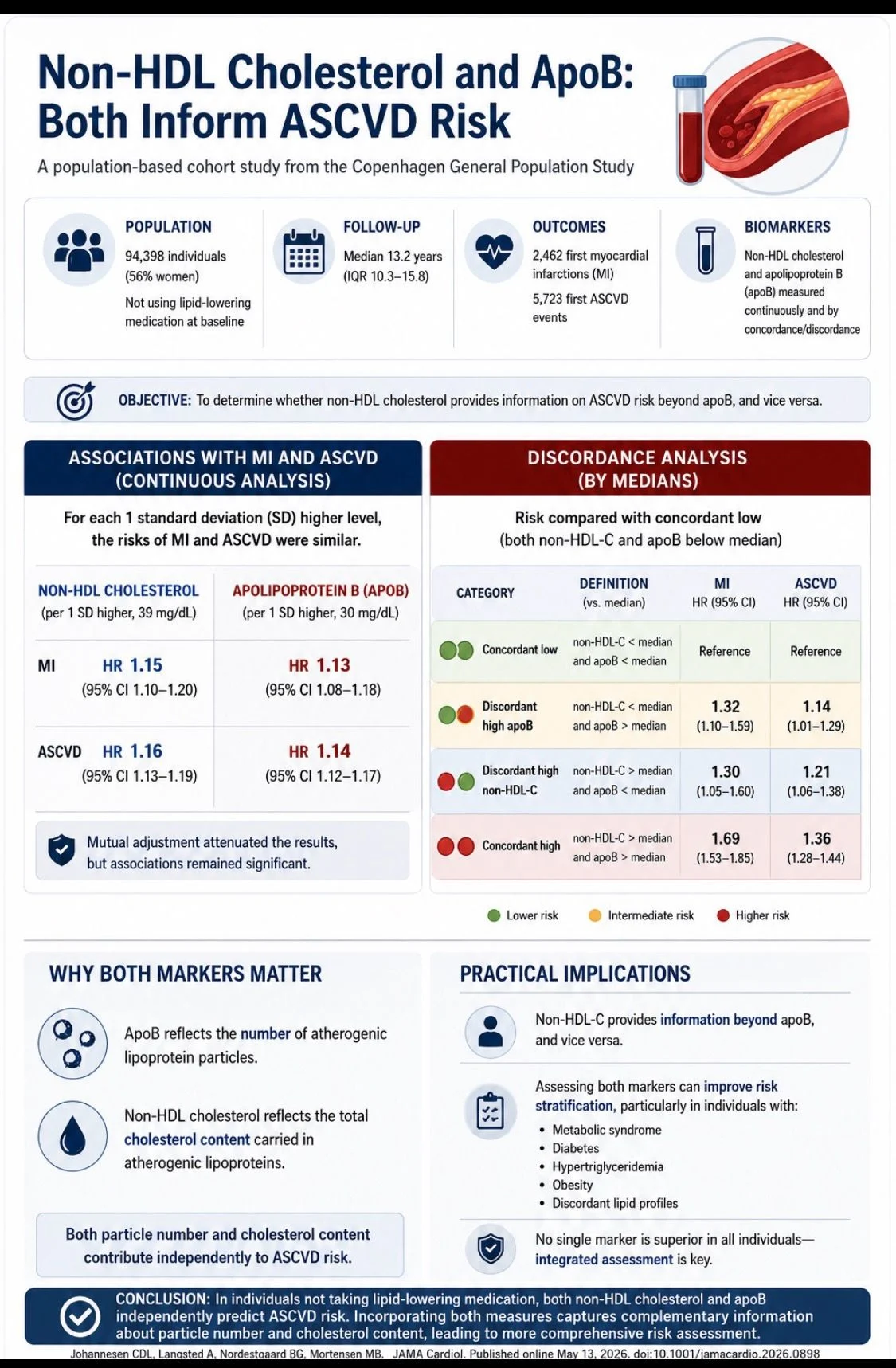
A contemporary cohort analysis from the Copenhagen General Population Study evaluated 94,398 statin-naïve individuals over a median follow-up of 13.2 years to determine whether non-HDL cholesterol or apolipoprotein B (apoB) provides superior prediction of atherosclerotic cardiovascular disease (ASCVD).
The investigators demonstrated that both biomarkers independently predicted myocardial infarction (MI) and ASCVD events. For each 1-standard deviation increase, non-HDL cholesterol was associated with a 16% higher ASCVD risk (HR 1.16; 95% CI 1.13–1.19), while apoB showed a comparable 14% increase (HR 1.14; 95% CI 1.12–1.17).
A particularly important finding emerged from discordance analyses. Individuals with elevated apoB despite lower non-HDL cholesterol still exhibited significantly higher cardiovascular risk, and the reverse pattern was equally true.
Patients with concordantly elevated non-HDL cholesterol and apoB had the greatest risk burden, with MI risk increasing by 69% (HR 1.69; 95% CI 1.53–1.85).
These findings reinforce the biological concept that both cholesterol content and lipoprotein particle number contribute to atherogenesis. ApoB reflects the number of circulating atherogenic particles, whereas non-HDL cholesterol better captures total cholesterol carried within these particles.
The study suggests that relying on only one marker may overlook clinically relevant residual risk.
From a practical cardiometabolic perspective, the data support combined assessment of non-HDL cholesterol and apoB, particularly in patients with metabolic syndrome, diabetes, hypertriglyceridemia, obesity, or discordant lipid profiles.
The authors conclude that there is no ‘one-marker-fits-all’ solution for ASCVD risk stratification and that integrated lipid assessment may improve future preventive strategies and guideline refinement.”
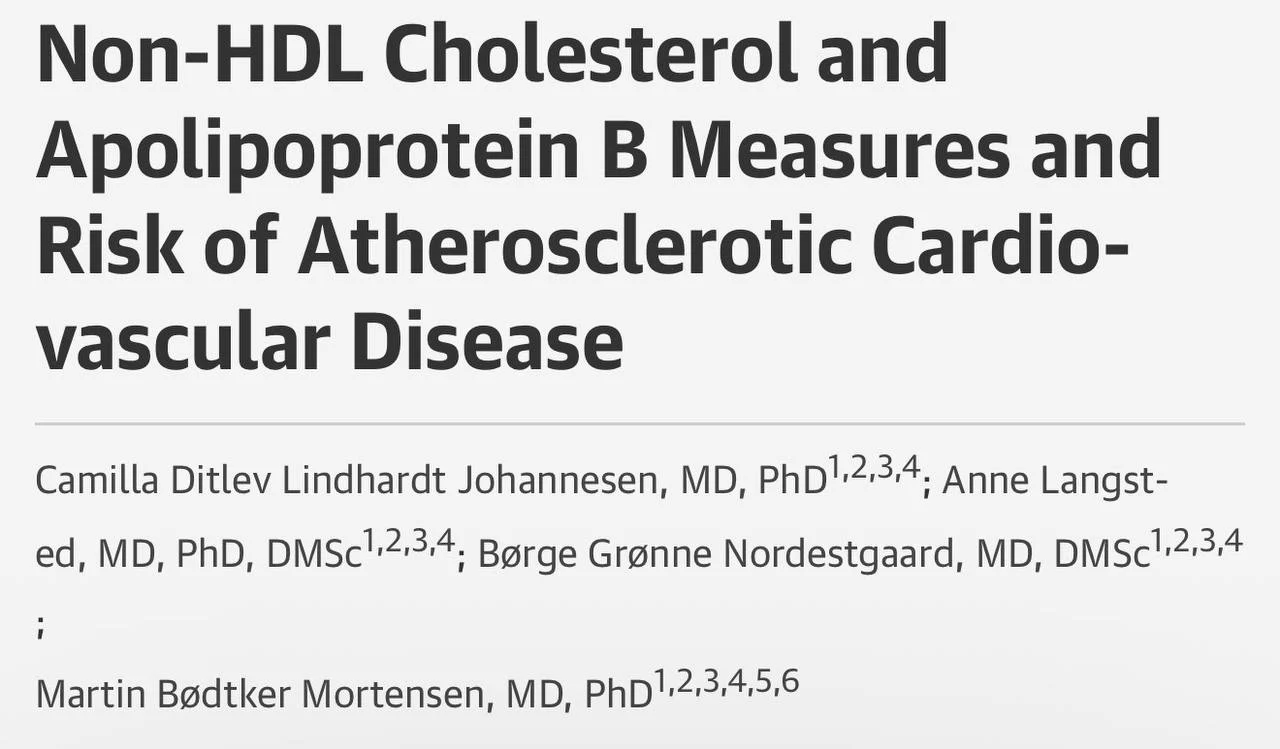
Title: Non-HDL Cholesterol and Apolipoprotein B Measures and Risk of Atherosclerotic Cardiovascular Disease
Authors: Camilla Ditlev Lindhart Johannesen, Anne Langsted, Borge Gronne Nordestgaard, Martin Bodtker Mortensen
Find more posts featuring Ney Carter Borges on Hemostasis Today.
-
Oct 19, 2026, 19:44Where You Live Should not Determine Whether You Receive Care – World Federation of Hemophilia
-
Oct 19, 2026, 19:42Belen Bianco: Prevention, Early Suspicion and an Interdisciplinary Approach Save Lives
-
Oct 19, 2026, 19:40Christina Chrysohoou: Catheter-Based LAAC vs OAC for Stroke Prevention in Atrial Fibrillation
-
Oct 19, 2026, 19:38Matthew Flick: A Two-Day Research Meeting on Fibrinogen, Hemostasis and Thrombosis
-
Oct 19, 2026, 19:37Hayat Saeed: Excited to Share Our Publication on the FGL1–Hepcidin Axis in Iron Homeostasis and Disease
-
Oct 19, 2026, 19:08IPAW 2026 Comes to a Close, but the Work Continues – PPTA
-
Oct 19, 2026, 17:44Paul Riley: Moderating a Webinar on Anticoagulation Monitoring
-
Oct 19, 2026, 16:36Christopher Pittman: Blood Clot Prevention Cannot End at Hospital Discharge
-
Oct 19, 2026, 16:13Javier M. Floren: When Immune Cells Move With Their Environment