

Wolfgang Miesbach: Greater Symptom Burden in Women with Bleeding Disorders – Insights from Irish Data
Wolfgang Miesbach, Professor of Medicine at Frankfurt University Hospital, shared a post on LinkedIn:
”Eye-opening session at EAHAD 2026 Dublin!
At the 19th Annual EAHAD Congress, Petra Elvinge delivered a compelling talk on ‘Adapting our haemophilia nursing roles to meet the needs of Women and Girls with Bleeding Disorders (WGBD)’:
- Subclinical joint damage on MRI detected in haemophilia carriers with FVIII >40% and no history of overt bleeding – ankles (92%), knees (100%), elbows (100%) affected
50% of carriers reported chronic joint pain vs. 3.3% of controls (p<0.001), and 26% joint swelling vs. 0% (p=0.002) – independent of baseline factor activity - BMI matters: carriers with BMI ≥25 kg/m² had significantly more haemarthroses vs. normal BMI (23% vs. 0%, p=0.037)
- 40% of VWD-JB patients developed arthropathy (HJHS ≥10) vs. 10% controls (p<0.01); 25% showed X-ray joint damage vs. 4% controls (p=0.01) – strongly associated with pain, radiological abnormalities and reduced social participation
- Sports participation in Type 3 VWD most limited – fear of bleeding, restricted walking ability, and daily activity limitations all cited as barriers
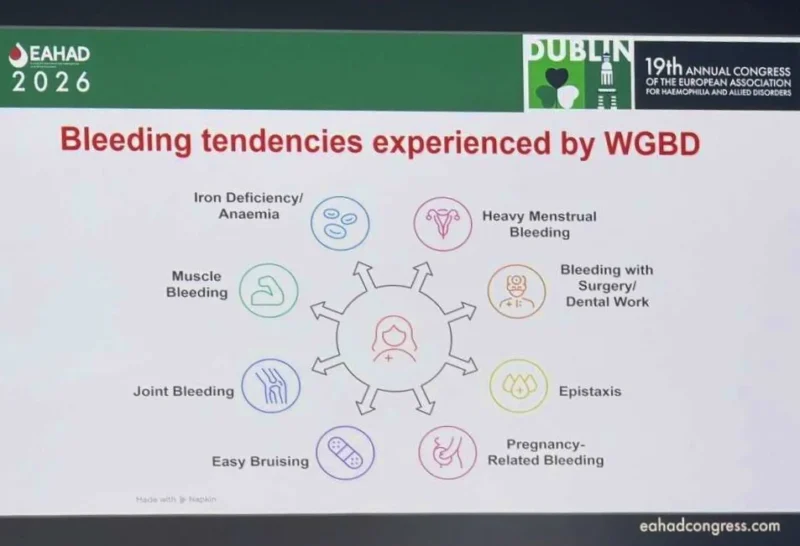
Irish unpublished data showed women with bleeding disorders report far higher rates of joint symptoms, epistaxis, gum bleeding, bruising, surgical bleeding, and heavy menstrual bleeding vs. women without bleeding disorders.
And then this patient voice stopped the room:
‘As a carrier, I feel we get ignored when it comes to symptoms of pain.’
4 key take-home messages:
- WGBD experience joint bleeds — including clinically silent, asymptomatic ones
- Joint bleeding significantly impairs physical function and quality of life
- Management remains suboptimal despite clear evidence
- Patient-centred, multidisciplinary care co-designed with WGBD is urgently needed
Nursing roles are evolving to meet these women where they are – with dedicated assessment, tailored treatment pathways, and above all, being heard.”
Stay updated with Hemostasis Today.
-
Oct 9, 2026, 16:23David Boone: Distinguishing Stroke Prevention from Rhythm Control in Atrial Fibrillation
-
Oct 9, 2026, 15:27Mohamed Hegazi: Geostatistical Modelling Maps Global β-Thalassaemia Carrier Prevalence
-
Oct 9, 2026, 15:15Maha Othman: Uncovering the Consensus on TXA in TBI – Call for Collaboration on a Landmark Umbrella Review
-
Oct 9, 2026, 15:07Daniel D. Han: How Inhalation Product Exposure Impairs Cardiac and Platelet Recovery After MI
-
Oct 9, 2026, 14:58William Toole: How Ultrasound-Guided PRP Therapy Relieves Joint and Tendon Pain
-
Oct 9, 2026, 14:50Shayan Mohammadmoradi: In Corpus Christi for the 20th Midwest Platelet Conference
-
Oct 9, 2026, 14:37Tariq Tramboo: High Platelet Concentrate for Osteoarthritis Knee – Recent Meta-Analyses
-
Oct 9, 2026, 14:26Yousma Khan: Hematology Series – Beyond RBCs, WBCs and Platelets
-
Oct 9, 2026, 14:13Jesus Ardila Novoa: Why the WHO’s Historic Essential Medicines List Decision Is Just the Beginning