

Flora Peyvandi / X
Jul 27, 2025, 06:16
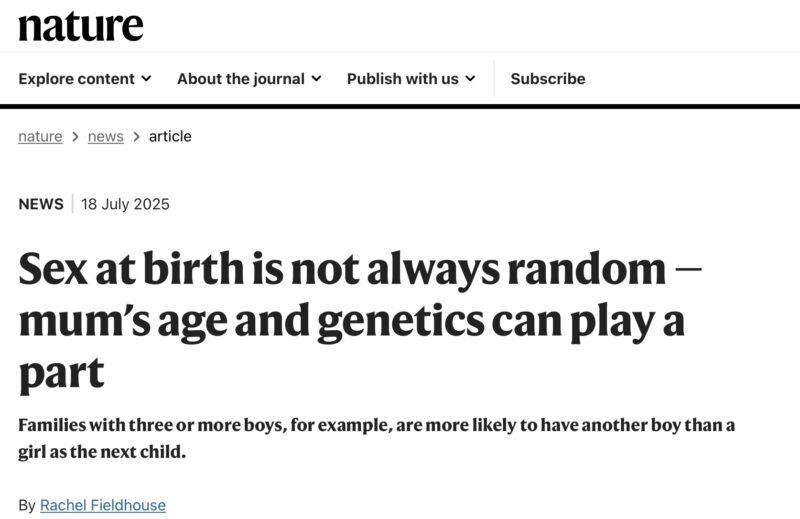
Can a Single DNA Change Decide If You’ll Have a Boy or a Girl? Scientists Think So
Flora Peyvandi, Professor of Internal Medicine in Hemostasis and Thrombosis Unit, University of Milan-Italy, former president of ISTH, shared a post on X:
”A change in chromosome 10, in a gene called NSUN6, was associated with a higher probability of having only girls, while women with a change in a single DNA letter on chromosome 18, near a gene called TSHZ1, were more likely to have only boys.”
Read the article here.
Stay informed with Hemostasis Today.
-
Sep 30, 2026, 22:21Markus Abeln: How Platelets, Coagulation, Glycosylation, and Complement Regulate Placental Blood Flow
-
Sep 30, 2026, 22:19Fatma Al Arbawi: Studying Blood Clot Mechanics to Understand Aspirin Resistance and Thrombosis
-
Sep 30, 2026, 22:17Sudhir Kumar: Stroke is a Medical Emergency – and Every Minute Matters
-
Sep 30, 2026, 22:15Luisa Medeiros Visentini: Our Research on Cognitive Impairment After CVT Cited in the International Journal of Stroke
-
Sep 30, 2026, 21:50Jagat Narula: Connecting Cardiovascular Health and Sickle Cell Disease on World Heart Day 2026
-
Sep 30, 2026, 21:38John Kastelein: Exploring the Biology of Cardiovascular Disease at BioCentury Grand Rounds Europe
-
Sep 30, 2026, 21:36Mark Murphy: Irish Heart Foundation Meets With Senator Teresa Costello on World Heart Day
-
Sep 30, 2026, 21:34Sadashiva Pai: How Pancreatic Cancer Uses Blood Clotting to Evade Immune Attack
-
Sep 30, 2026, 15:58Bernhard Merget: New Frontiers in Thrombosis and Stroke Research