


Jim Hoffman: Dysregulated NETosis as a Key Driver of Neuro–Cardiac–Metabolic Health Dysfunction
Jim Hoffman, Former Technical Advisor at Cygnus Technologies, LLC, shared Abhilasha Singh’s post on LinkedIn, adding:
“I believe dysregulated NETosis and impaired efferocytosis self-sufficiency are multimorbid disorders that results in chronically elevated levels of extracellular chromatin and NETs in the blood exemplifies the link to worsening ‘Neuro–Cardiac–Metabolic‘ health you speak of.
Slowing the rate of cell death and improving the clearance of dying cells and their extracellular chromatin cell debris from the blood circulation should be investigated for improved efficacy in treating both infectious and non-infectious multimorbid disease progression, potentially negating the need for less effective and very expensive conventional treatment regimes.
See my latest post on how cancer and post-acute chronic infections can likely lead to brain encephalopathy via exacerbated NETosis dysregulation.
Serum neurofilament light chain is also elevated in MS, as discussed by Thrower in this video.
‘The assay is primarily used in neurology and neurodegeneration research to quantify neurofilament light (NfL), a well-established biomarker of axonal damage.
Researchers use this assay to study disease progression, treatment response, and neuronal injury across a range of conditions, including Alzheimer’s disease, multiple sclerosis, amyotrophic lateral sclerosis (ALS), Parkinson’s disease, and traumatic brain injury (TBI).’
For more visit here.
In addition, I strongly suspect elevated circulating chronic low-grade ‘NETosis dysregulation’ in all these cases of high-risk patients with neuro-cardio-metabolic axis dysfunction, helping drive their systemic vascular inflammation and organ injuries.
We can potentially treat the damaging effects of ‘dysregulated NETosis’ with the aid of extracorporeal blood removal therapies capable of helping patients deplete extracellular chromatin and NETs from their circulation.
This extracorporeal NET removal therapy is waiting for funding and should be trialed for the better treatment of Alzheimer’s, sepsis, lupus, and all the other neuro-cardio metabolic disorders, including poorly controlled diet and drug-refractory diabetes, where NETs are elevated in the circulation and tissues, creating havoc and contributing to poorly controlled blood sugar complications.
Research on elevated NETs and neurodegenerative diseases.
Research on elevated NETs and cardiometabolic diseases.
Research implicating NETosis dysregulation, resulting in, and exacerbated by poor glycemic control.”
Abhilasha Singh, Review Editor at Frontiers in Stroke, Reviewer at Springer Nature Phytomedicine, Frontiers in Neurology and AHA, shared a post on LinkedIn about a recent article by Geethan Baskaran et al. published in JAMA Cardiology:
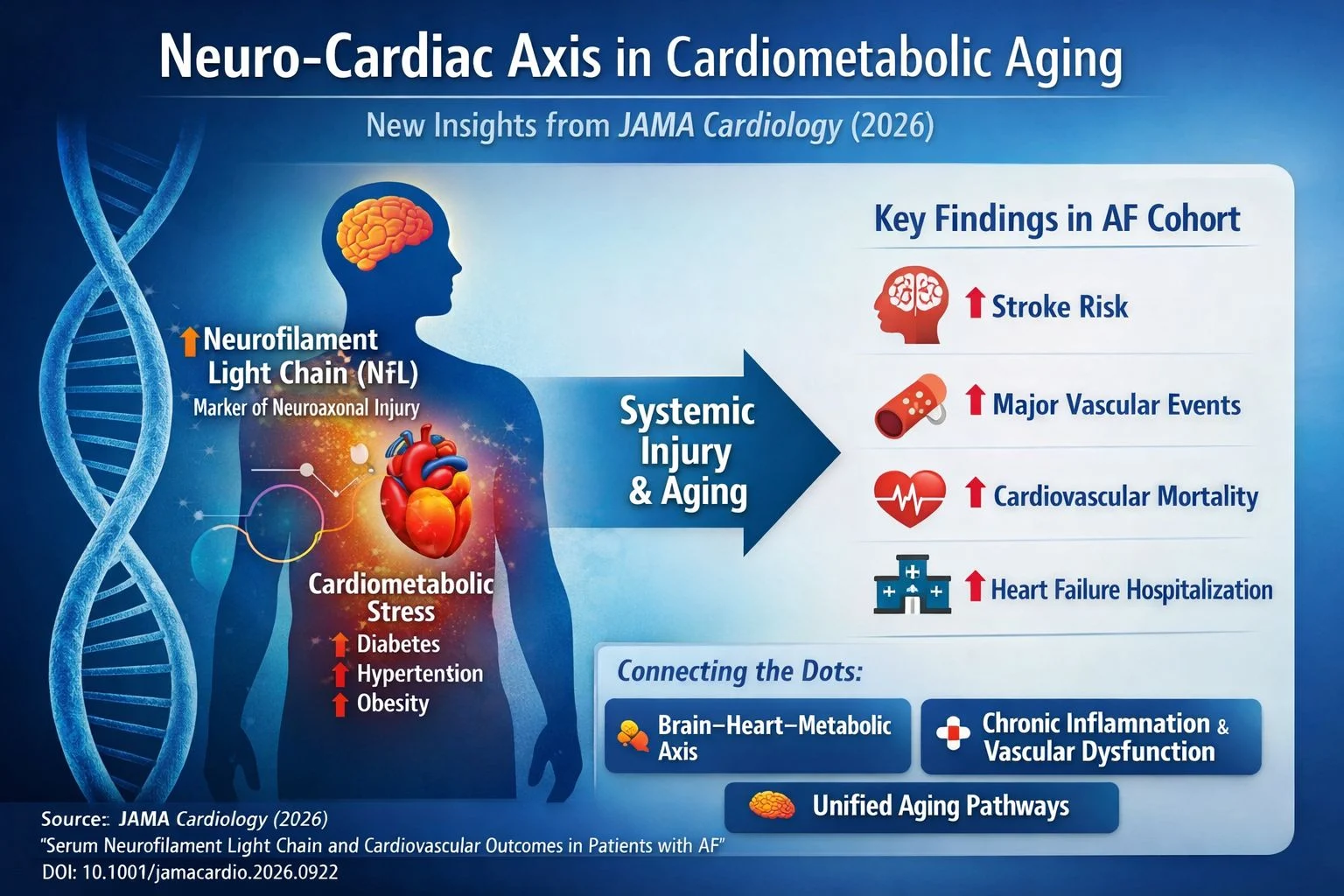
“Neuro-Cardiac Axis in Cardiometabolic Aging: Expanding the Risk Paradigm
While exploring the JAMA Cardiology online portal, a recent 2026 study highlighted around ACC26 caught my attention:
Elevated serum neurofilament light chain (NfL) – a marker of neuroaxonal injury – was strongly associated with:
- Increased stroke risk
- Major vascular events
- Higher cardiovascular mortality
- Greater heart failure hospitalization
What makes this important
This study highlights a critical shift in how we understand cardiovascular disease:
Signals of neuronal injury may reflect systemic processes driving cardiovascular risk
Connecting the dots: Neuro–Cardiac–Metabolic axis
- Cardiometabolic stress (diabetes, hypertension, obesity) drives chronic inflammation and vascular dysfunction
- These processes extend beyond the heart, contributing to subclinical neuroaxonal injury
- Biomarkers like NfL may capture this integrated biology of aging and disease progression
Why this matters
- Moves beyond traditional risk markers toward multi-system biomarkers
- Opens avenues for integrated risk stratification across heart, brain, and metabolism
- Supports a shift toward precision cardiovascular medicine
Big picture
We are increasingly recognizing that:
Cardiovascular outcomes are shaped by interconnected systems—not isolated organs
Final Thought:
The future of cardiology may lie in decoding the neuro-cardiac axis, where brain health, metabolic stress, and vascular disease converge into a unified disease continuum.”
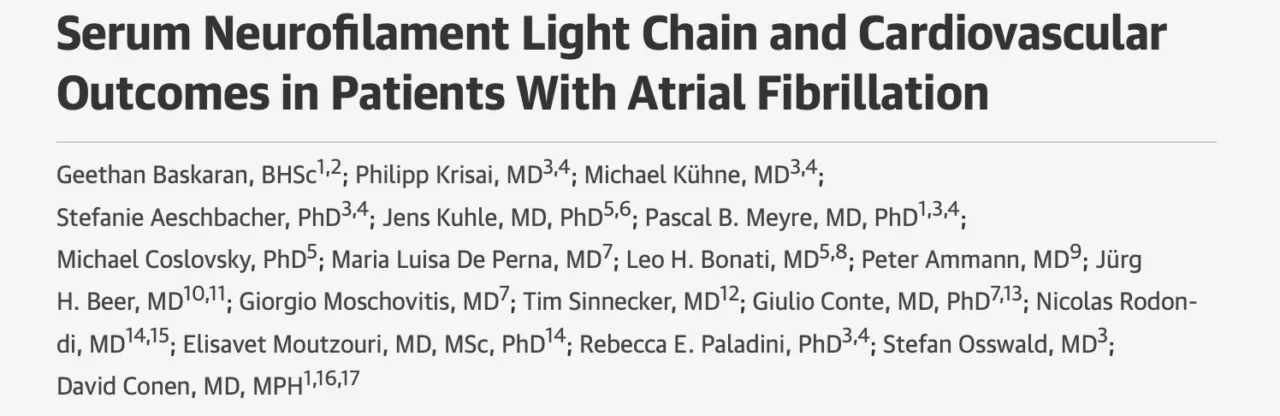
Title: Serum Neurofilament Light Chain and Cardiovascular Outcomes in Patients With Atrial Fibrillation
Authors: Geethan Baskaran, Philipp Krisai, Michael Kühne, Stefanie Aeschbacher, Jens Kuhle, Pascal B. Meyre, Michael Coslovsky, Maria Luisa De Perna, Leo H. Bonati, Peter Ammann, Jürg H. Beer, Giorgio Moschovitis, Tim Sinnecker, Giulio Conte, Nicolas Rodondi, Elisavet Moutzouri, Rebecca E. Paladini, Stefan Osswald, David Conen
Read the Full Article on JAMA Cardiology
Stay updated on all scientific advances with Hemostasis Today.
-
Oct 10, 2026, 17:58Archo Farzana Batool: Exploring Medical Writing Through an Article on Iron Deficiency Anemia
-
Oct 10, 2026, 17:53Assessing Frailty in Adults With Hemophilia – JTH
-
Oct 10, 2026, 17:52Fatma Sadeghi: Reducing Maternal Health Inequalities Through Nursing Advocacy
-
Oct 10, 2026, 17:50Grzegorz Hensler: How Apheresis Transformed Blood Cell Separation and Collection
-
Oct 10, 2026, 17:47Hemant K Sharma: Japan’s Universal Artificial Blood Research – A Potential Breakthrough in Transfusion Medicine
-
Oct 10, 2026, 17:40John Strouse: Learning About Bleeding Disorders and Sickle Cell Disease at FWGBD
-
Oct 10, 2026, 17:34Mae Caime: Speaking at the Annual Women’s Retreat for the Hemophilia Community in Florida
-
Oct 10, 2026, 17:30Chokri Ben Lamine: PNH beyond the Textbook Triad
-
Oct 10, 2026, 17:29Ruah Alyamany: Thrombosis and Anticoagulation in Hematological Malignancies at SOHO KSA 2026