

Yves Bikorimana։ Normal MCV Doesn’t Always Mean Normal RBCs
Yves Bikorimana, CEO at MedData – Rwanda and Lab Scientist at The University Teaching Hospital of Kigali – Chuk, shared a post on LinkedIn:
”A normal Mean Corpuscular Volume (MCV) does not always mean the red blood cells are actually normal in size.
What’s happening here?
MCV measures the average size of red blood cells (RBCs).
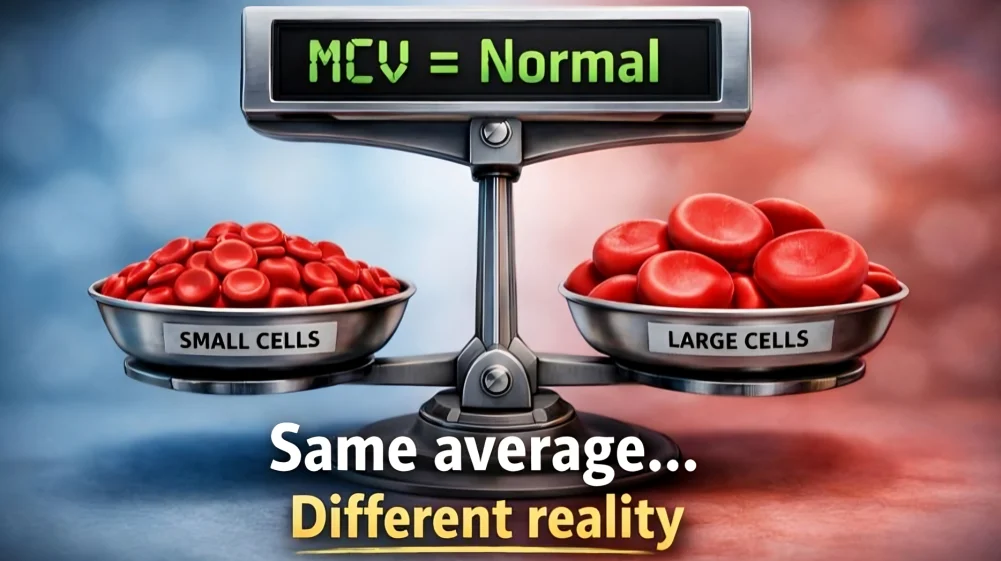
In the image:
- One side has small cells (microcytes)
- The other side has large cells (macrocytes)
When you average them together, the result can appear ‘normal’
So the lab value says ‘normal MCV,’ but in reality, there is a mixed population of abnormal cells.
This phenomenon is called:
Anisocytosis: meaning variation in red blood cell sizes.
Why does this matter clinically?
A normal MCV can hide underlying disease, such as:
- Combined deficiencies:
Iron deficiency – small cells
Vitamin B12 or folate deficiency – large cells
- Recent blood transfusion (mix of donor and patient cells)
- Certain bone marrow disorders
How do we detect the ‘different reality’?
We don’t rely on MCV alone. We also look at:
- Red Cell Distribution Width (RDW)
Measures variation in RBC size
High RDW = mixed population (like in the image)
- Peripheral blood smear
Directly shows the mix of small and large cells
Key takeaway:
- A normal average (MCV) can be misleading.
- Always interpret it alongside RDW and blood smear findings.”
Stay updated with Hemostasis Today.
-
Oct 7, 2026, 16:44Amor Salah: 2026 NCS/SCCM Guidelines for Managing Antithrombotic-Associated ICH
-
Oct 7, 2026, 16:04NETs in Thrombosis: From Mechanism to Therapeutic Target
-
Oct 7, 2026, 15:28Amir Samimi: Prognostic Value of Platelet Count in Resected HNSCC
-
Oct 7, 2026, 15:21Eloïse Laouenan: Bridging Immunity and Thrombosis in MVTE
-
Oct 7, 2026, 15:10Uthra Sundaram: Honouring Donors During International Plasma Awareness Week
-
Oct 7, 2026, 15:04Daniel Victor Ortigoza: Should Frail Older Patients With AF Switch From VKA to DOACs?
-
Oct 7, 2026, 14:53Susan Noone: Donor Turned Recipient Shares Lifesaving Transfusion Story
-
Oct 7, 2026, 14:49Aimee Burtenshaw: The Impact of the Infected Blood Inquiry on Hospital Transfusion Laboratories
-
Oct 7, 2026, 14:41Vikash Jaiswal: Does Timing Matter for Calcium in Pre-Eclampsia Prevention?