

André da Silva: Stroke Is Not an Explosion – It’s Often a Silent Loss of Blood Flow
André da Silva, Scrub Nurse at American Hospital Dubai, shared on LinkedIn:
”Most people imagine a stroke as a sudden ‘explosion’ in the brain.
In reality, the most common type is the opposite – a silent loss of blood flow.
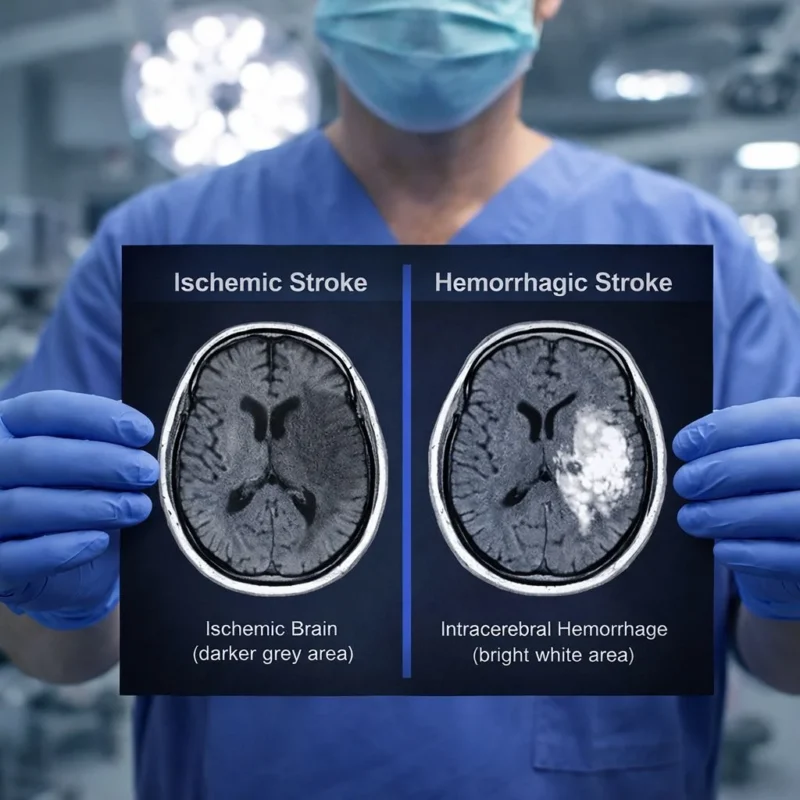
Stroke is broadly divided into two entities, each requiring fundamentally different management:
- Ischemic stroke (~85–87%)
An arterial occlusion interrupts cerebral perfusion, leading to rapid neuronal death — estimated at nearly 2 million neurons per minute.
Management: urgent reperfusion (e.g., thrombolysis with tPA or mechanical thrombectomy).
- Hemorrhagic stroke (~13–15%)
Vessel rupture causes intracranial bleeding, increasing pressure and damaging surrounding tissue.
Management: hemostasis, blood pressure control, and neurosurgical intervention when indicated.
Clinically, both can present identically:
- facial asymmetry
- limb weakness
- speech disturbance
- sudden neurological deficit
Neuroimaging: typically non-contrast CT – is the critical first step to differentiate them.
Treating blindly is not an option; the wrong intervention can be catastrophic.
This is why in stroke care, time is brain – and precision is just as vital as speed.
The intersection of neurology and neurosurgery remains one of the most time-sensitive and decision-critical areas in medicine – where seconds shape outcomes.
What concept in medicine changed the way you think about patient care?”
Stay updated with Hemostasis Today.
-
Oct 6, 2026, 16:43Beth Shirley: Xylitol Consumption Increases Platelet Reactivity and Cardiovascular Risk
-
Oct 6, 2026, 16:37Jared Rice: What Sets the Transfusion Threshold in Anemia of Prematurity?
-
Oct 6, 2026, 16:30Thirunavukkarasu Angappan: Immunoglobulin Decides How Much Plasma Gets Collected
-
Oct 6, 2026, 16:18Gemma Davies: New CMML Research Selected for Presentation at the 68th ASH Annual Meeting
-
Oct 6, 2026, 16:03Professor Csongor Kiss Receives the Kálmán Laki Prize – Hungarian Society of Thrombosis and Haemostasis
-
Oct 6, 2026, 15:52Mark Kheifets: A Massive Stent Thrombosis Requiring Aspiration Thrombectomy
-
Oct 6, 2026, 15:40Joseph Aslan։ Targeting Mitochondrial Permeability Transition To Reduce Platelet Thrombogenicity
-
Oct 6, 2026, 15:36Nominations Open for ISTH Outstanding Mentor Awards – ISTH
-
Oct 6, 2026, 15:17Walaa Obaid: How Warfarin Went From Poison To Medicine