


Can We Better Predict Who Is Most Likely to Have Another VTE After a First Event? – RPTH Journal
RPTH Journal shared a post on LinkedIn about a recent article by Eugenia Biguzzi, adding:
”Can we better predict who is most likely to have another VTE after a first event?
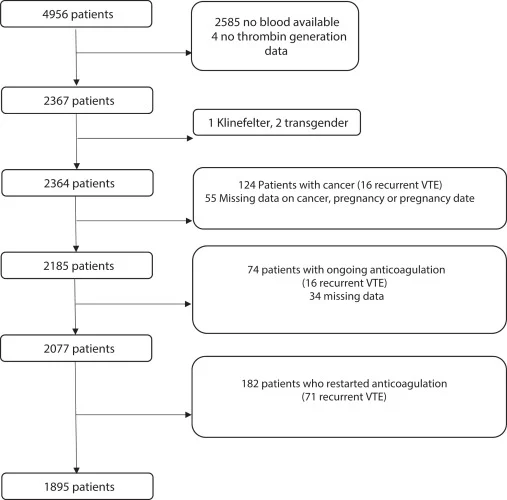
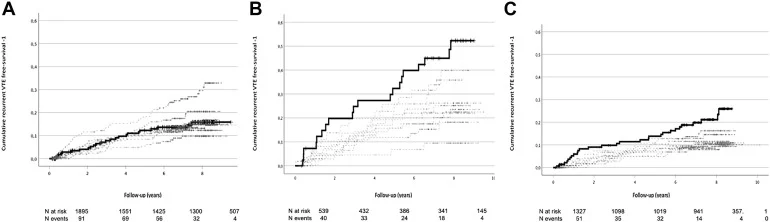
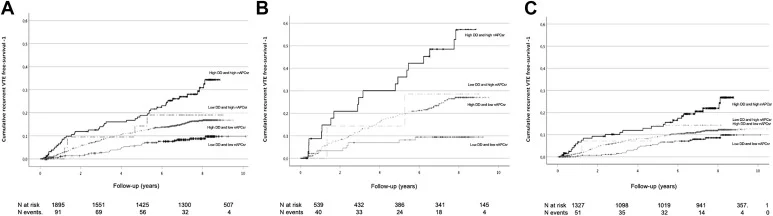
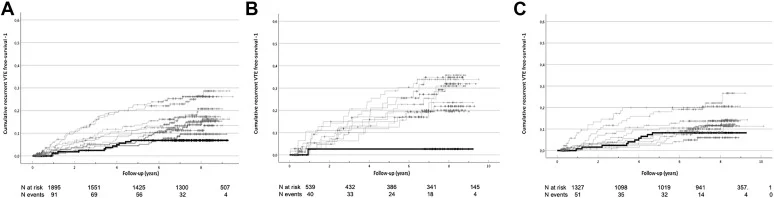
A new RPTH study suggests that combining d-dimer with thrombin generation may improve risk stratification for recurrent venous thromboembolism. In this cohort of 1,895 patients, recurrence risk was lowest in those with low d-dimer + low thrombin generation, intermediate when only 1 marker was elevated, and highest when both were elevated.
The signal was especially striking in unprovoked VTE. Patients with high d-dimer and high thrombin generation had an incidence rate of 9.80 per 100 patient-years, compared with 1.36 per 100 patient-years in those with low levels of both markers, with an adjusted hazard ratio of 8.59.
Why this matters:
Extending anticoagulation lowers recurrence risk, but bleeding risk remains the tradeoff. Tools that better separate low-, intermediate-, and high-risk patients could help guide more personalized decisions after a first VTE.
A key caveat: thrombin generation was measured with a specialized assay, which may limit immediate routine clinical use. Still, this study adds to the push toward biomarker-guided anticoagulation decisions rather than relying on broad clinical categories alone.”
Title: Recurrent venous thromboembolism: association with thrombin generation and d-dimer
Authors: Eugenia Biguzzi, Kristien Winckers, Tilman M. Hackeng, Frits R. Rosendaal, Astrid van Hylckama Vlieg
Read the Full Article on RPTH
Stay updated on all scientific advances with Hemostasis Today.
-
Oct 15, 2026, 19:41Looking Beyond Platelet Counts to Quality of Life in ITP – American Society of Hematology
-
Oct 15, 2026, 19:32Markus Gregorio Barbosa: Hepatic VPS35 and Cholesterol Homeostasis
-
Oct 15, 2026, 19:18Emerging Novel Therapies for Hereditary Hemorrhagic Telangiectasia – The Lancet Haematology
-
Oct 15, 2026, 19:04Umberto Pensato: EVT Treatment Effects Across Perfusion Profiles in MeVO Stroke
-
Oct 15, 2026, 18:26Chanakya Nayudu: Presenting My Research at ISTH Congress 2026 in Paris
-
Oct 15, 2026, 18:09Maha Othman: Students Lead World Thrombosis Day 2026 Awareness Events
-
Oct 15, 2026, 17:52Jill de Mol։ Rapamycin Modulates Immune Responses in Aged Atherosclerosis
-
Oct 15, 2026, 17:41Victor Aboyans։ Think About Lipids in VTE
-
Oct 15, 2026, 17:08Babu Mia։ Targeting PPM1D to Eliminate Malignant Stem Cells in Myeloproliferative Neoplasms