

Syed Sibtain Raza: White Blood Cells – Understanding Morphology for Better Diagnosis
Syed Sibtain Raza, Medical Laboratory Technologist, shared a post on LinkedIn:
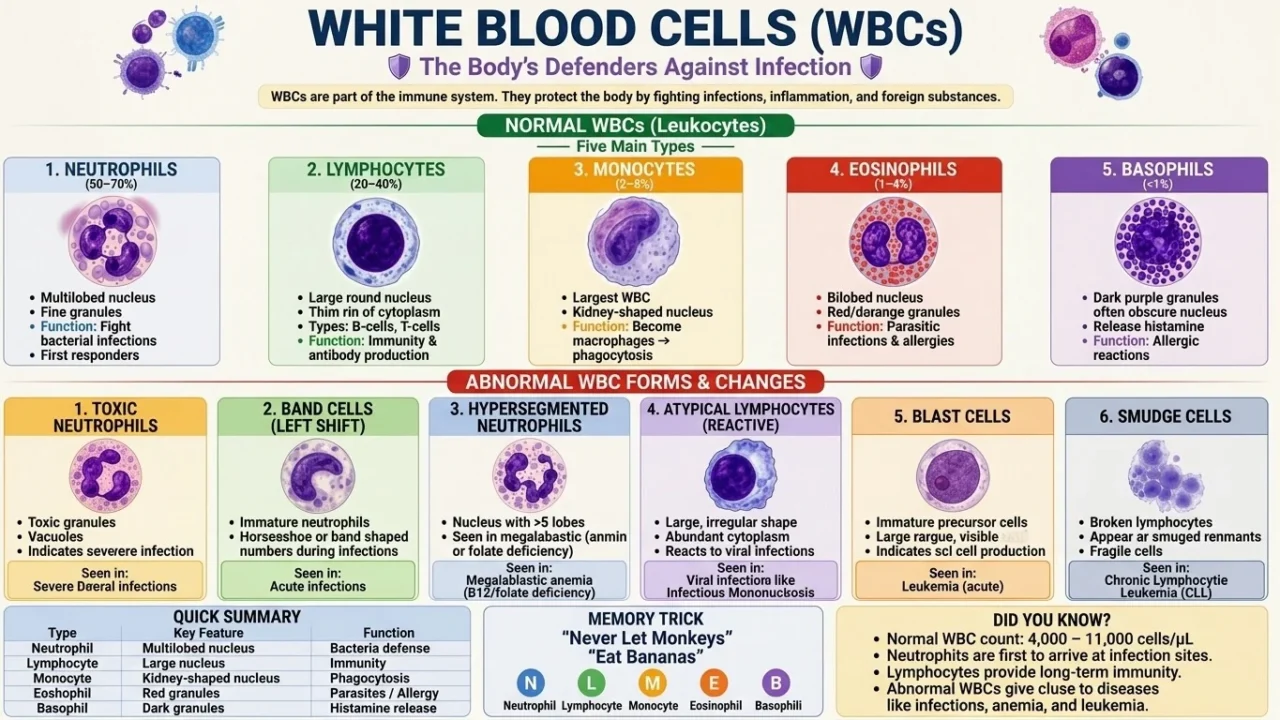
“White Blood Cells (WBCs): Understanding Morphology for Better Diagnosis
White blood cells play a vital role in protecting the body against infections, inflammation, and foreign invaders. However, beyond their basic function, their morphology provides critical diagnostic clues that help laboratory professionals identify underlying conditions early and accurately.
This infographic is designed to simplify and visually organize key concepts in hematology, covering both normal leukocyte types and important abnormal findings encountered in routine blood smear analysis.
What this covers:
Normal WBCs (Leukocytes):
- Neutrophils – First responders in bacterial infections
- Lymphocytes – Core of adaptive immunity
- Monocytes – Precursors to macrophages (phagocytosis)
- Eosinophils – Associated with parasitic infections and allergies
- Basophils – Involved in inflammatory and allergic responses
Abnormal WBC Forms:
- Toxic neutrophils – Indicator of severe infection
- Band cells (left shift) – Suggest acute inflammatory response
- Hypersegmented neutrophils – Common in Megaloblastic Anemia
- Atypical lymphocytes – Seen in viral infections such as Infectious Mononucleosis
- Blast cells – Strong indicator of Leukemia
- Smudge cells – Often associated with Chronic Lymphocytic Leukemia
For students and professionals in Medical Laboratory Technology, mastering WBC identification is essential for accurate reporting and clinical decision-making.
This visual guide aims to make revision faster, clearer, and more practical – especially for those working in labs or preparing for exams.
I’d love to hear your feedback or discuss how you approach peripheral smear interpretation.”
Stay updated with Hemostasis Today.
-
Sep 27, 2026, 15:49Rana Al-Hrout: Iron Deficency – Is Ferritin 15ng/mL or Less Still the Cutoff?
-
Sep 27, 2026, 15:49Ayushi Sharma: What I Thought Transfusion Medicine Would Be vs What It Actually Is
-
Sep 27, 2026, 15:48William Wallace: How Much Human Research Is Behind the Supplements We Take?
-
Sep 27, 2026, 15:46Franck Perraudin: Lp(a) Lowering Alone May Not Be Enough
-
Sep 27, 2026, 15:41Ahmed Hamandi: Sharing Real-World HSCT Experience at the Iraqi Society of Haematology Conference
-
Sep 27, 2026, 15:39Co-creating Digital Support With Young Stroke Survivors – European Stroke Organisation
-
Sep 27, 2026, 15:39Eleri Schiavone: Celebrating 80 Years of the Welsh Blood Service
-
Sep 27, 2026, 15:38Jessica Garcia: Standing Where VWD Was First Recognized 100 Years Later
-
Sep 27, 2026, 15:37Heghine Khachatryan: A Meaningful Step Forward for Inherited Blood Disorders in Africa