

ICHCC/LinkedIn
May 2, 2026, 10:24
From Gene Mutation to Clot Risk in Factor V Leiden – ICHCC
Iranian Comprehensive Hemophilia Care Center shared a post on LinkedIn:
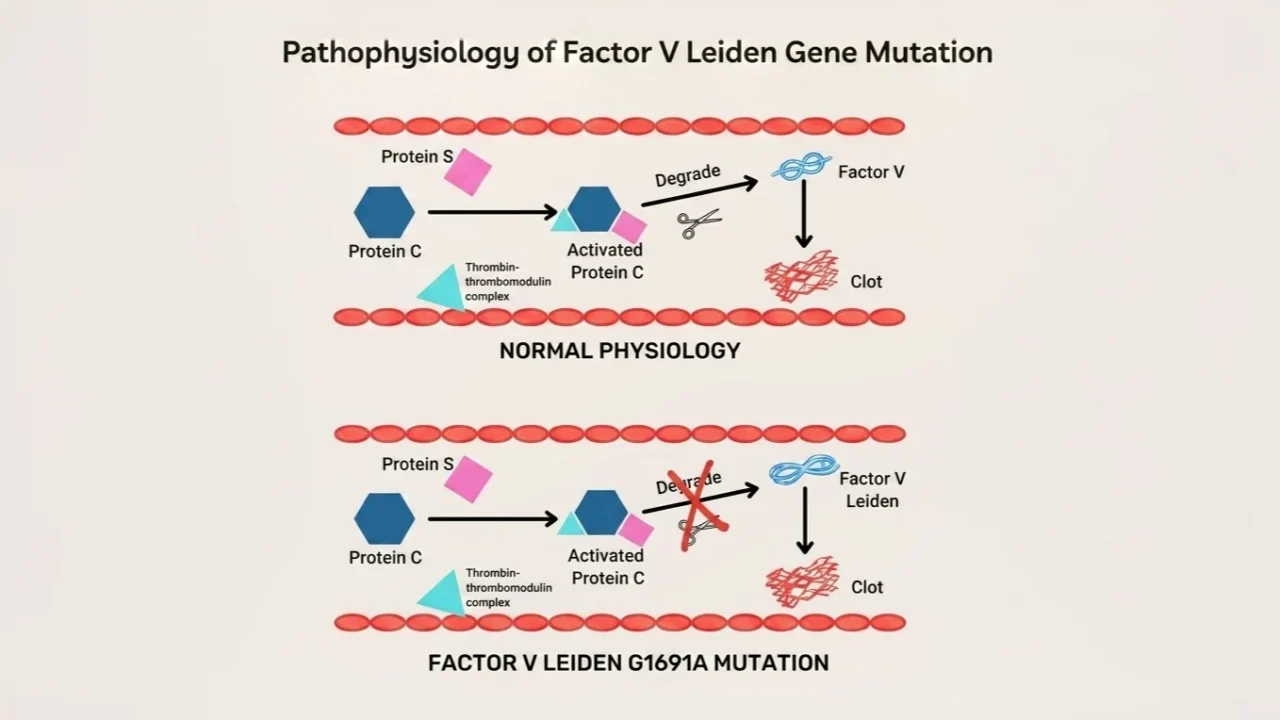
- is the most common inherited blood clotting disorder in populations of European descent, caused by a mutation in the \(F5\) gene. It makes blood more prone to clotting (thrombophilia) because the mutated Factor V protein resists inactivation by protein C.
- While most carriers never experience a clot, it significantly increases the risk of deep vein thrombosis (DVT) and pulmonary embolism.”
Stay updated with Hemostasis Today.
-
Sep 21, 2026, 15:56Anita Zaidi: Why Only 2% of Health Research and Development Goes to Women’s Conditions
-
Sep 21, 2026, 15:49Omid Khalafi: Gating Strategy and How Do We Decide Which Cells to Analyze
-
Sep 21, 2026, 15:44Levacetylleucine: A New Therapeutic Approach to Ataxia Telangiectasia
-
Sep 21, 2026, 15:40Andreas Tridimas: The Diagnostic Traps of Lipaemic Blood – Why a Normal Amylase Can Mislead You
-
Sep 21, 2026, 15:33Arsene Mekinian: Exploring Cardiac Involvement in Behçet’s Disease
-
Sep 21, 2026, 15:23Anis Mahjoubi: MRI Findings of Krukenberg Tumors
-
Sep 21, 2026, 15:08Fikreab Tesfaye Tefera: 10 Practical Take-Home Points for Diagnosing Iron Deficiency Anemia
-
Sep 21, 2026, 14:10Aswin K Mohan: Lessons from TRANSCON 2026 – Building Resilient Blood Supply Systems Before Crisis Hits
-
Sep 21, 2026, 14:00Vincent Lu: Beyond PT and aPTT – How Hemostasis Evolves Across a Lifetime