

Abhishek Kumar: New Horizons in Hemophilia B Treatment and Prevention
Abhishek Kumar, Lead Analyst at DelveInsight Business Research LLP, shared a post on LinkedIn:
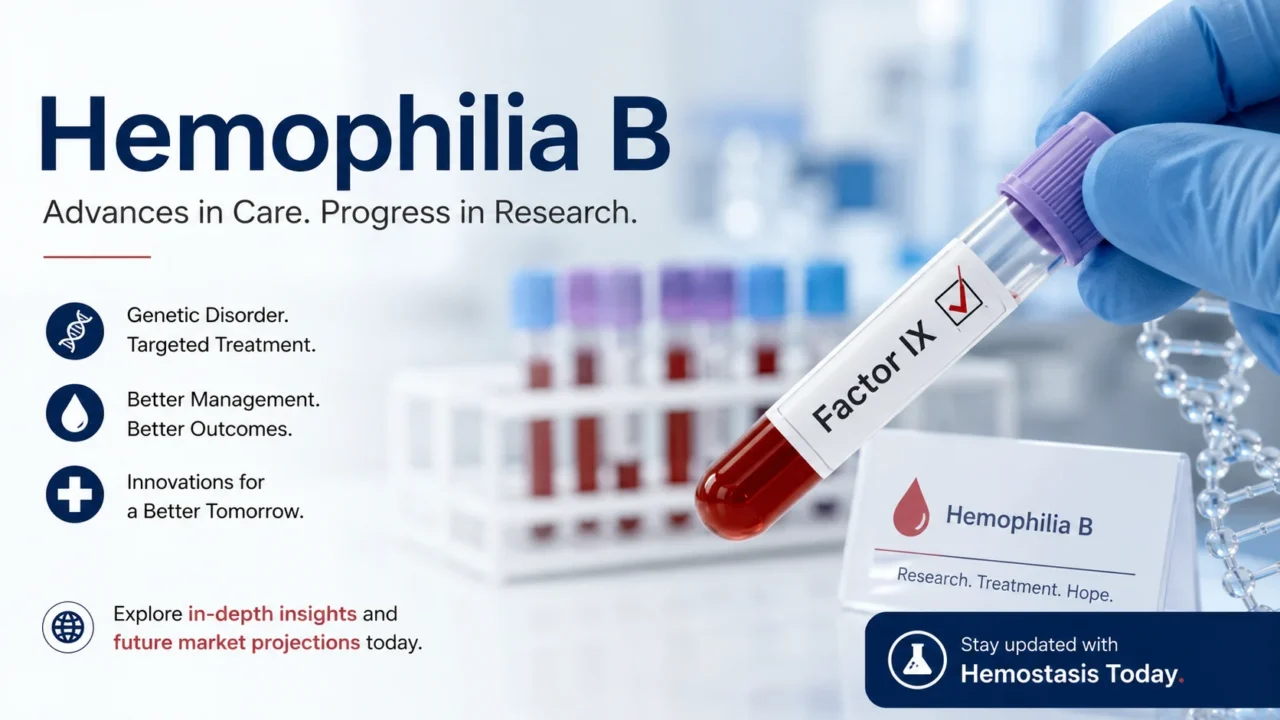
“Hemophilia B: Genetics, Clotting Challenges, and Modern Treatment Advances
Hemophilia B is a rare inherited bleeding disorder caused by factor IX deficiency due to F9 gene mutations.
It follows an X linked recessive pattern, affecting mostly males while females are carriers.
Reduced factor IX disrupts the intrinsic coagulation pathway, leading to unstable clots and prolonged bleeding after injury.
Severity depends on factor levels.
Management focuses on replacing factor IX through recombinant or plasma derived concentrates, used on demand or prophylactically.
Newer options like extended half life therapies and gene therapy aim to improve long term control and quality of life.
Early diagnosis and care are essential for preventing complications.
Recent Developments in Hemophilia B Clinical Research
In March 2025, Sanofi announced that the U.S. Food and Drug Administration (FDA) approved Qfitlia, the first antithrombin-lowering (AT) therapy for routine prophylaxis to prevent or reduce the frequency of bleeding episodes in adult and pediatric patients (aged 12 or older) with Hemophilia A or B, with or without factor VIII or IX inhibitors.
The approval was based on data from the ATLAS phase 3 studies, which demonstrated clinically meaningful bleed protection as measured by annualized bleeding rates (ABR) across Hemophilia A and B patients, regardless of inhibitor status.
Key Hemophilia B Companies shaping the competitive landscape include: BIOCAD, Gyre Therapeutics, Be Biopharma, Regeneron Pharmaceuticals, Inc., Intellia Therapeutics, Inc., Suzhou Alphamab Co., Ltd., Equilibra Bioscience, UBI Pharma Inc., Staidson (Beijing) Biopharmaceuticals Co., Ltd, and others.
Explore in-depth insights and future market projections today.”
Stay updated with Hemostasis Today.
-
Nov 8, 2026, 19:31Anna Kajaste-Rudnitski: Presenting AAV-Induced p53 Signalling in Human CNS Cells at ESGCT 26
-
Nov 8, 2026, 19:29David McIntosh: Cybersecurity Matters, but Blood Availability Remains the Bigger Challenge
-
Nov 8, 2026, 19:26Wenxue Ma: An Integrative Framework for Macrophage-Mediated Therapeutic Resistance in Cancer
-
Nov 8, 2026, 19:25Yildiz Yigit: Presenting a Polycythemia Vera Case at the MPN Subcommittee Session
-
Nov 8, 2026, 18:56Denis Oduor: Strengthening the Regulation and Delivery of Blood Transfusion and Transplantation Services
-
Nov 8, 2026, 18:28Raghavendra Rao: A Narrative Review on Chronic Venous Disease during Pregnancy
-
Nov 8, 2026, 17:57Dhiren Patel: PLD1-Derived Phospholipids Regulate NAD Kinase and ROS Production in Neutrophils
-
Nov 8, 2026, 17:48Andra T.: What Causes Antiphospholipid Syndrome? – Four Steps, not One Cause
-
Nov 8, 2026, 17:38Nasrin Samadi: Can a Normal Clotting Test Be Misleading?