

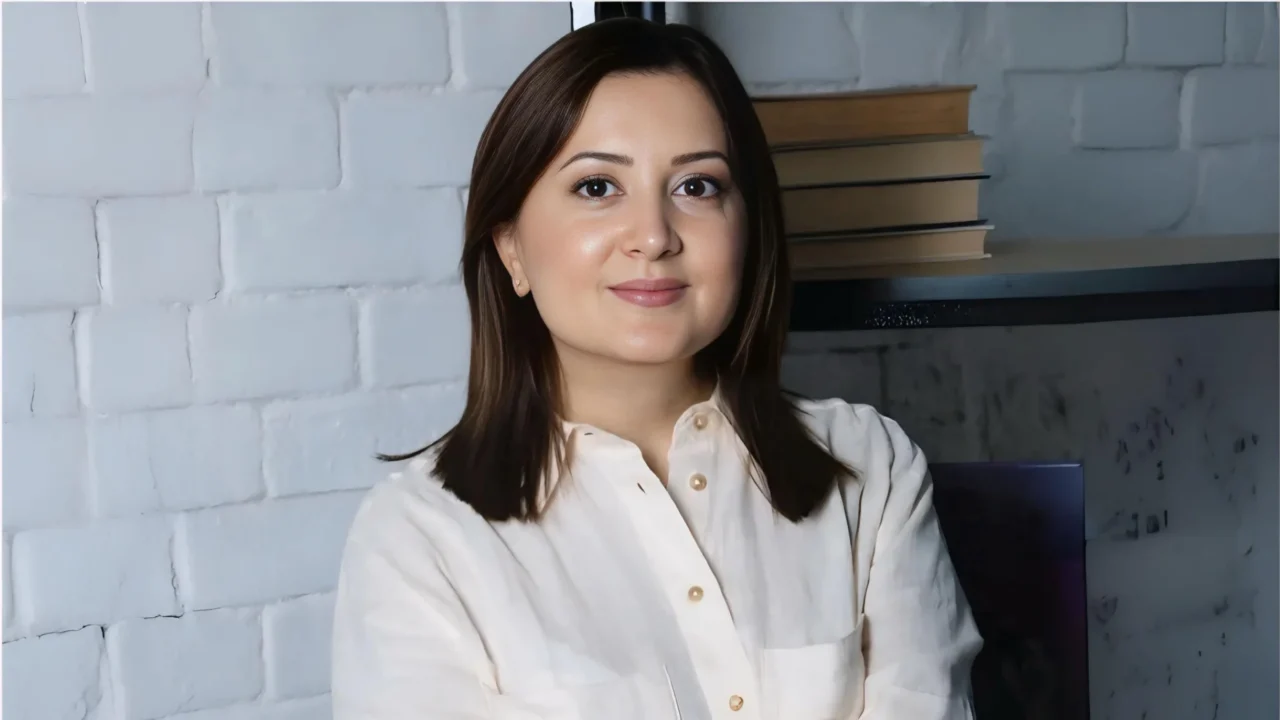
Heghine Khachatryan: The Emerging Era of Immunothrombosis and Precision Vascular Medicine
Heghine Khachatryan, Editor-in-Chief of Hemostasis Today, Head of Hemophilia and Thrombosis Center at Yeolyan Hematology and Oncology Center, shared RPTH’s post on LinkedIn:
“An outstanding and conceptually rich review highlighting how modern platelet biology has moved far beyond the classical ‘hemostasis-only’ paradigm.
What is particularly compelling is the emerging view of platelets as dynamic immune-effector cells that actively orchestrate thromboinflammation, vascular surveillance, innate immunity, and tissue signaling.
The idea that platelet phenotypes are context-dependent rather than simply ‘activated’ or ‘resting’ reflects a major shift in contemporary hematology and vascular biology.
Especially important are the implications for:
- immunothrombosis and NETosis,
- cancer-associated thrombosis,
- sepsis and endothelial dysfunction,
- autoimmune and inflammatory diseases,
- and precision antithrombotic therapy.
The discussion around platelet heterogeneity and modular effector programs may ultimately reshape how we classify thrombotic and inflammatory disorders in the coming years.
Selective targeting of pathogenic thromboinflammatory pathways while preserving physiologic vascular protection remains one of the most important unresolved challenges in the field.
A highly valuable contribution for clinicians and researchers working across hemostasis, thrombosis, vascular medicine, immunology, and translational hematology.”
RPTH journal shared a post on LinkedIn about recent article by Raphael Escaig et al., adding:
“Are platelets really just clotting cells or immune orchestrators?
We’ve long viewed platelets through a hemostasis lens.
But emerging data are reshaping that paradigm.
A new State-of-the-Art review in RPTH breaks this wide open.
Here’s the key signal:
- Platelets actively coordinate innate and adaptive immunity
- Distinct effector programs (procoagulant, secretory, immune-interacting) operate in parallel
- These functions are context-dependent, protective vs pathogenic
What’s changing under the hood:
- Platelets migrate (Arp2/3-driven haptotaxis) to sites of injury and infection
- Procoagulant platelets localize coagulation to microlesions (not just thrombi)
- Platelet-neutrophil interactions drive NETosis and thromboinflammation
- Platelet aging shifts function – hemostatic – immune
Conceptual insight:
- Platelets are not ‘activated vs resting’
- They operate as modular effector systems tuned by the microenvironment
Big questions for the field:
- What dictates which platelet program dominates in disease?
- Can we selectively block thromboinflammation without impairing vascular protection?
- How does platelet programming (e.g., megakaryocyte origin, cargo) shape outcomes?
- Platelet biology is evolving, and it’s becoming clear that thrombosis, inflammation, and immunity are deeply intertwined.”
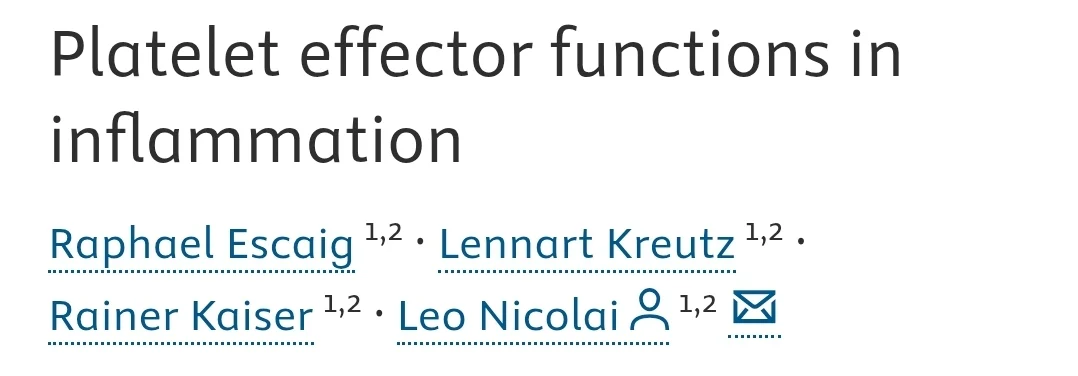
Title: Platelet effector functions in inflammation
Authors: Raphael Escaig, Lennart Kreutz, Rainer Kaiser, Leo Nicolai
Other posts featuring Heghine Khachatryan and RPTH journal on Hemostasis Today.
-
Sep 30, 2026, 01:52Javed Anees: DADA2 – When a Young Stroke Is More Than a Stroke
-
Sep 30, 2026, 01:51How a Venous Thrombus Becomes Revascularized – ISTH
-
Sep 29, 2026, 22:45Victor Agunyego: Paracetamol – The Most Common Drug We Underestimate
-
Sep 29, 2026, 22:42Nova Sinclair: Advancing the Future of Hematology – Meet Our 2027 Organizing Committee
-
Sep 29, 2026, 22:41Lorenz Räber: Intracoronary Imaging in PCI – Why, When, How, and Which Modality?
-
Sep 29, 2026, 22:31Selma Turkovic: Pleased to Deliver the Opening Presentation at Kingston Hospital
-
Sep 29, 2026, 22:31Miguel Teran: Ultrasound and Simulation in Arterial Blood Sampling
-
Sep 29, 2026, 22:28Mohammad Refaei: Navigating Your Career in Hematology From Training to Practice
-
Sep 29, 2026, 22:27Matteo Foschi: 10 Clinical Pearls for Antithrombotic Therapy in Secondary Stroke Prevention