

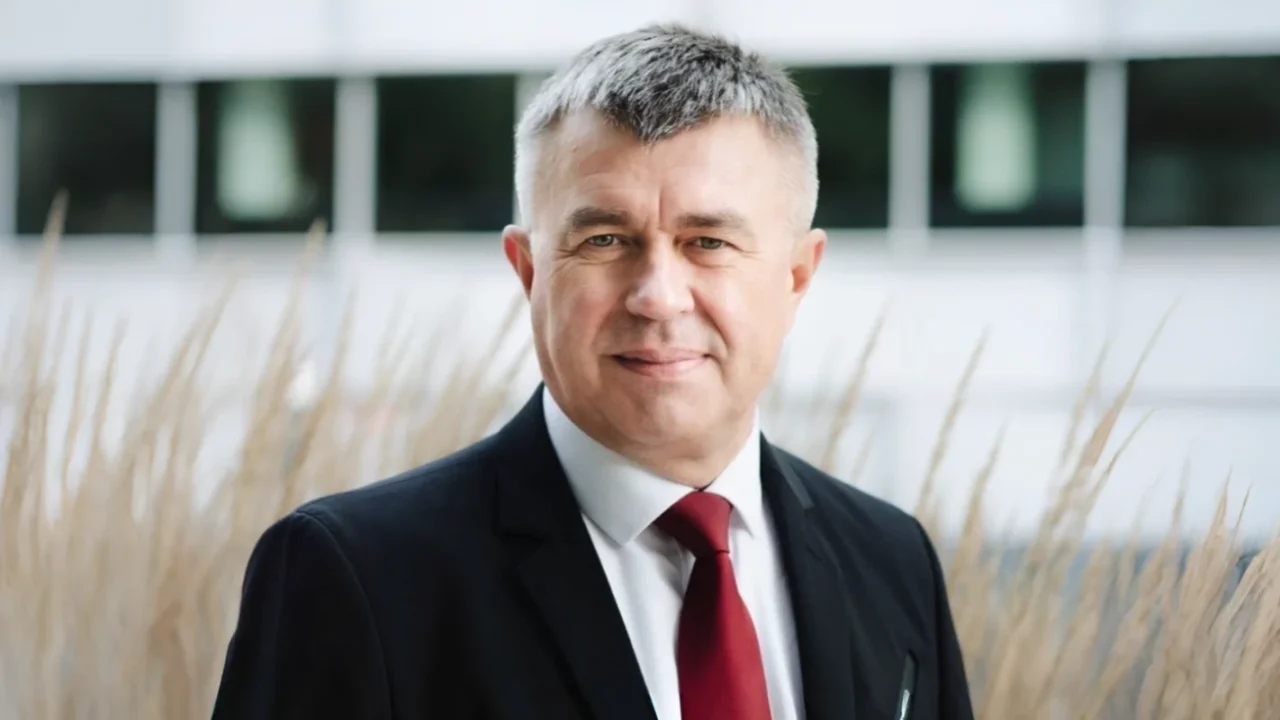
Dalius Jatužis: Our AI-Driven Automated Stroke Registry Data Extraction Gets Best Poster Award at ESOC 2026
Dalius Jatužis, Dean of Faculty at Vilnius University Faculty of Medicine, shared on LinkedIn:
”A joint study by researchers from the Vilnius University Faculty of Medicine (VU MF), VUL Santaros Clinic (VUHSK), and the Health Management Institute in Brno (Czech Republic), titled ‘Combining a Large Language Model with Traditional Software Engineering Tools for Automated RES-Q Registry Variable Extraction’, has received the Best Poster Award at the European Stroke Organisation Conference ESOC2026, which has just concluded in Maastricht, the Netherlands.
Only six posters were selected for the award out of more than 2000 submissions.
The study presents a pilot algorithm that automatically extracts variables for the International Registry of Stroke Care Quality (RES-Q) directly from the hospital information system, combining a large language model (LLM) with conventional software engineering tools.
Evaluated on 100 ischemic stroke cases and 198 variables (13,872 data points in total), the algorithm achieved an overall accuracy of 89.2%. For 60 variables – including age, sex, pre-stroke modified Rankin Scale score, mechanical thrombectomy indicators and reperfusion timestamps – the extracted values matched the ground-truth dataset perfectly (Cohen’s κ or Spearman’s coefficient of 1.0).
It is expected that the final iterations of the algorithm will be able to extract registry variable data with accuracy equal to or even greater than that of trained medical personnel.
VUHSK is expected to become the first stroke center worldwide capable of automating data submission to an international stroke care quality registry.
Manual data collection for the registry currently takes around 20 minutes per patient, so automation at this scale offers a realistic path to substantially reducing the workload of registry data entry and accelerating stroke care quality improvement initiatives.
The concept developed by researchers at Vilnius University is widely applicable to many other areas of medicine that contribute data to international disease registries.
In the future, this research is expected to support the development of the learning health system paradigm at the national level in Lithuania.
The work attracted strong recognition and considerable interest from international colleagues. The authors plan to continue refining the algorithm.
Authors: Gertrūda Kaubrytė (VU MF), Agnė Ulytė (Department of Quality Management, VUHSK), Rytis Klimovič and Andrius Lukas Maslovas (Center of Informatics and Development, VUHSK), Robert Mikulik (St Anne’s University Hospital and Health Management Institute, Brno, Czech Republic), Dalius Jatužis and Rytis Masiliūnas (VU MF; R. Masiliūnas is also affiliated with the Department of Quality Management, VUHSK).”
Stay updated with Hemostasis Today.
-
Sep 29, 2026, 03:53Nahrwan Masaoodi: Iron Deficiency Can Exist Without Anemia
-
Sep 29, 2026, 03:38Muhammad Yousaf: Iron Deficiency Beyond Diet
-
Sep 29, 2026, 03:21Parvez Ahmed Chowdhury: Synthesizing Aspirin in the Organic Chemistry Lab
-
Sep 29, 2026, 03:12Ahmed Hamandi: Building the Future of Hematopoietic Transplantation in Iraq
-
Sep 29, 2026, 03:09M V Chandrakanth: Aspirin in CRC – Old Drug, New Precision Oncology?
-
Sep 29, 2026, 03:07Caroline Pothet: Advancing Treatment Development in Sickle Cell Disease and Thalassaemia
-
Sep 29, 2026, 02:53Astha Jain: Thalassemia Care Through a Public Health Lens
-
Sep 29, 2026, 02:50Emma Groarke: Starting a New Career Path in Homeland
-
Sep 28, 2026, 19:14Aditya Sharma: An Outstanding Start to the Final Day of VSS 2026!