

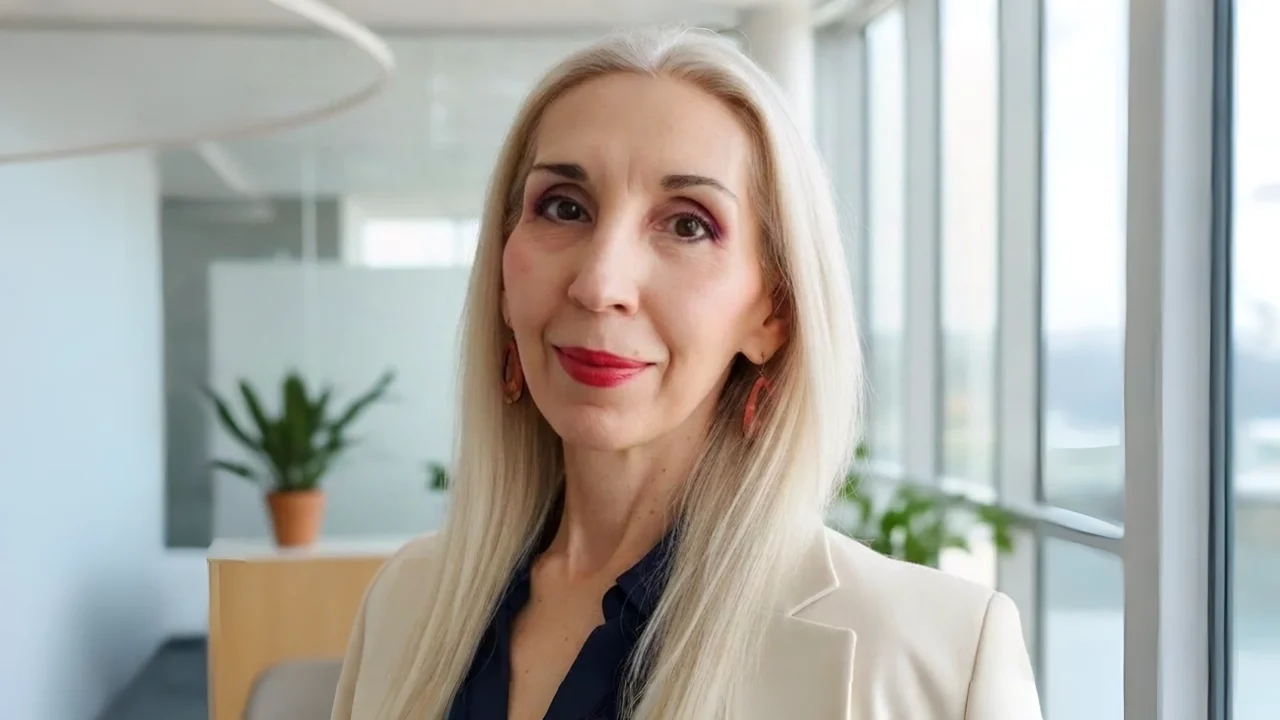
Genoveva Uzunova: Why It’s Time to Close the Sex Variable Gap in Healthcare
Genoveva Uzunova, Former Senior Staff Associate at Columbia University in the City of New York, shared a post on LinkedIn:
“Today marks Sex Diff Day and Mental Health Awareness Week – a perfect time to discuss a gap in our healthcare system:
Sex as a Biological Variable (SABV).
As both a psychiatrist and a genetherapy researcher, I’ve seen how ignoring sex differences, from brain stereotaxic coordinates in the lab to diagnostic scales in the psychiatry clinic, may lead to missed targets and missed diagnoses.
In this video, I explore why men’s depression often ‘masks’ as irritability, and why structural brain differences mean we must move toward truly precision psychiatry.
We cannot provide better care until we do better, sex-specific science.
We know that the brains of female mice have many neuroanatomical and gene expression differences with the brains of male mice, which may translate into different behaviors.
Diseases such as depression, anxiety, autism, Alzheimer’s disease, multiple sclerosis, Systemic lupus erythematosus (SLE), and breast cancer have higher rates in women than in men.
In connection with today, my dear Mom, Anelia Uzunova, published a letter in Nature in 1976 with her co-authors Estelle Ramey and Peter Ramwell, on the Effect of testosterone, sex and age on experimentally induced arterial thrombosis.
My views in this presentation are based on my professional experience and literature searches.
I have discussed many of them, particularly relating to gene therapy and depression, with my supervisors but have met with some resistance as this will complicate the studies and work.
When I researched brain gene therapies for neurodegenerative disorders, I measured the Bregma-Lambda distances in our four transgenic mouse strains and found differences between strains and males and females.”
Stay updated with Hemostasis Today.
-
Sep 29, 2026, 22:45Victor Agunyego: Paracetamol – The Most Common Drug We Underestimate
-
Sep 29, 2026, 22:42Nova Sinclair: Advancing the Future of Hematology – Meet Our 2027 Organizing Committee
-
Sep 29, 2026, 22:41Lorenz Räber: Intracoronary Imaging in PCI – Why, When, How, and Which Modality?
-
Sep 29, 2026, 22:31Selma Turkovic: Pleased to Deliver the Opening Presentation at Kingston Hospital
-
Sep 29, 2026, 22:31Miguel Teran: Ultrasound and Simulation in Arterial Blood Sampling
-
Sep 29, 2026, 21:47Javed Anees: DADA2 – When a Young Stroke Is More Than a Stroke
-
Sep 29, 2026, 22:28Mohammad Refaei: Navigating Your Career in Hematology From Training to Practice
-
Sep 29, 2026, 22:27Matteo Foschi: 10 Clinical Pearls for Antithrombotic Therapy in Secondary Stroke Prevention
-
Sep 29, 2026, 22:26A Global Call for Action on Cardiovascular Health on World Heart Day – ISTH