

Antiphospholipid Syndrome: A Thrombo-Inflammatory Autoimmune Disorder Associated with Thrombosis and Pregnancy Morbidity
Antiphospholipid syndrome (APS) is an autoimmune thrombo-inflammatory disorder marked by recurrent venous and arterial thrombosis, pregnancy complications, and persistent antiphospholipid antibodies (aPL). Once seen mainly as a coagulation problem, APS is now recognized as immune-mediated, involving endothelial dysfunction, complement and platelet activation, and immunothrombosis.
It can be primary or associated with other autoimmune diseases, especially Systemic Lupus Erythematosus (SLE). Advances in molecular immunology and vascular biology have clarified APS pathogenesis and clinical variability.
The 2023 ACR/EULAR classification offers a more specific, risk-focused framework. Despite therapeutic progress, recurrent thrombosis, catastrophic APS, and non-criteria manifestations remain major clinical challenges.
Overview
Antiphospholipid syndrome (APS) is a common acquired autoimmune thrombophilia marked by thrombotic events and pregnancy complications associated with persistent antiphospholipid antibodies (aPL).
APS can affect any organ system, with manifestations from isolated deep vein thrombosis to ischemic stroke, recurrent pregnancy loss, microvascular disease, and catastrophic multiorgan thrombosis.
Although most frequent in women of reproductive age, APS occurs in both sexes and all ages.
APS is increasingly understood not just as a hypercoagulable state but as a thrombo‑inflammatory disorder involving innate immunity, endothelial injury, platelet activation, complement, and coagulation pathways.
This shift has informed classification and treatment; the 2023 ACR/EULAR criteria use a weighted scoring system to better reflect heterogeneity and risk. APS is clinically important because thrombosis may be the first sign – often in younger patients without traditional cardiovascular risks – and because of significant obstetric morbidity. Ongoing advances aim to improve risk stratification and disease‑specific therapies.
Epidemiology and Risk Factors
Antiphospholipid syndrome (APS) affects about 40–50 per 100,000 people worldwide, though underdiagnosis likely underestimates prevalence. It more often affects women, especially in obstetric APS, and is typically diagnosed between ages 30–50 (pediatric and elderly cases are increasingly reported).
Venous thromboembolism is the most common manifestation; arterial thrombosis, notably ischemic stroke in younger patients, is also a major cause of morbidity. Antiphospholipid antibodies can be transiently present during infections, but persistent positivity – more common in autoimmune diseases like SLE—is clinically important.
Thrombotic risk is increased by a triple-positive antibody profile (lupus anticoagulant, anticardiolipin, anti-β2 glycoprotein I), persistent lupus anticoagulant, high-titer IgG, smoking, hypertension, hyperlipidemia, estrogen exposure, and immobility; triple positivity confers the highest risk.
Pathophysiology
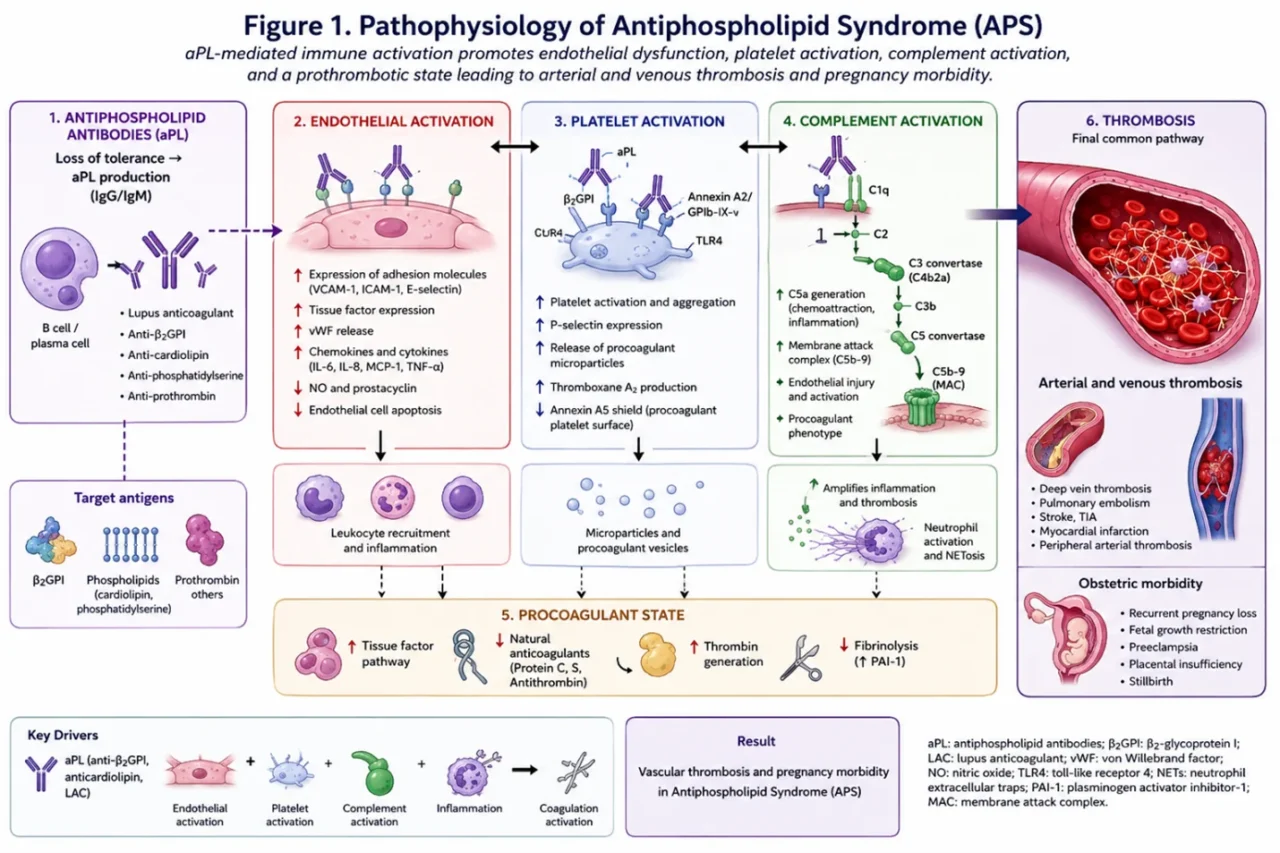
APS pathogenesis is multifactorial and involves a complex interaction between autoantibodies, endothelial dysfunction, inflammation, and coagulation pathways.
The principal pathogenic antibodies include lupus anticoagulant (LA), anticardiolipin antibodies (aCL), and anti-β2 glycoprotein I antibodies (anti-β2GPI).
Among these, lupus anticoagulant is considered the strongest predictor of thrombosis. β2-glycoprotein I plays a central role in APS immunopathology. Binding of anti-β2GPI antibodies to endothelial cells, monocytes, and platelets initiates intracellular signaling pathways that promote inflammation and thrombosis.
These mechanisms result in increased tissue factor expression, platelet aggregation, endothelial activation, complement activation, and enhanced thrombin generation.
Neutrophil extracellular traps contribute to clot formation by amplifying inflammatory and coagulation pathways. Complement activation further enhances vascular injury, especially in obstetric APS and catastrophic APS, where it contributes to placental dysfunction and microvascular thrombosis.
The two-hit hypothesis helps explain clinical expression.
Persistent antiphospholipid antibodies represent the first hit, while infection, surgery, trauma, estrogen exposure, pregnancy, or immobilization act as second triggers that precipitate thrombosis.
How does APS cause thrombosis?
The pathogenesis of APS-associated thrombosis reflects a sustained disruption of vascular homeostasis in which blood cells, the endothelium, and rheology are simultaneously altered. Platelets display a chronically activated phenotype, while leukocytes and neutrophils amplify inflammation and promote thrombus formation through tissue factor expression, reactive oxygen species, and neutrophil extracellular traps.
Red blood cells also contribute by increasing blood viscosity and impairing flow properties. The endothelium becomes functionally prothrombotic through increased von Willebrand factor release, P-selectin expression, and enhanced platelet adhesion. Together, these changes establish a multicellular thrombo-inflammatory network that sustains both thrombus initiation and propagation.
Clinical Manifestations
- Thrombosis
APS commonly presents with venous thromboembolism, including deep vein thrombosis, pulmonary embolism, and thrombosis in unusual sites such as cerebral, portal, or hepatic veins. Arterial thrombosis includes ischemic stroke, transient ischemic attacks, myocardial infarction, and peripheral arterial occlusion.
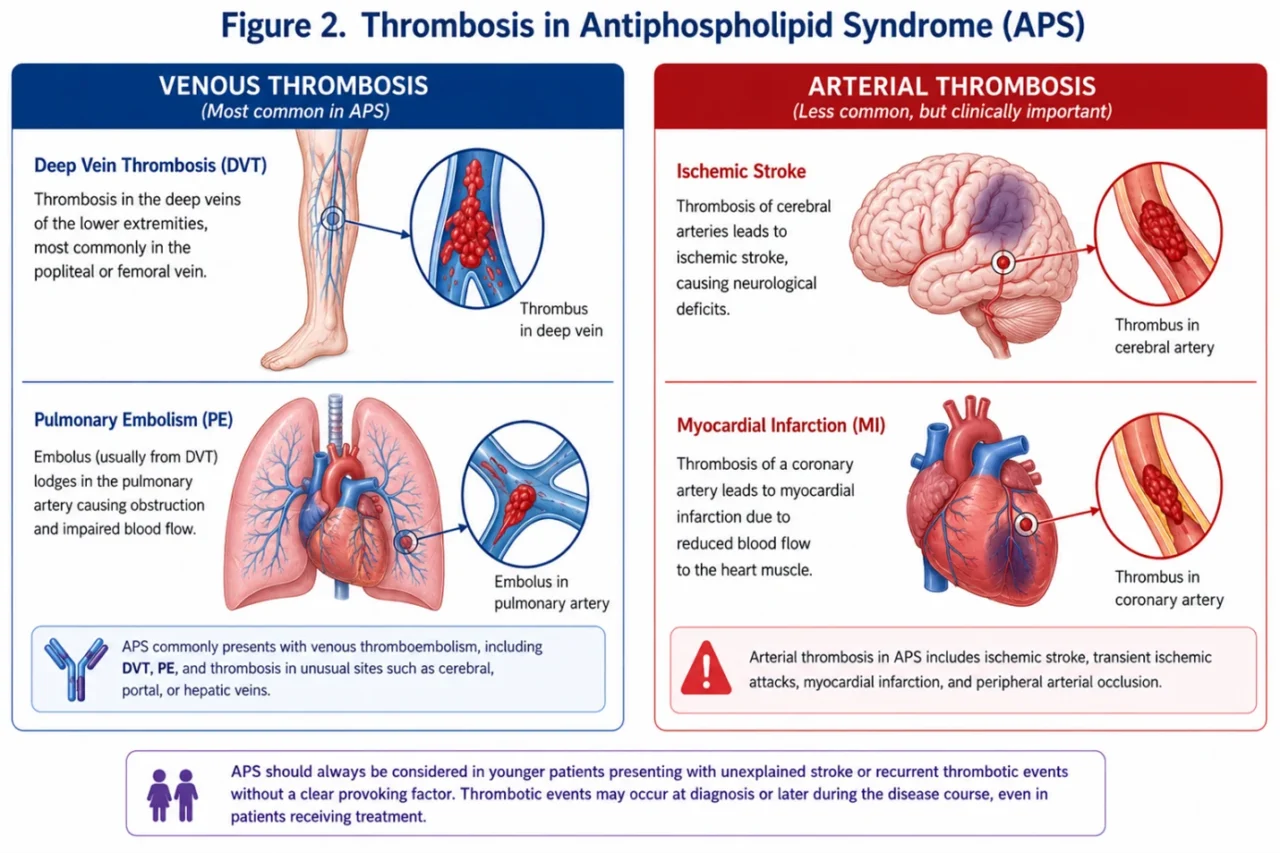
APS should always be considered in younger patients presenting with unexplained stroke or recurrent thrombotic events without a clear provoking factor. Thrombotic events may occur at diagnosis or later during the disease course, even in patients receiving treatment.
- Pregnancy Morbidity
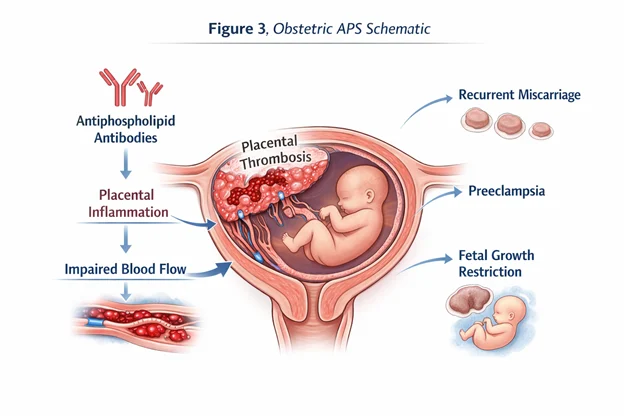
Pregnancy morbidity is a defining feature of APS and includes recurrent miscarriage, fetal loss after 10 weeks, severe preeclampsia, placental insufficiency, and intrauterine growth restriction. Placental thrombosis and complement-mediated inflammation are central mechanisms in obstetric APS.
Non-Criteria Manifestations
Beyond classical criteria, APS may also present with thrombocytopenia, livedo racemosa, cardiac valve disease, APS nephropathy, migraine, and cognitive dysfunction.
These manifestations may precede overt thrombotic disease and are increasingly recognized in clinical practice.
Catastrophic APS
Catastrophic antiphospholipid syndrome (CAPS) is a rare but severe form characterized by rapid multiorgan failure due to widespread microvascular thrombosis. It is often triggered by infection, surgery, trauma, or anticoagulation withdrawal and carries high mortality despite aggressive therapy.
How is APS diagnosed and classified?
APS diagnosis requires clinical evidence of thrombosis or pregnancy morbidity combined with persistent antiphospholipid antibodies.
Laboratory testing includes lupus anticoagulant, anticardiolipin IgG/IgM antibodies, and anti-β2-glycoprotein I IgG/IgM antibodies, with persistence on two occasions at least 12 weeks apart required for diagnosis.
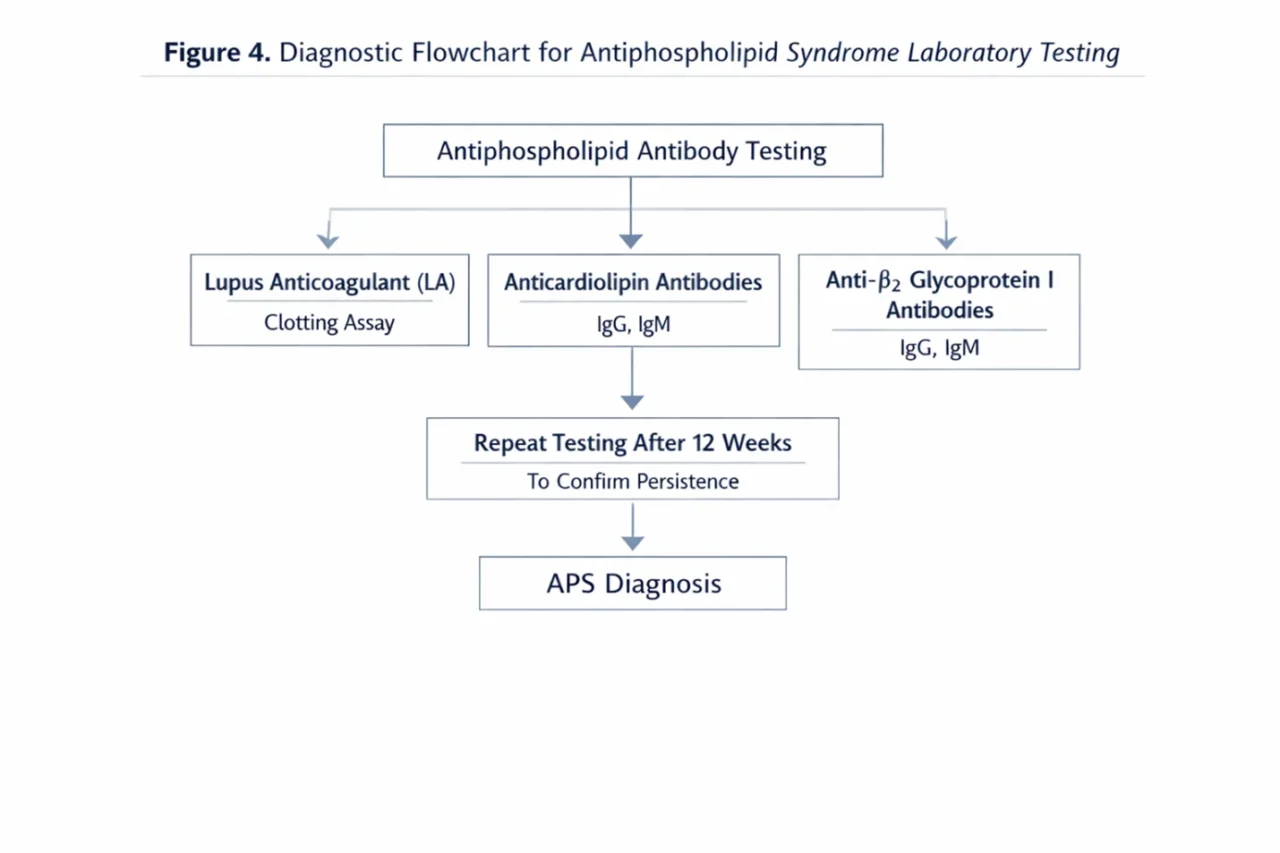
Transient antibody positivity related to infection or medications should not be considered diagnostic. The 2023 ACR/EULAR classification criteria introduced a weighted scoring system combining clinical and laboratory domains. These criteria are intended for research classification and should not replace clinical diagnosis.
Treatment and Management
Why do warfarin and aspirin remain central?
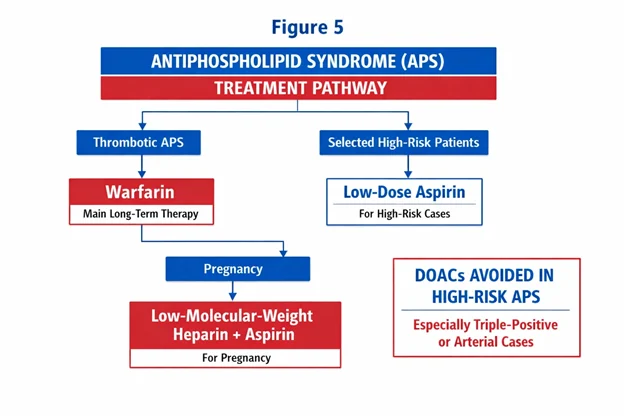
Vitamin K antagonists, especially warfarin, remain the cornerstone of treatment in thrombotic APS. For venous thrombosis, the usual target INR is 2.0–3.0, while higher intensity anticoagulation may be considered for selected arterial or recurrent events.
Low-dose aspirin may be considered in high-risk asymptomatic individuals with persistent antiphospholipid antibodies, especially in patients with SLE or triple positivity. In obstetric APS, aspirin is also used together with heparin during pregnancy.
What do recent trials show about DOACs?
Recent trials showed higher thrombotic recurrence with rivaroxaban and apixaban in high-risk APS, especially in triple-positive patients. As a result, DOACs are not recommended in triple-positive or arterial APS and should be used only with great caution, if at all, in selected low-risk venous cases when warfarin is not feasible.
How is obstetric APS managed?
Standard therapy in pregnancy includes low-dose aspirin combined with prophylactic low-molecular-weight heparin, which improves pregnancy outcomes and reduces fetal loss. In refractory cases, hydroxychloroquine, intravenous immunoglobulin, low-dose corticosteroids, or experimental complement inhibition may be considered.
What do recent trials and studies show from 2024 to 2026?
Recent APS research has continued to expand beyond conventional anticoagulation.
In 2025-2026, early-phase and recruiting studies have included complement-targeting strategies such as RAY121 and crovalimab, reflecting growing interest in blocking the classical complement pathway in APS.
The RAINBOW trial is evaluating RAY121, a novel anti-C1s monoclonal antibody, while the crovalimab APS study is assessing complement inhibition as add-on therapy in patients already receiving vitamin K antagonist treatment.
These studies remain investigational, but they support the concept that complement inhibition may become an important future strategy in selected APS phenotypes.
Current APS research also continues through pediatric registries, observational studies, and trial programs aimed at improving diagnosis, phenotype definition, and long-term outcome tracking.
Emerging therapies
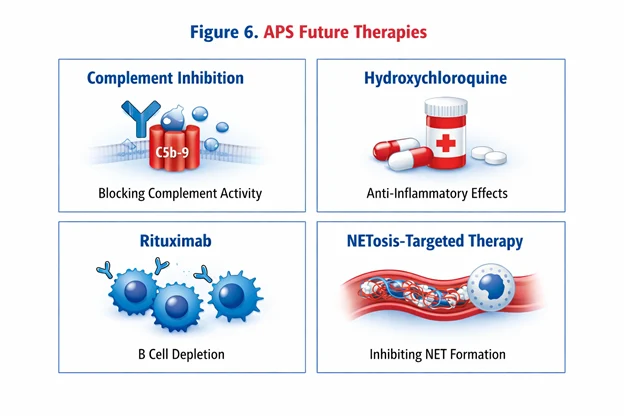
Current research focuses on immune modulation and vascular protection. Emerging strategies include complement inhibition in catastrophic APS, rituximab in selected refractory cases, hydroxychloroquine as adjunct therapy, statins for endothelial protection, and therapies targeting NETosis pathways.
Prognosis
The prognosis of APS depends on antibody profile, clinical phenotype, recurrence history, and adequacy of anticoagulation. Patients with triple positivity and arterial thrombosis have the highest risk of recurrence. Despite treatment, residual thrombotic risk remains significant in high-risk groups.
FAQ
1․ What is antiphospholipid syndrome (APS)?
APS is an autoimmune disease in which antiphospholipid antibodies increase the risk of blood clots and pregnancy complications.
2․ Why is APS clinically important?
APS can cause deep vein thrombosis, pulmonary embolism, stroke, heart attack, pregnancy loss, and in severe cases multiorgan thrombosis.
3․ What are the main antibodies in APS?
The main antibodies are lupus anticoagulant, anticardiolipin antibodies, and anti-β2 glycoprotein I antibodies.
4․ Who is at highest risk for thrombosis in APS?
Patients with triple positivity, persistent lupus anticoagulant, high-titer IgG antibodies, and associated autoimmune disease such as SLE are at highest risk.
5․ How is APS diagnosed?
Diagnosis requires at least one clinical event plus persistent antiphospholipid antibodies on repeat testing at least 12 weeks apart.
6․ What is the difference between APS diagnosis and classification?
Diagnosis is based on clinical judgment, while the 2023 ACR/EULAR criteria are meant for research classification and should not be used alone to diagnose individual patients.
7․ What is the standard treatment for thrombotic APS?
Warfarin-based long-term anticoagulation remains the standard treatment for thrombotic APS.
8․ Why are DOACs not recommended in high-risk APS?
Trials such as TRAPS showed increased thrombotic recurrence with rivaroxaban in triple-positive patients, so DOACs are not preferred in high-risk APS.
9․ How is APS managed during pregnancy?
Pregnant patients with APS are usually treated with low-dose aspirin plus low-molecular-weight heparin to improve pregnancy outcomes.
10․ Can APS be cured?
APS cannot usually be cured, but proper long-term treatment can greatly reduce thrombosis risk and improve outcomes.
Written by Anna Stepanyan, MD
Stay updated with Hemostasis Today.
-
Oct 10, 2026, 17:58Archo Farzana Batool: Exploring Medical Writing Through an Article on Iron Deficiency Anemia
-
Oct 10, 2026, 17:53Assessing Frailty in Adults With Hemophilia – JTH
-
Oct 10, 2026, 17:52Fatma Sadeghi: Reducing Maternal Health Inequalities Through Nursing Advocacy
-
Oct 10, 2026, 17:50Grzegorz Hensler: How Apheresis Transformed Blood Cell Separation and Collection
-
Oct 10, 2026, 17:47Hemant K Sharma: Japan’s Universal Artificial Blood Research – A Potential Breakthrough in Transfusion Medicine
-
Oct 10, 2026, 17:40John Strouse: Learning About Bleeding Disorders and Sickle Cell Disease at FWGBD
-
Oct 10, 2026, 17:34Mae Caime: Speaking at the Annual Women’s Retreat for the Hemophilia Community in Florida
-
Oct 10, 2026, 17:30Chokri Ben Lamine: PNH beyond the Textbook Triad
-
Oct 10, 2026, 17:29Ruah Alyamany: Thrombosis and Anticoagulation in Hematological Malignancies at SOHO KSA 2026