


Jason Brandon: On Lyophilized Hemostatic Supplementation at Simmons Research Day 2026
Jason Brandon, Research Technician at University of Pittsburgh School of Medicine, shared on LinkedIn:
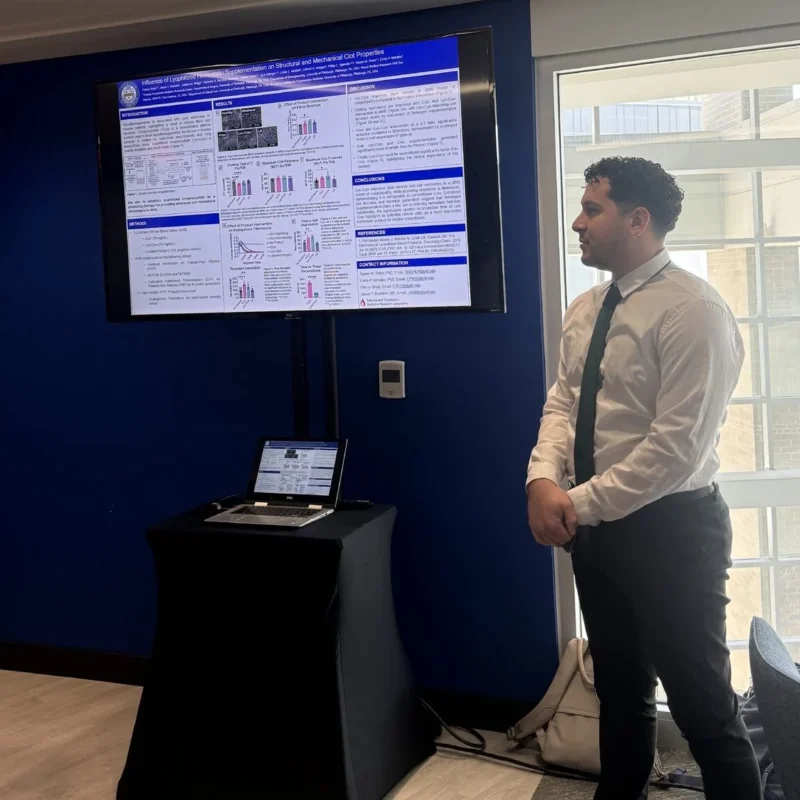
”Last week, I had the opportunity to present research I have been working on titled, ‘Influence of Lyophilized Hemostatic Supplementation on Structural and Mechanical Clot Properties,’ at the 24th Annual Simmons Research Day 2026, hosted by the Department of Surgery at the University of Pittsburgh.
I presented this work on behalf of my undergraduate mentee, which investigates how lyophilized hemostatic supplementation affects clot formation, mechanical strength, and structural properties, with the goal of improving our understanding of resuscitation strategies and hemostatic therapies in hemorrhage and trauma care.
I am grateful for the opportunity to share our findings, engage in scientific discussions, and learn about the innovative work being done across the department!
Thank you to my mentors and everyone who contributed on this work.
I look forward to continuing this research and contributing to advances in transfusion medicine and trauma research!”
Stay updated with Hemostasis Today.
-
Oct 15, 2026, 17:08Babu Mia։ Targeting PPM1D to Eliminate Malignant Stem Cells in Myeloproliferative Neoplasms
-
Oct 15, 2026, 16:26Hauke Horstmann: Can an Existing Drug Be Repurposed to Treat Atherosclerosis?
-
Oct 15, 2026, 15:19Bernadette Borrelli: AdventHealth Teams Unite to Mark World Thrombosis Day
-
Oct 15, 2026, 15:03Mohamed Magdy: The Hematological Consequences of Portal Hypertension in Banti Syndrome
-
Oct 15, 2026, 14:34Marium Khan: New Systematic Review Examines Asundexian Safety and Efficacy in Cardiovascular Disease
-
Oct 15, 2026, 14:03JTH Research Recap Explores Occult Malignancy Screening in DVT
-
Oct 15, 2026, 13:52Thierry Peyrard: A Heartfelt Thank You Ahead of Blood 2026
-
Oct 15, 2026, 12:40Todd Keitz: DVT and PE Explained in Five Minutes
-
Oct 15, 2026, 12:35Bartosz Hudzik: Balancing Ischemic and Bleeding Risk After ACS and PCI