


Fredrick Chalinga: The Reality of Massive Transfusion in Emergency Medicine
Fredrick Chalinga, Medical Technologist at Aga Khan University Hospital, shared a post on LinkedIn:
“When Blood can’t Wait: Massive Transfusion Decisions under Pressure.
‘Emergency transfusion is where science, speed, and clinical judgment meet.’
In massive hemorrhage, the priority is simple, keep the patient alive while minimizing transfusion risk.
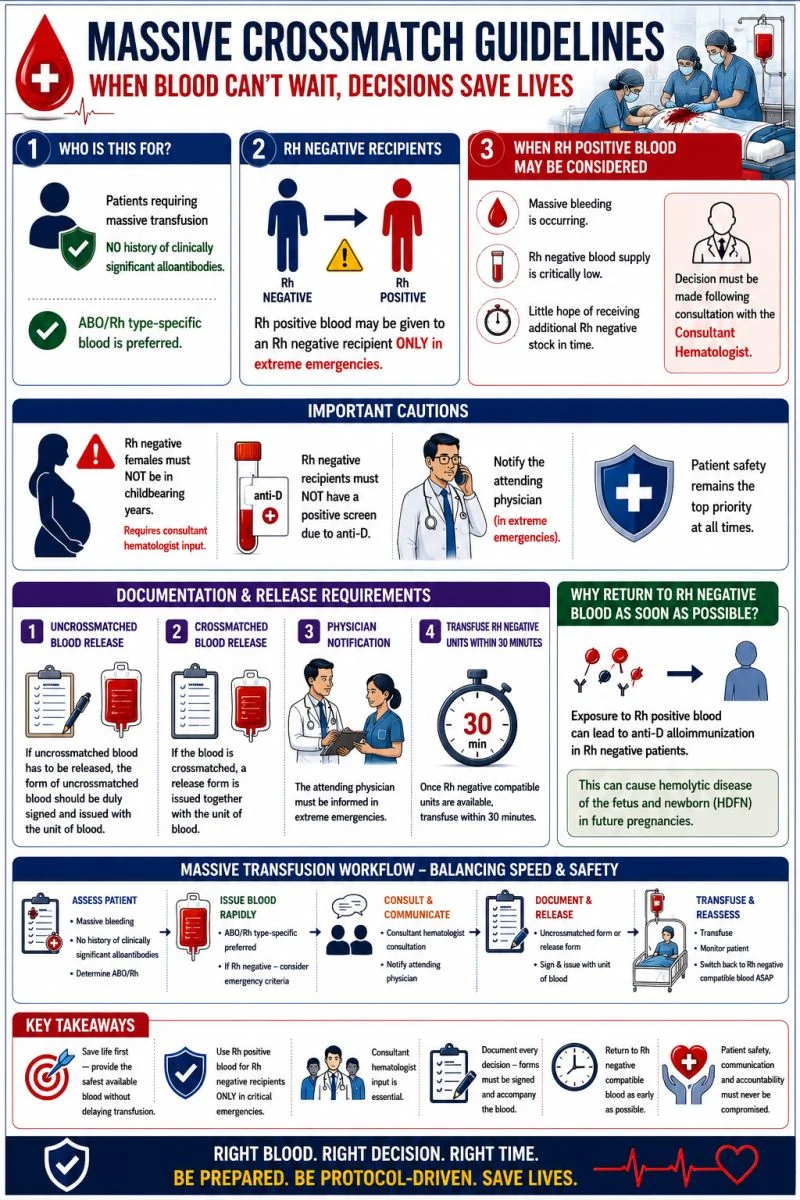
When there is no history of clinically significant alloantibodies, ABO/Rh type-specific blood is usually issued rapidly to support ongoing resuscitation.
But real emergencies are rarely perfect.
There are moments when an Rh-negative patient may receive Rh-positive blood, not because it is ideal, but because delaying transfusion could cost a life.
This may occur when: Massive bleeding is ongoing, Rh-negative blood stocks are critically low, additional compatible units are unlikely to arrive in time.
These decisions are never taken lightly.
Consultation with the Consultant Hematologist is essential before issuing Rh-positive blood to an Rh-negative recipient.
Special caution must always be exercised in Rh-negative females of childbearing potential because of the risk of anti-D alloimmunization and future hemolytic disease of the fetus and newborn (HDFN).
Likewise, patients with existing anti-D antibodies should never receive Rh-positive blood.
In emergency-release situations:
- The attending physician must be informed
- All emergency-release documentation must be signed
- Uncrossmatched blood forms or blood transfusion monitoring chart forms must accompany issued units
- Transition back to Rh-negative compatible blood should occur as soon as possible
In trauma bays, operating theatres, maternity emergencies, and intensive care units, blood bank professionals make rapid high-stakes decisions every day.
The challenge is not just providing blood quickly it is providing the safest possible blood under extreme pressure.
Transfusion medicine is often a balance between ideal compatibility and urgent survival.
- Save life first
- Reduce avoidable immunization risks
- Maintain communication and documentation
- Return to compatible support as early as possible
- Never compromise patient safety principles, even during emergencies
Right blood. Right judgment. Right time.”
Stay updated with Hemostasis Today.
-
Oct 20, 2026, 04:13Ifeanyichukwu Ifechidere: DOACs Are Not the Answer to Every Anticoagulation Question
-
Oct 20, 2026, 04:04Sadia Kamal: Honored to Receive the Outstanding Abstract Award at the 20th Midwest Platelet Conference
-
Oct 20, 2026, 04:03Yu-Hsuan Chen: One Antibody, Two Diseases from FcRn Biology to Clinical Translation
-
Oct 20, 2026, 03:49Domenico Simone Castiello: Rethinking Prolonged DAPT in Multivessel PCI – Insights from the DAPT-MVD Trial
-
Oct 20, 2026, 03:37Rucha Patil: Scaling POC Diagnostics for Haemophilia A and VWD Across India
-
Oct 20, 2026, 03:31Zena Vexler: Targeting Neutrophil Elastase and NETosis to Mitigate Infection-Triggered Childhood Stroke
-
Oct 20, 2026, 03:24Chaza Alaji: Diagnosing Protein C and Protein S Deficiency
-
Oct 20, 2026, 03:24Mou Nandi: How Maternal Health During Pregnancy May Shape Infant Development
-
Oct 20, 2026, 03:13Sumyea Kabir: Pre-Analytical Quality in Phlebotomy – Preventing In Vitro Hemolysis