

Wolfgang Miesbach: How Should We Monitor FVIII Expression After AAV5-Based Gene Therapy?
Wolfgang Miesbach, Professor of Medicine at Frankfurt University Hospital, shared a post on LinkedIn about a recent article by Flora Peyvandi et al, published in Journal of Thrombosis and Haemostasis, adding։
“How should we monitor FVIII expression after AAV5-based gene therapy (valoctocogene roxaparvovec)?
In 4 adults with severe haemophilia A treated with a single infusion of valoctocogene roxaparvovec, the authors collected 182 plasma samples over a median of 61 weeks.
Measurement of FVIII activity using:
- one-stage clotting assay (OSA)
- chromogenic substrate assay (CSA)
- FVIII antigen using an ELISA specifically optimised for B‑domain–deleted FVIII (the transgene product)
What they found:
- The one-stage assay (OSA) consistently reported around 1.6–2.0 higher FVIII activity than the chromogenic assay (CSA) across follow-up.
- FVIII antigen levels showed a strong correlation with chromogenic FVIII activity, suggesting that the CSA more accurately reflects the functional expression of the AAV5-delivered FVIII transgene.
- The combined use of FVIII activity (CSA) and FVIII antigen provided a coherent picture of transgene expression, synthesis and secretion over time.
For haemophilia centres implementing post–gene therapy monitoring algorithms, these data support:
- Using the chromogenic FVIII assay (CSA) as the primary functional readout after AAV5 FVIII gene therapy
- Adding FVIII antigen measurement to improve biological interpretation (e.g. distinguishing true biological changes from assay-related variability)
Congratulations to the authors on a very timely and practice-relevant contribution to post–gene therapy monitoring in haemophilia A.”
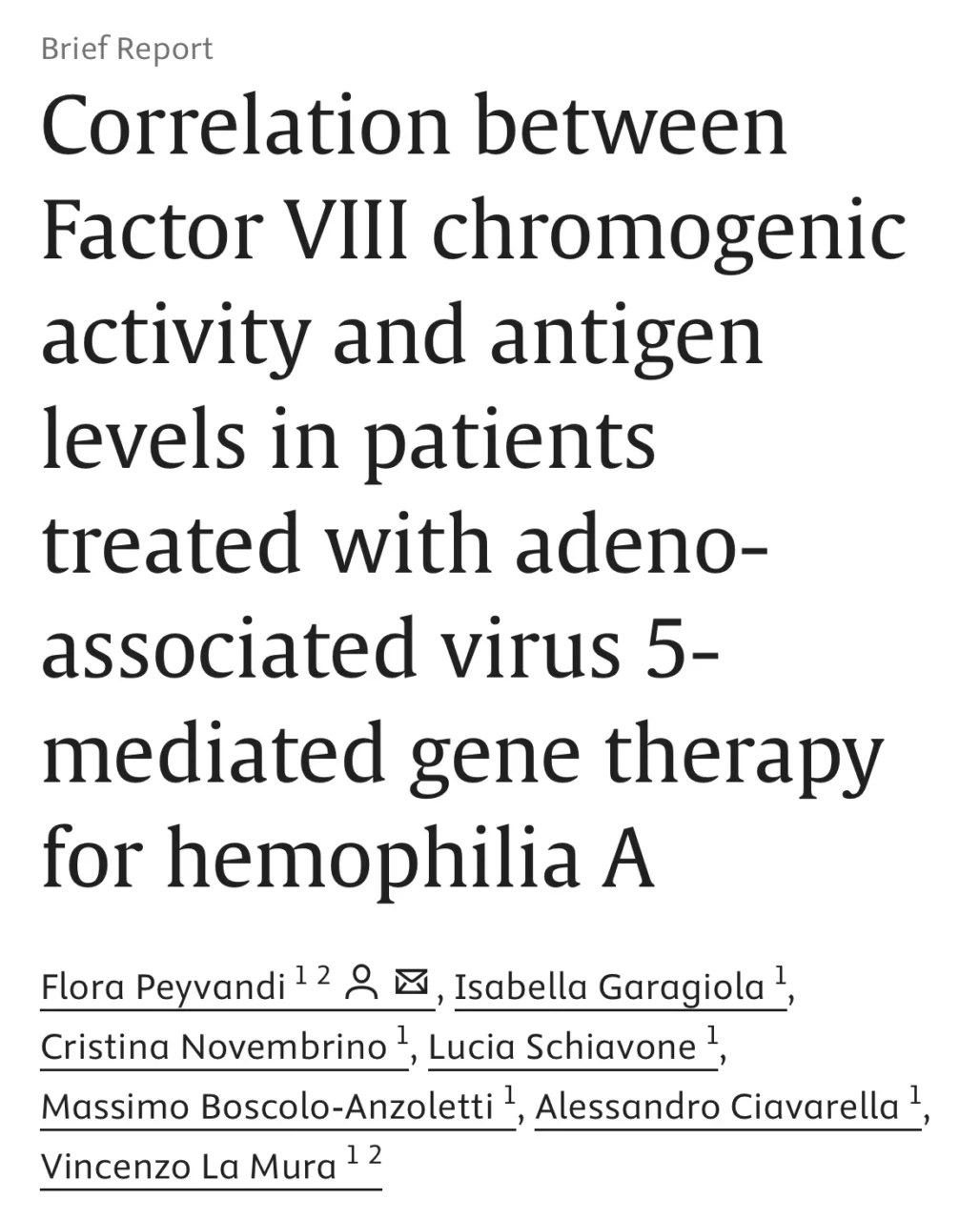
Title: Correlation between Factor VIII chromogenic activity and antigen levels in patients treated with adeno-associated virus 5-mediated gene therapy for hemophilia A
Authors: Flora Peyvandi, Isabella Garagiola, Cristina Novembrino, Lucia Schiavone, Massimo Boscolo-Anzoletti, Alessandro Ciavarella, Vincenzo La Mura
Other posts featuring Wolfgang Miesbach on Hemostasis Today.
-
Oct 30, 2026, 17:43Santagata Davide: Can Targeting Inflammation Help Prevent Thrombosis?
-
Oct 30, 2026, 17:38Patrick Ellsworth: Supporting Patients and Families Through Bleeding Disorders Awareness and Community Initiatives
-
Oct 30, 2026, 17:33Ed Shovelin: Comparative Hemostatic Performance of CRP-A and Equine Fibrillar Collagen
-
Oct 30, 2026, 16:52Tosin Ola: A New Era in Sickle Cell Disease Treatment and the Question of Access
-
Oct 30, 2026, 16:48Cedric Hermans: The Next Generation of FVIIIa-Mimetic Antibodies in Haemophilia A
-
Oct 30, 2026, 16:44Shehab Mohamed: Recognizing Isolated Thrombocytopenia as a Presentation of MDS
-
Oct 30, 2026, 16:40Amrita Sarkar: Advancing the Diagnosis of Anti-PF4 Syndromes
-
Oct 30, 2026, 16:35James Garrard: Driving Innovation in Stroke Care Through Global Collaboration
-
Oct 30, 2026, 16:19Cesar de Almeida Neto: Hemo 2026 Roundtable Focuses on the Challenges of Patient Blood Management