

New Evidence Highlights the Urgent Need for Gender-Inclusive Bleeding Disorders Research – EHC
European Haemophilia Consortium (EHC) shared a post on LinkedIn:
”If women are missing from the data, they will keep being missed in care.
Bleeding disorders have long been studied predominantly in men. But women and girls with bleeding disorders face experiences that are entirely their own (menstruation, pregnancy, childbirth, menopause), and these are rarely reflected in clinical research or trial design.
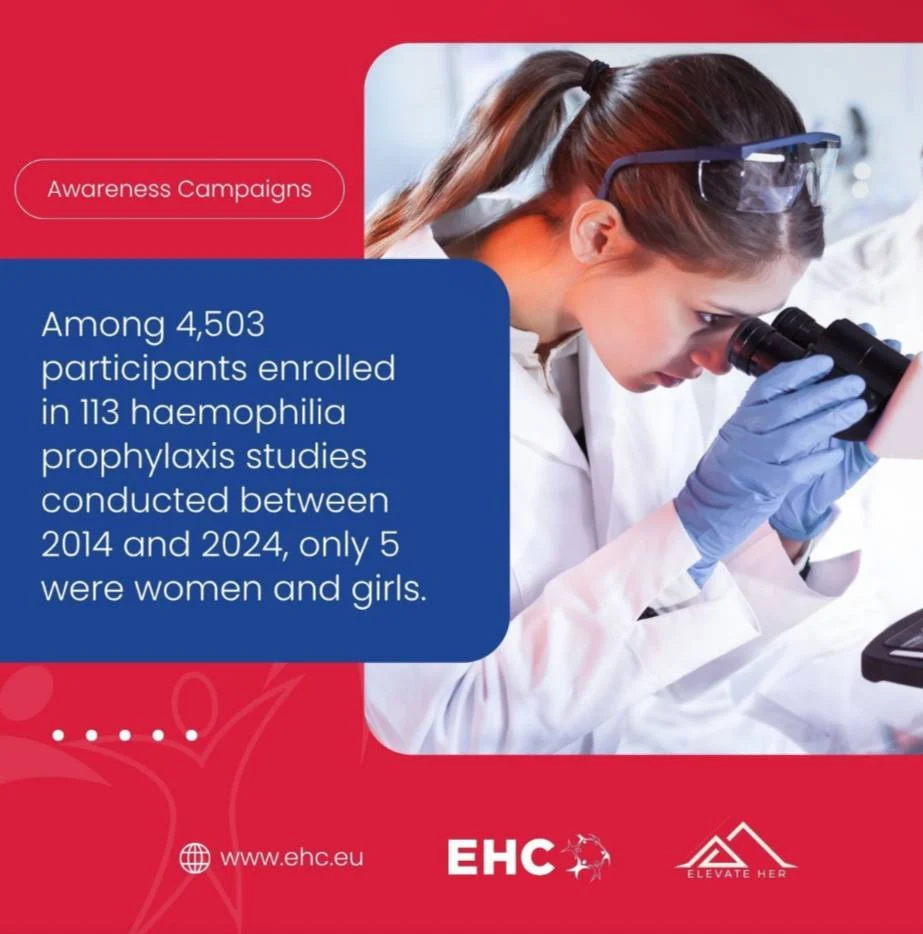
A recent scientific letter from the European Association for Haemophilia and Allied Disorders (EAHAD)’s Women and Girls Working Group published in the Haemophilia Journal makes this clear: most haemophilia clinical trials do not include women.
And even when women are technically allowed to participate, the studies almost always end up with only male participants. On top of that, bleeding symptoms that are specific to women (like heavy periods or bleeding complications during pregnancy) are rarely taken into account when these studies are designed.
This is not just a data gap. It is a care gap. Without research that reflects women’s lived experiences, our clinical understanding remains incomplete, and health inequalities persist.
To align with the EU Gender Equality Strategy, we are calling on EU institutions and stakeholders to ensure that gender-responsive research is systematically integrated, implemented, and monitored across health research programmes. Inclusive research leads to better care for everyone.
This is one of the critical issues that Project Elevate Her is working to bring forward, among others. This month, Maia Meier climbs Mont Blanc as the first expedition of a journey across all seven summits to raise global awareness of the critical importance of timely diagnosis and care for women with bleeding disorders.
As a proud partner, the EHC is sharing stories, expert voices, and perspectives from across Europe.
Follow along as this global initiative unfolds!”
Stay updated with Hemostasis Today.
-
Oct 21, 2026, 18:13Wolfgang Miesbach: Hereditary Hemorrhagic Telangiectasia An Overlooked Bleeding Disorder
-
Oct 21, 2026, 17:55Gayatri Kotwal։ New Review on Anemia, Pain, and Nutritional Deficiencies in Cancer Patients
-
Oct 21, 2026, 17:40Tetsuzan Ron: Iron Deficiency Without Anemia Clinical Impact and Management
-
Oct 21, 2026, 17:29Amir Hossien Esfandiari։ The Association Between Viral Infections and Aplastic Anemia
-
Oct 21, 2026, 17:16Melissa Hollo: A Meaningful Step Forward for Women’s Health
-
Oct 21, 2026, 17:09Chipili Ng’onga: Have You Ever Seen a Result That Just Didn’t Make Sense?
-
Oct 21, 2026, 16:57Fabrice Cognasse: Celebrating the Next Generation of Platelet Research and Transfusion Medicine
-
Oct 21, 2026, 16:47Christabel Odeta: Treating Pediatric Cancer in Children With Sickle Cell Disease
-
Oct 21, 2026, 16:36Sharlene Haywood: Bringing Multidisciplinary Learning Into Nursing Practice