


Antoine Francis: Plasma as the Internet of the Human Body
Antoine Francis, Founder of Global Plasma Supply LTD, has shared on LinkedIn:
“For years, blood has been visually dominated by the red cell.
But the future of plasma medicine begins when we look beyond the red.
Plasma is not background fluid.
It is the hidden biological network of the human body.
It carries the molecular traffic of life: antibodies, albumin, coagulation factors, complement proteins, cytokines, hormones, nutrients, electrolytes, bicarbonate, and regulatory signals moving continuously between organs and tissues.
Red cells deliver oxygen.
Plasma helps carry much of the carbon dioxide burden as bicarbonate, supporting exhalation, pH balance, and metabolic stability.
That means plasma is not passive;
- It connects.
- It signals.
- It stabilizes.
- It defends.
- It clots.
- It repairs.
- It adapts.
And inside a small protein fraction lies the foundation of modern plasma medicine: albumin, immunoglobulins, coagulation factors, and specialty proteins.
These are not random pharmaceutical products.
They are biological functions decoded from the human plasma network and returned to patients as therapy.
This is why I believe plasma must be seen differently.
Not as waste.
Not as a by-product.
Not as a commodity.
Plasma is biological infrastructure.
And modern medicine is quietly built on its invisible network.
Always think Donation
Always think Life
Plasma: The Internet of the Human Body
Plasma is often described as the liquid portion of blood. In reality, it is something far greater. It is a dynamic molecular network carrying the signals, proteins, immune defenses, nutrients, and coagulation systems that sustain human life every second.
Hidden within this golden fluid lies an extraordinary biological infrastructure: antibodies searching for pathogens, cytokines coordinating immune responses, albumin maintaining vascular equilibrium, and clotting factors standing ready against hemorrhage.
From this circulating universe emerges one of modern medicine’s most valuable therapeutic resources — the plasma protein fraction.
Although plasma proteins represent only approximately 7% of plasma volume, they form the foundation of life-saving plasma-derived medicinal products (PDMPs) used worldwide in immunology, hematology, critical care, neurology, pulmonology, and rare disease medicine.
This article explores plasma not merely as a component of blood, but as the hidden communication network of human biology and the molecular backbone of modern therapeutic medicine.
The Molecular Architecture of Plasma
At first glance, plasma appears deceptively simple — a translucent golden fluid suspended around circulating blood cells. Yet beneath this visual simplicity exists one of the most sophisticated biological transport systems in human physiology.
Approximately 90–92% of plasma consists of water, forming the medium through which an immense molecular ecosystem continuously travels throughout the vascular system.
The remaining fraction contains an extraordinarily complex mixture of plasma proteins, electrolytes, lipids, hormones, metabolites, nutrients, waste products, and cell-signaling molecules operating in constant dynamic equilibrium.
Among these components, the plasma proteome represents the true functional engine of plasma biology.
Albumin, the most abundant plasma protein, maintains oncotic pressure and serves as a molecular carrier for hormones, fatty acids, calcium, bilirubin, and pharmaceutical compounds. Immunoglobulins provide adaptive immune surveillance, identifying and neutralizing pathogens across the body.
Coagulation factors remain suspended in an inactive state until vascular injury triggers the coagulation cascade. Simultaneously, complement proteins, acute-phase reactants, and cytokines continuously regulate inflammation, immunity, tissue repair, and host defense.
What makes plasma uniquely remarkable is that these molecular systems do not function independently. They operate as an integrated biological communication network in which proteins, signaling molecules, and immune mediators continuously exchange information across the entire organism.
Every second, plasma coordinates billions of microscopic interactions essential for maintaining vascular stability, immune readiness, tissue oxygenation, metabolic regulation, and survival itself.
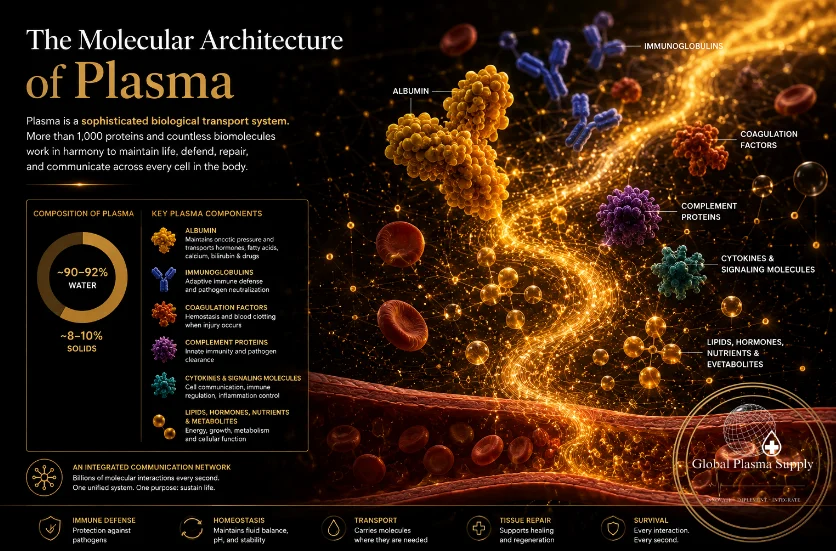
Functional overview of plasma as an integrated biological communication network coordinating immunity, transport, vascular stability, tissue repair, and survival.
The Hidden Biological Network
Plasma is not simply the liquid component of blood.
It is the communication infrastructure of human biology — a dynamic, protein-rich medium through which the body transports information, distributes molecular instructions, regulates internal balance, and coordinates survival across every organ system.
Suspended within plasma is an extraordinary biological network: hormones carrying endocrine signals, cytokines coordinating immune responses, antibodies preserving immunological memory, coagulation factors preparing the body for vascular injury, complement proteins surveying for microbial danger, albumin maintaining oncotic pressure and transporting ligands, and nutrients sustaining cellular metabolism.
This is not passive circulation. It is continuous biological communication.
Every second, plasma moves through the vascular system as a living transport matrix, linking the brain, liver, kidneys, immune system, endothelium, bone marrow, muscles, and peripheral tissues into one integrated physiological network.
It carries oxygen indirectly by supporting red cell flow, distributes metabolites and electrolytes, buffers pH, transports lipids and hormones, and delivers proteins that determine whether the body defends, repairs, clots, heals, or adapts. In this sense, plasma functions like a biological internet: not because it resembles technology, but because it performs the same fundamental role at the level of life — connectivity, signaling, routing, regulation, and system-wide coordination.
The power of plasma lies in its invisibility. The red cell may dominate the visual identity of blood, but plasma carries the molecular intelligence that allows blood to become more than a fluid. It transforms circulation into communication.
Through plasma, distant organs speak to one another. The liver releases albumin, clotting factors, complement proteins, and transport molecules into circulation. Endocrine glands send hormonal signals through the plasma compartment.
Immune cells release cytokines that travel through plasma to reshape inflammation, fever, vascular permeability, and cellular defense. B cells generate antibodies that enter plasma and carry highly specific biological memory across the body.
The coagulation system remains suspended in readiness, waiting for the precise moment when vascular injury requires controlled activation. Plasma therefore operates as both a transport highway and a regulatory intelligence layer.
This hidden network is also profoundly fragile. Its balance depends on concentration, timing, structure, and context. A deficiency in one coagulation factor can produce life-threatening bleeding.
A dysregulated antibody response can damage tissue. Excess inflammatory signaling can drive systemic illness. Loss of albumin can destabilize oncotic pressure and fluid distribution.
Complement activation can protect against pathogens, but when uncontrolled, it can contribute to disease. Plasma is therefore not merely ‘the fluid around the cells.’ It is a highly regulated biological environment where molecular communication determines physiological stability.
Modern plasma medicine begins with this truth: the therapeutic value of plasma does not originate in manufacturing. It originates in biology.
Plasma-derived medicinal products (PDMPs) are not random pharmaceutical products imposed onto the body from the outside; they are purified, concentrated, and clinically redirected biological functions that already exist within the plasma network.
Albumin reflects plasma’s stabilizing and transport capacity. Immunoglobulins reflect plasma’s immune intelligence. Coagulation factors reflect plasma’s hemostatic readiness.
Specialty proteins reflect highly specific molecular functions hidden within this circulating system. Before these proteins become therapies, they are part of the body’s native communication infrastructure.
To understand plasma properly, we must stop seeing it as the background liquid of blood and begin seeing it as one of the most advanced biological networks in human physiology.
It is the medium through which the body distributes signals, coordinates defense, preserves equilibrium, and converts molecular information into systemic action. Plasma is not silent. It is constantly transmitting.
It is not empty. It is densely encoded. It is not simply fluid. It is infrastructure.
Plasma is the hidden biological network sustaining human life — the invisible communication system from which modern plasma medicine begins.
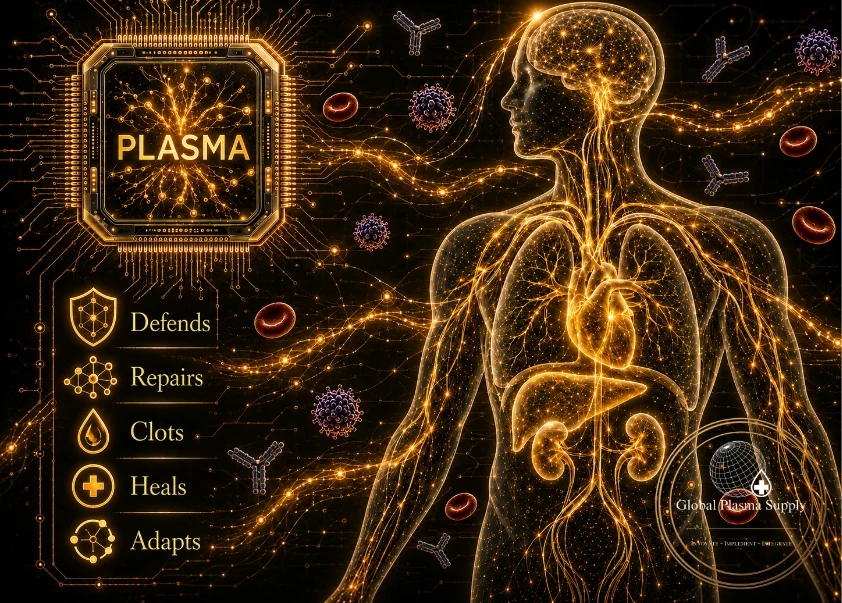
The Molecular Traffic of Life
Inside this hidden biological network, plasma carries the molecular traffic that allows the body to act as one integrated system.
The network is not empty; it is filled with biological signals, transport proteins, immune mediators, clotting factors, nutrients, electrolytes, and regulatory molecules moving continuously between organs and tissues.
Hormones travel through plasma as long-distance instructions, linking endocrine glands to target tissues and shaping metabolism, growth, stress responses, reproduction, and fluid balance.
Cytokines and chemokines move as immune messages, alerting distant tissues to infection, inflammation, injury, or repair. Antibodies circulate as molecular memory, allowing the immune system to recognize threats across the body.
Complement proteins patrol the plasma compartment as surveillance and amplification systems, capable of marking danger, recruiting immune activity, and supporting microbial clearance.
Coagulation factors remain suspended in readiness, inactive until vascular injury triggers a controlled hemostatic response. Albumin stabilizes plasma volume while transporting fatty acids, bilirubin, drugs, and other ligands.
Nutrients, metabolites, and electrolytes form the metabolic current that sustains cellular function.
This is the biological traffic of plasma: not one message, but thousands of simultaneous molecular movements. Some signals defend. Some repair. Some regulate pressure and fluid balance. Some prepare for bleeding.
Some modulate inflammation. Some carry memory. Some sustain metabolism. Together, they create a circulating language that every organ reads in real time.
Plasma also links the body’s organs through metabolism and gas exchange. Red blood cells are widely recognized for transporting oxygen from the lungs to the tissues, but the removal of carbon dioxide also depends heavily on the plasma compartment.
As tissues generate carbon dioxide during cellular metabolism, a large proportion of that carbon dioxide is converted into bicarbonate, which is transported through plasma back toward the lungs.
There, bicarbonate is converted back into carbon dioxide and eliminated through exhalation. In this way, plasma supports not only molecular signaling, but also metabolic waste removal and acid–base balance.
This makes plasma central to one of the most fundamental rhythms of life: breathing.
Oxygen delivery depends heavily on red cells, but carbon dioxide clearance depends on the coordinated interaction between red cells, plasma bicarbonate transport, the lungs, and the kidneys.
Plasma therefore does more than carry proteins and nutrients; it helps maintain pH, remove metabolic waste, stabilize the internal environment, and connect cellular metabolism to respiration.
The body does not simply inhale through red cells and exhale through the lungs. It relies on plasma as part of the buffering and transport network that allows every breath to serve the chemistry of life.
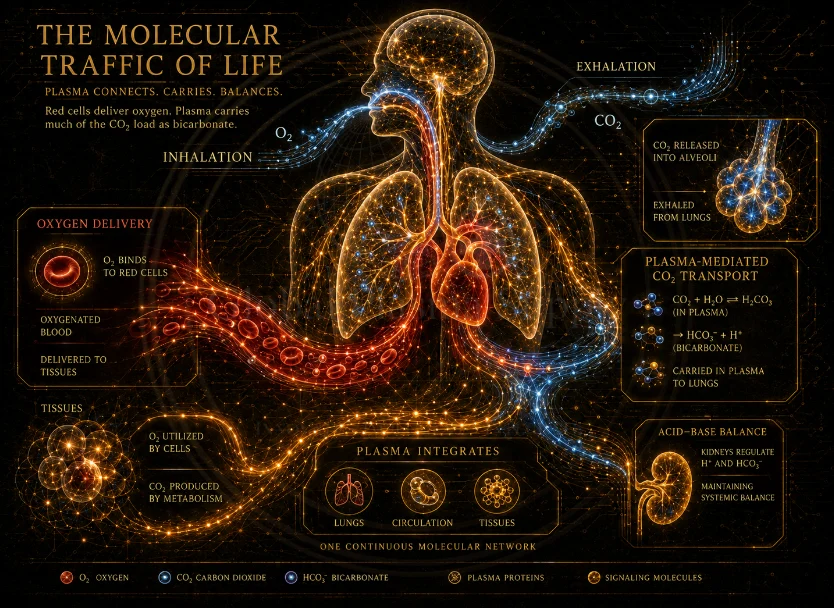
Plasma integrates the molecular traffic of life
The 7% That Changes Medicine
Plasma is mostly water, but its medical power is concentrated within a much smaller fraction: its proteins. Although plasma proteins represent only a minority of total plasma volume, they contain many of the biological functions that make plasma clinically irreplaceable.
Within this protein fraction are molecules responsible for maintaining vascular stability, defending against infection, regulating inflammation, supporting coagulation, transporting ligands, and restoring physiological balance under stress.
This small fraction is not biologically minor. It is where much of plasma’s therapeutic intelligence is stored.
This is why plasma medicine begins with a paradox. The largest part of plasma provides the fluid environment, but the smallest biologically active fraction carries the functions that can be transformed into therapy.
Albumin, immunoglobulins, coagulation factors, complement-related proteins, protease inhibitors, and other specialty proteins are not random substances floating in blood.
They are functional components of the body’s communication and survival network. When isolated, purified, concentrated, and clinically redirected, these proteins become plasma-derived medicinal products (PDMPs).
The significance of this 7% protein fraction is not only biochemical; it is medical, industrial, and global. Albumin reflects plasma’s capacity to stabilize circulation, maintain oncotic pressure, and transport endogenous and exogenous ligands.
Immunoglobulins reflect the adaptive immune system’s memory, specificity, and defensive intelligence. Coagulation factors reflect plasma’s ability to respond to vascular injury and restore hemostatic integrity.
Specialty proteins such as alpha-1 antitrypsin, C1 esterase inhibitor, antithrombin, and other targeted plasma proteins reflect highly specific regulatory functions that can be lifesaving when deficient, overwhelmed, or clinically required.
This is the transition from physiology to therapeutics. Plasma-derived medicines are not manufactured concepts invented outside the body. They are biological functions extracted from the body’s own molecular network.
Fractionation does not create the value from nothing; it reveals, separates, preserves, and concentrates functions already encoded within plasma.
The therapeutic universe of plasma begins because biology has already placed within plasma the proteins needed to stabilize, defend, clot, regulate, and restore.
The 7% protein fraction therefore represents a hidden therapeutic code. It is small in volume but immense in consequence.
From this fraction come therapies used across immunology, hematology, intensive care, neurology, transplantation, infectious disease, trauma, rare disorders, and inherited protein deficiencies. The medicine begins inside the network long before it reaches the vial.
To see plasma only as a fluid is to miss the code. To see plasma only as a raw material is to miss the biology. The true value of plasma lies in its functional proteins — the concentrated molecular instructions that modern medicine can decode, purify, and return to patients as therapy.
Plasma’s therapeutic power begins in a small protein fraction — the biological code from which modern plasma medicine is built.
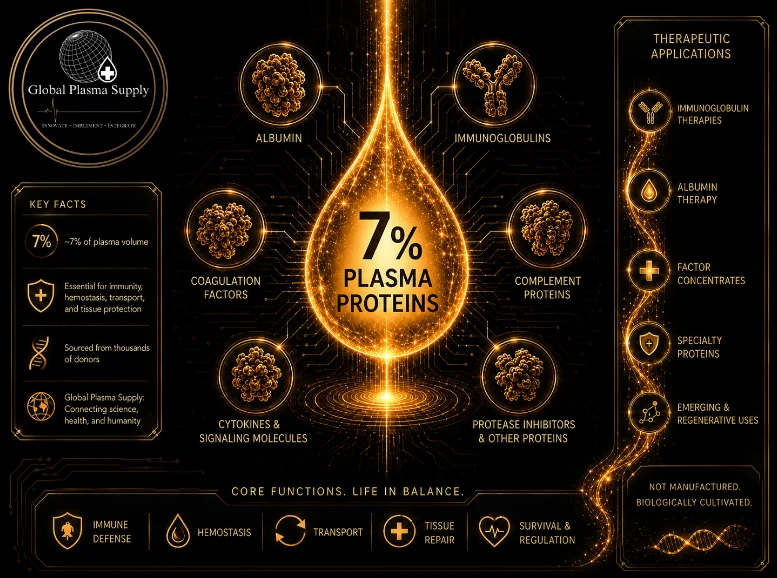
Plasma Therapeutic Code
The Therapeutic Universe
The therapeutic universe of plasma begins when the body’s native molecular functions are isolated, purified, concentrated, and redirected for clinical use. PDMPs are not ordinary drugs in the conventional sense.
They are biological functions recovered from the plasma network: stabilizing proteins, immune proteins, clotting proteins, regulatory proteins, and specialty molecules that already perform essential roles in human physiology before they ever become therapies.
Albumin represents plasma’s stabilizing and transport intelligence. In circulation, albumin helps maintain oncotic pressure, supports vascular volume, binds fatty acids, bilirubin, hormones, drugs, and other ligands, and contributes to the movement of molecules through the bloodstream.
When transformed into therapy, albumin carries forward this same biological identity: stabilization, volume support, transport, and systemic balance.
Immunoglobulins represent plasma’s immune memory and defensive intelligence. They are not merely proteins; they are molecular records of immune recognition.
In the body, antibodies identify pathogens, neutralize threats, support immune clearance, and preserve immunological memory.
When purified into immunoglobulin therapy, this defensive capacity can be redirected to support patients with immune deficiency, autoimmune disease, inflammatory disorders, and complex immune dysregulation.
Coagulation factors represent plasma’s hemostatic readiness. They circulate in a controlled, inactive state until vascular injury demands activation.
Their value lies in precision: they must remain silent during normal circulation, but respond rapidly when bleeding threatens the body’s integrity.
When concentrated as therapy, these factors restore missing or deficient components of the clotting system, allowing hemostasis to be rebuilt where it has failed.
Specialty plasma proteins represent the precision layer of plasma medicine.
Proteins such as alpha-1 antitrypsin, C1 esterase inhibitor, antithrombin, and other targeted molecules reveal that plasma is not only a source of broad therapeutic classes; it is a reservoir of highly specific biological regulators.
These proteins may control inflammation, regulate complement activation, protect tissue, modulate coagulation, or replace deficient physiological functions in rare and complex diseases.
This is the crucial transition: plasma-derived therapies are not detached from the network described earlier. They are the network translated into medicine.
Albumin is stabilization extracted from plasma. Immunoglobulin is immune intelligence extracted from plasma. Coagulation factors are hemostatic readiness extracted from plasma. Specialty proteins are regulatory precision extracted from plasma.
Each therapy is a decoded function of the original biological system.
Therefore, the therapeutic universe of plasma should not be presented as a shelf of products. It should be understood as a constellation of biological functions.
Each vial represents a specific form of molecular intelligence that once moved through the plasma network, coordinating defense, repair, transport, clotting, regulation, and survival. Modern plasma medicine does not begin in the vial. It begins in the body.
The extraordinary power of plasma-derived medicine lies in this continuity.
The same proteins that sustain physiological balance inside the donor can, after ethical collection, fractionation, purification, and clinical preparation, restore balance in patients whose own systems are deficient, overwhelmed, or damaged.
This is what makes plasma medicine scientifically unique: it transforms natural biological functions into targeted therapeutic support.
Plasma-derived therapies are decoded biological signals — purified functions of the plasma network returned to medicine as stabilization, defense, hemostasis, and precision regulation.
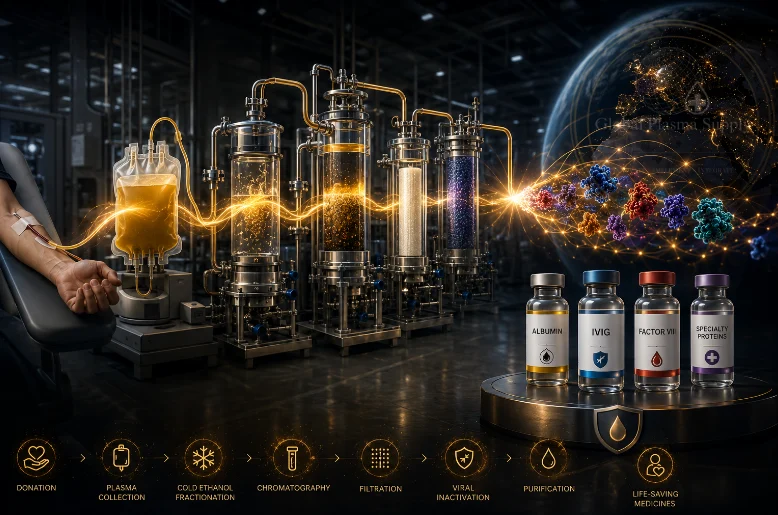
Plasma-derived therapies decoded biological functions
Fractionation — The Biological Data Center
Fractionation is often misunderstood because it is visually presented as manufacturing. That is too limited. In the context of plasma biology, fractionation is not simply a factory process; it is the controlled decoding of a biological network.
Plasma arrives containing thousands of molecular components, but only through precise separation, purification, concentration, and preservation can its hidden therapeutic functions be isolated and transformed into clinically usable medicines.
If plasma is the communication infrastructure of human biology, then fractionation is the biological data center that reads, separates, routes, and amplifies the signals within that infrastructure.
It does not invent the biological value of plasma. The value already exists inside the donor’s plasma as albumin, immunoglobulins, coagulation factors, inhibitors, transport proteins, and specialty molecules.
Fractionation reveals that value by organizing the molecular complexity of plasma into defined therapeutic pathways.
This makes fractionation one of the most important technological bridges between human physiology and modern medicine. It receives plasma as a complex biological input and separates its proteins according to their physical, chemical, and functional properties.
Differences in solubility, charge, size, stability, temperature response, and biochemical behavior allow the plasma proteome to be divided into fractions. Each fraction contains a different layer of biological meaning.
One pathway leads toward albumin. Another toward immunoglobulins. Another toward coagulation factors. Others toward specialty proteins that may regulate inflammation, complement activation, coagulation, or tissue protection.
The process therefore behaves less like mass production and more like molecular routing. Every litre of plasma carries a dense biological code.
Fractionation decodes that code by identifying which proteins must be preserved, which conditions must be controlled, which impurities must be removed, and which functional molecules must be concentrated without destroying their biological activity.
Temperature, pH, ethanol concentration, chromatography, filtration, viral safety steps, sterile processing, and quality control are not random industrial steps. They are the operating rules of a biological processor designed to protect therapeutic function.
This is why the visual language of fractionation should not be reduced to pipes, tanks, or factories. Those are only the external structures. The deeper truth is that fractionation is a molecular intelligence system.
It translates plasma’s native biological functions into therapeutic categories. Albumin becomes stabilization. Immunoglobulins become immune defense.
Coagulation factors become hemostatic restoration. Specialty proteins become precision regulation. The plant is not merely processing liquid; it is decoding the body’s circulating protein network.
The global dimension is equally important. Plasma collection is not local biology ending at the donor chair. Once collected, tested, frozen, stored, transported, and fractionated, plasma enters a global therapeutic network.
Recovered plasma bags and source plasma bottles represent two entry points into this biological infrastructure. Fractionation becomes the central exchange node where these inputs are decoded into functions that can reach patients across the world.
The global map is therefore not decorative. It represents the planetary dependence of modern medicine on plasma connectivity.
In this sense, the fractionation system behaves like an internet exchange node for biology. Plasma comes in as a complex molecular signal.
Fractionation separates the signal into therapeutic channels. Quality systems verify identity, purity, potency, safety, and consistency. Logistics then route the resulting therapies back into healthcare systems.
The entire process is a biological data architecture: collection, preservation, decoding, purification, validation, distribution, and clinical use.
This is the corrected understanding: fractionation does not replace biology with industry. It protects biology through technology. It does not manufacture plasma’s therapeutic meaning from nothing.
It extracts and stabilizes functions already present in the human plasma network. The scientific achievement is not that plasma is turned into random products; it is that fragile biological intelligence can be preserved, separated, purified, and returned to patients as reliable medicine.
Fractionation is the biological data center of plasma medicine — decoding, isolating, routing, and amplifying the therapeutic signals hidden within the plasma network.
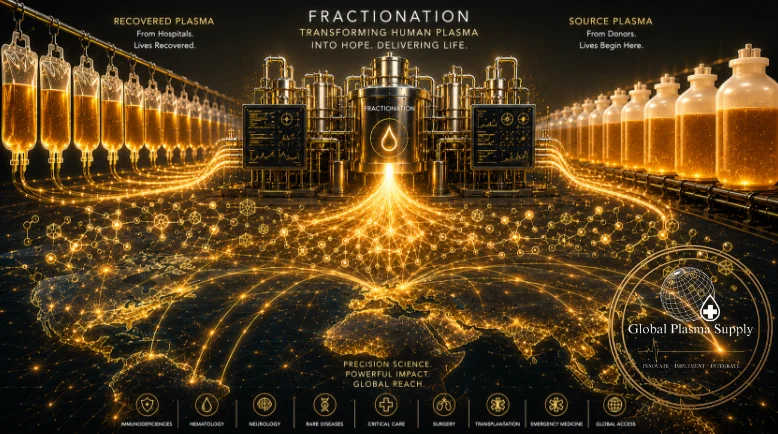
The Plasma Global Network
The World Runs on Plasma Connectivity
By the time plasma-derived therapies enter clinical practice, the invisible network described inside the body has expanded into something larger: a medical dependency system.
Across modern healthcare, plasma proteins are no longer abstract molecular components. They become part of the therapeutic backbone supporting some of the most vulnerable patients in medicine.
This dependency is visible across multiple clinical domains. In critical care, albumin may be used where circulatory stability, fluid distribution, and oncotic support are clinically relevant.
In trauma, surgery, liver disease, and bleeding disorders, coagulation factors and plasma-related hemostatic support can become central to restoring control when bleeding overwhelms the body’s own reserves.
In immunology, immunoglobulin therapy supports patients with antibody deficiency and selected immune-mediated diseases. In neurology, immunoglobulins are used in specific immune-driven disorders where abnormal immune activity affects nerve function.
In transplantation, plasma-derived and plasma-related therapies may contribute to immune management, coagulation balance, infection risk control, and complex supportive care. In rare diseases, specialty plasma proteins may provide functions that patients cannot produce adequately themselves.
What links these fields is not a common organ, a single disease, or one therapeutic pathway. What links them is dependence on plasma-derived function. Critical care needs stabilization. Immunology needs antibody support. Neurology may require immune modulation.
Trauma and hematology require hemostatic restoration. Transplantation requires careful biological control. Rare disease medicine often depends on precise protein replacement or regulation. These are different clinical worlds, but plasma connects them through the therapeutic functions it supplies.
This is why plasma medicine occupies a unique position in healthcare. It does not belong to one department. It crosses intensive care units, immunology clinics, neurology services, hematology centers, transplant programs, emergency pathways, and rare disease services.
A disruption in plasma-derived therapy access can therefore affect many parts of medicine at once.
The consequence is not simply a missing product on a shelf; it can mean delayed treatment, restricted dosing, rationed access, increased clinical risk, or reduced therapeutic options for patients who have few alternatives.
The global dependency on plasma is therefore quiet but profound. Most patients never see the donor, the collection system, the fractionation process, or the international movement of plasma-derived therapies.
Yet their treatment may depend on that entire chain functioning correctly. Behind a vial of albumin, immunoglobulin, coagulation factor, or specialty protein is a global network linking human donation to clinical need.
This is the point where the biological network becomes a healthcare network. Plasma begins as a circulating medium inside the body, but its derived therapies become part of the infrastructure of modern medicine.
They support patients in critical care, immunology, neurology, transplantation, trauma, and rare disease treatment — not as isolated products, but as essential biological tools embedded across clinical practice.
Modern healthcare runs on this hidden dependency. The world does not simply use plasma-derived medicines; in many areas of care, it relies on them.
Plasma connectivity becomes global dependency when the functions hidden inside plasma become essential tools across critical care, immunology, neurology, transplantation, trauma, and rare disease medicine.
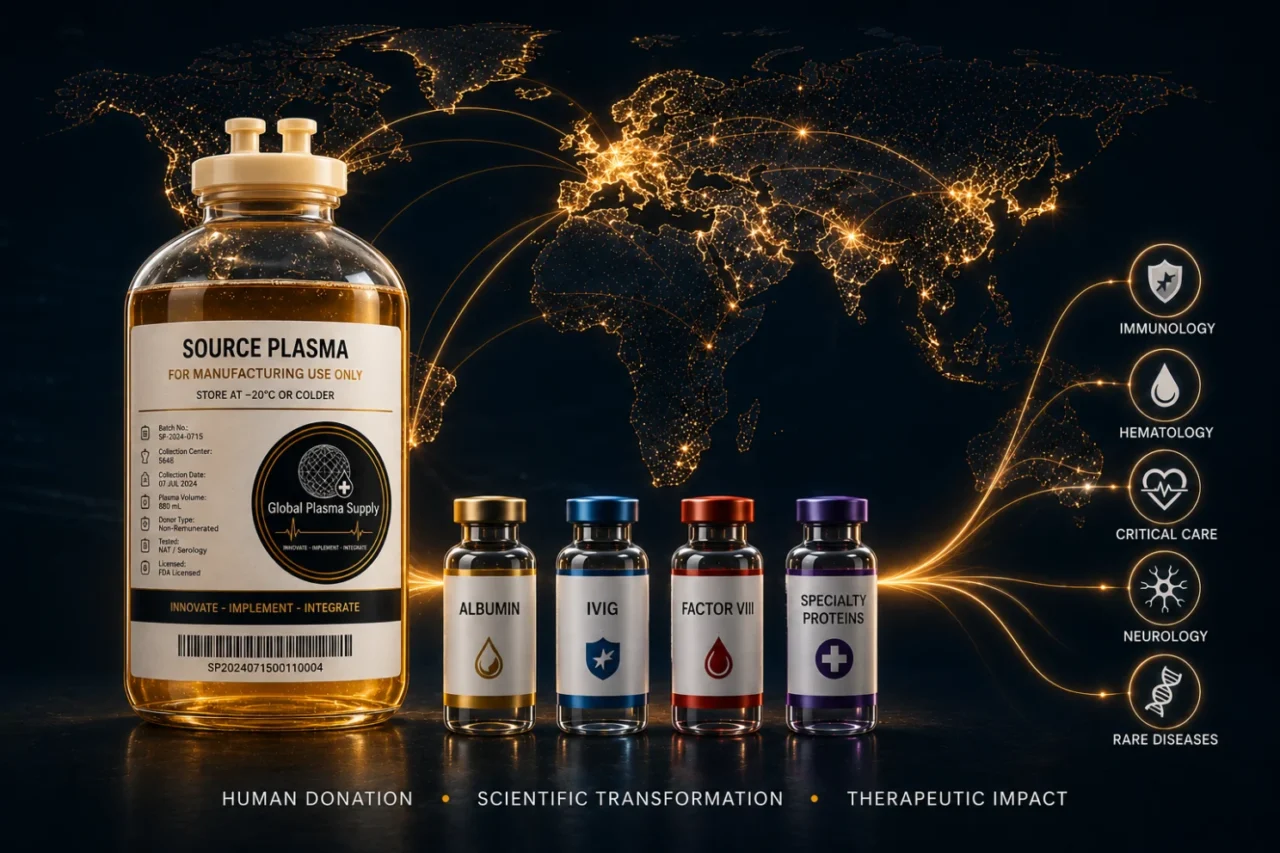
Global Dependency
Plasma as Biology, Infrastructure, and Medicine
Plasma begins as biology, but its significance extends far beyond the bloodstream. It is the medium through which the body communicates, stabilizes, defends, repairs, clots, regulates, adapts, and survives.
Across the previous sections, one idea becomes unavoidable: plasma is not a background fluid. It is an active biological infrastructure.
Inside the body, plasma connects organs through molecular traffic. It carries hormones, cytokines, antibodies, coagulation factors, complement proteins, albumin, nutrients, electrolytes, metabolites, and buffering systems.
It supports oxygen delivery indirectly, carries much of the carbon dioxide burden as bicarbonate, helps regulate acid–base balance, and allows metabolism, respiration, immunity, and vascular stability to function as one integrated system.
Through plasma, the body does not operate as isolated organs. It operates as a connected living network.
Within that network lies a small but extraordinary protein fraction. Albumin, immunoglobulins, coagulation factors, and specialty proteins are not random molecules; they are concentrated biological functions.
They represent stabilization, immune defense, hemostatic readiness, transport, regulation, and precision molecular control. Plasma-derived medicine begins when these native functions are identified, isolated, purified, preserved, and returned to clinical use.
Fractionation is the bridge between physiology and therapy. It does not create plasma’s value from nothing. It decodes the value already present within the plasma network.
Through controlled separation, purification, viral safety, quality testing, and preservation of protein function, fractionation transforms plasma’s biological complexity into reliable therapeutic pathways. It is not merely manufacturing. It is biological decoding.
At global scale, this invisible network becomes a medical dependency. Critical care, immunology, neurology, transplantation, trauma, bleeding disorders, and rare disease medicine all depend on plasma-derived functions in different ways.
Patients may never see the donor, the plasma collection system, the fractionation process, or the global network behind each therapy, but their treatment may depend on all of it working with precision.
This is why the future of plasma must be understood through a wider lens. Plasma is not only a substance. It is a biological resource, a therapeutic platform, a scientific frontier, and a healthcare infrastructure.
Its value begins in the donor, is protected through ethical collection and quality systems, is decoded through fractionation, and is completed when its functions reach patients who depend on them.
The future of biological connectivity will require more than supply. It will require scientific discipline, donor dignity, transparent systems, ethical procurement, regulatory strength, and global cooperation.
Plasma cannot be treated as an ordinary commodity because it is not ordinary material. It is human biology carrying therapeutic potential.
Modern medicine is built upon many visible structures: hospitals, laboratories, technologies, protocols, and clinical expertise. But beneath them is an invisible layer that quietly sustains care across the world. Plasma belongs to that layer.
It connects the biology of the donor to the survival of the patient. It connects molecular function to clinical outcome. It connects physiology to medicine.
Plasma is one of humanity’s most advanced biological resources because it carries the language of life itself: stabilization, defense, repair, clotting, regulation, adaptation, and restoration.
To understand plasma is to understand that modern medicine does not only depend on machines, drugs, or procedures. It also depends on the hidden biological network circulating within us.
Plasma is biology, communication, infrastructure, and therapy — an invisible network through which human life is sustained, and through which modern medicine continues to advance.
Global Plasma Supply – Plasma is Life”
More posts featuring Antoine Francis on Hemostasis Today.
-
Sep 13, 2026, 05:36Speaking Up When Women’s Health Concerns Are Dismissed – Haemophilia Foundation Australia
-
Sep 13, 2026, 05:16W. Alberto Sifuentes Giraldo: Dual Targeted Therapy Shows Promise in Refractory Systemic Autoinflammatory Diseases
-
Sep 13, 2026, 04:42Christopher Robinson: Early Pregnancy Oxylipins May Signal Risk of Fetal Growth Restriction
-
Sep 13, 2026, 04:22Gabriela Hobbs: 2026 Society of Hematologic Oncology Meeting
-
Sep 13, 2026, 03:40Mizinga Moonze: When Blood Speaks – The Missing Link in Healthcare Sustainability
-
Sep 12, 2026, 17:55Dries De Wolf: Honored to Have Wolfgang Miesbach Comment on Our Latest Research
-
Sep 12, 2026, 17:53Usman Waheed: Introducing the Discovery of the 49th ISBT Blood Group System
-
Sep 12, 2026, 17:51Maria Sabater Lleal: Happy to Share Our Latest Work Exploring the Genetic Determinants of PE in VTE
-
Sep 12, 2026, 17:51Jeff Sternlicht: Why LDL-C and ApoB Remain King of the Hill?