


Tsigereda Bekele: Ischemic Stroke vs. Hemorrhagic Stroke
Tsigereda Bekele, Professional Nurse at MCM Comprehensive Specialized Hospital, shared a post on LinkedIn:
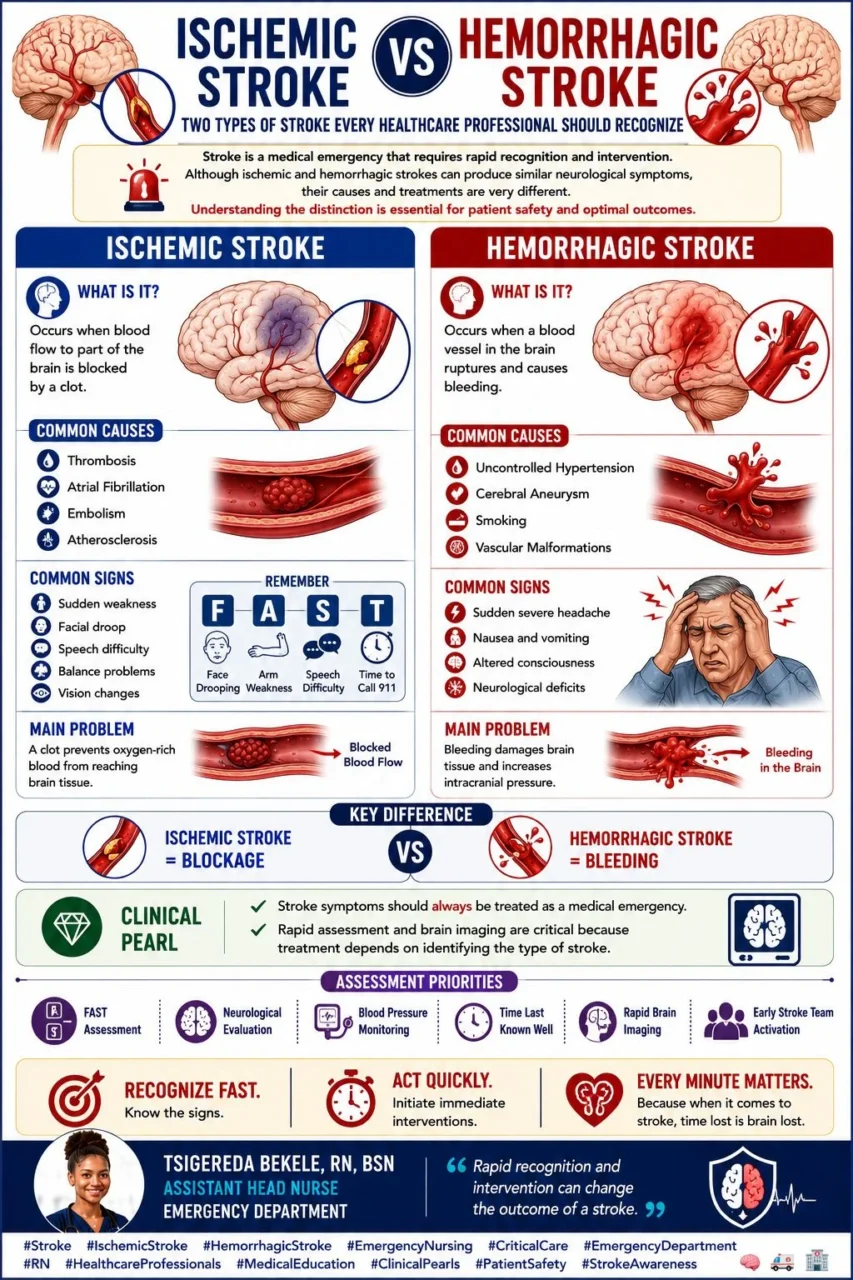
“Ischemic vs Hemorrhagic Stroke:
Two Types of Stroke Every Healthcare Professional Should Recognize
Stroke is a medical emergency that requires rapid recognition and intervention.
Although ischemic and hemorrhagic strokes can produce similar neurological symptoms, their causes and treatments are very different.
Understanding the distinction is essential for patient safety and optimal outcomes.
Ischemic Stroke
What Is It?
Occurs when blood flow to part of the brain is blocked by a clot.
Common Causes
- Thrombosis
- Atrial Fibrillation
- Embolism
- Atherosclerosis
Common Signs
- Sudden weakness
- Facial droop
- Speech difficulty
- Balance problems
- Vision changes
Main Problem
A clot prevents oxygen-rich blood from reaching brain tissue.
Hemorrhagic Stroke
What Is It?
Occurs when a blood vessel in the brain ruptures and causes bleeding.
Common Causes
- Uncontrolled Hypertension
- Cerebral Aneurysm
- Smoking
- Vascular Malformations
Common Signs
- Sudden severe headache
- Nausea and vomiting
- Altered consciousness
- Neurological deficits
Main Problem
Bleeding damages brain tissue and increases intracranial pressure.
Key Difference
- Ischemic Stroke: Blockage
- Hemorrhagic Stroke: Bleeding
Although symptoms may appear similar, treatment approaches are very different.
Clinical Pearl
Stroke symptoms should always be treated as a medical emergency.
Rapid neurological assessment and brain imaging are critical because treatment depends on identifying the type of stroke.
Early recognition and intervention can significantly improve outcomes.
Assessment Priorities
- FAST Assessment
- Neurological Evaluation
- Blood Pressure Monitoring
- Time Last Known Well
- Rapid Brain Imaging
- Early Stroke Team Activation
- Recognize Fast.
- Act Quickly.
- Every Minute Matters.
Because when it comes to stroke, time lost is brain lost.
‘Rapid recognition and intervention can change the outcome of a stroke.’ ”
Stay updated with Hemostasis Today.
-
Sep 21, 2026, 15:56Anita Zaidi: Why Only 2% of Health Research and Development Goes to Women’s Conditions
-
Sep 21, 2026, 15:49Omid Khalafi: Gating Strategy and How Do We Decide Which Cells to Analyze
-
Sep 21, 2026, 15:44Levacetylleucine: A New Therapeutic Approach to Ataxia Telangiectasia
-
Sep 21, 2026, 15:40Andreas Tridimas: The Diagnostic Traps of Lipaemic Blood – Why a Normal Amylase Can Mislead You
-
Sep 21, 2026, 15:33Arsene Mekinian: Exploring Cardiac Involvement in Behçet’s Disease
-
Sep 21, 2026, 15:23Anis Mahjoubi: MRI Findings of Krukenberg Tumors
-
Sep 21, 2026, 15:08Fikreab Tesfaye Tefera: 10 Practical Take-Home Points for Diagnosing Iron Deficiency Anemia
-
Sep 21, 2026, 14:10Aswin K Mohan: Lessons from TRANSCON 2026 – Building Resilient Blood Supply Systems Before Crisis Hits
-
Sep 21, 2026, 14:00Vincent Lu: Beyond PT and aPTT – How Hemostasis Evolves Across a Lifetime