


Tejas Ahire: When the Body’s Clotting System Goes Out of Control
Tejas Ahire, Junior Officer in Downstream Process at Hetero Biopharma, shared a post on LinkedIn:
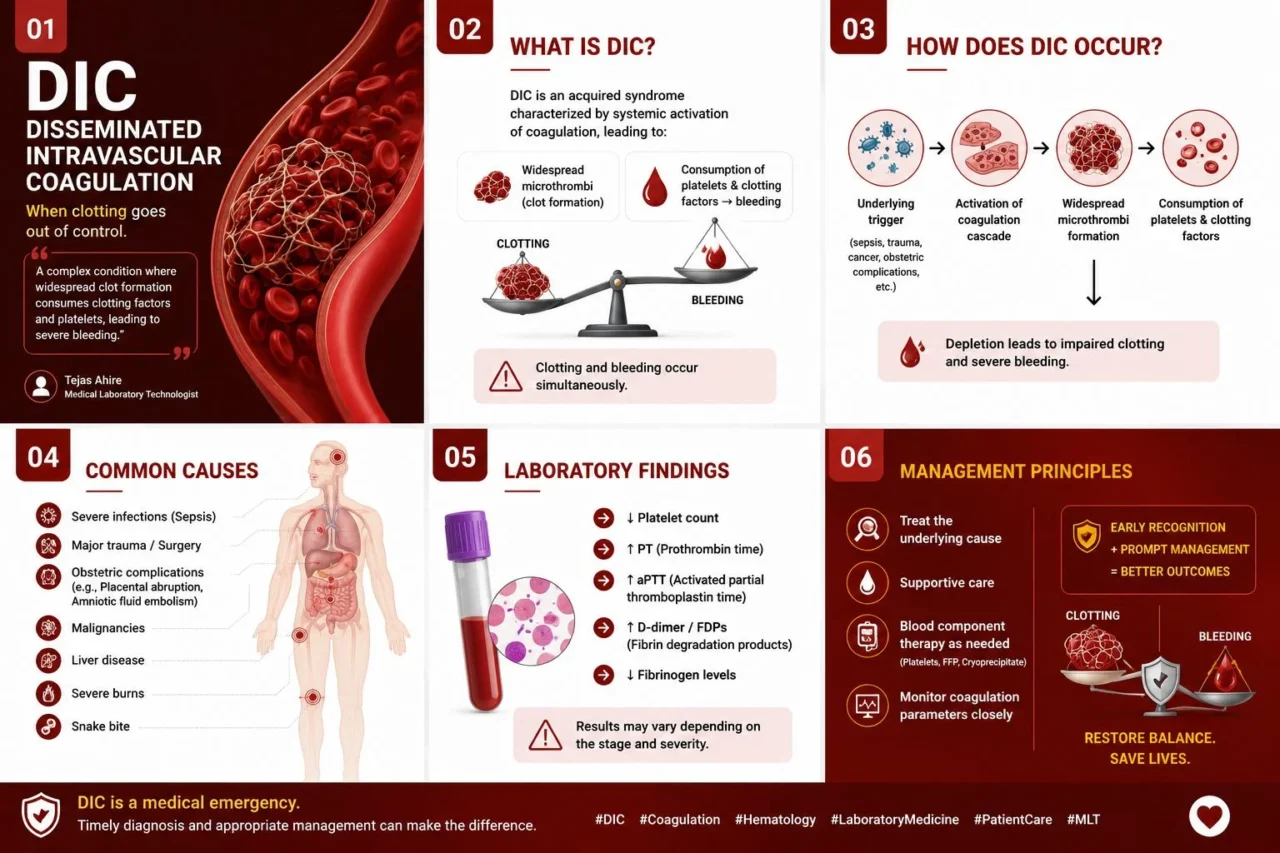
“Disseminated Intravascular Coagulation (DIC): When the Body’s Clotting System Goes Out of Control.
DIC is a serious and potentially life-threatening condition in which the coagulation system becomes excessively activated throughout the body.
This leads to the formation of widespread microclots in small blood vessels, consuming platelets and clotting factors faster than the body can replace them.
As a result, patients may experience two dangerous processes simultaneously: Excessive clot formation Severe bleeding
DIC is not a disease itself but a complication of underlying conditions such as sepsis, major trauma, malignancies, obstetric emergencies, and severe infections.
Key laboratory findings often include:
- Thrombocytopenia (low platelet count)
- Prolonged PT and aPTT
- Elevated D-dimer/FDP levels
- Reduced fibrinogen levels
Early recognition, prompt treatment of the underlying cause, and appropriate supportive care are essential to improve patient outcomes.
DIC reminds us that maintaining the delicate balance between clotting and bleeding is critical for survival.”
Stay updated with Hemostasis Today.
-
Sep 13, 2026, 11:13Mavis Agnes Kisakye: How Community Partnerships Are Driving Opportunity for Youths with Bleeding Disorders
-
Sep 13, 2026, 11:07Dianne E. van der Wal: Transforming Science into Art – The Launch of The Life, Function and Death of Platelets
-
Sep 13, 2026, 10:18Daniel Victor Ortigoza: Understanding Stroke, Risk Factors and Prevention
-
Sep 13, 2026, 08:13Selina Olwanda Ogweno: Expanding Access to Sickle Cell Care for Children and Young People
-
Sep 13, 2026, 08:02Alexandra Rickard: One Donation Can Make All the Difference
-
Sep 13, 2026, 07:41Global Study Defines ISTH BAT Reference Ranges in Children and Adolescents – JTH
-
Sep 13, 2026, 07:1010 Posts Not to Miss This Week
-
Sep 13, 2026, 07:04Mohamed Abdelhadi: Sharing Our Latest Publication
-
Sep 13, 2026, 05:36Speaking Up When Women’s Health Concerns Are Dismissed – Haemophilia Foundation Australia