


Emeka Patrick Chukwuka: Treatment Sequencing After JAK Inhibitor Failure in Relapsed and Refractory Myelofibrosis
Emeka Patrick Chukwuka, Hematologist and Clinical Pathologist, shared a post on LinkedIn:
“Clinical Haematology Series
Two JAK inhibitors. Both failed. A 50-year-old teacher with a spleen 16cm below her costal margin. What comes next?
This is Sandra. And her case is a masterclass in why relapsed/refractory myelofibrosis demands a structured, sequential decision framework — not improvisation.
The backstory matters.
Ten years of polycythaemia vera, transformed to post-PV myelofibrosis. Massive splenomegaly. Severe pruritus, drenching night sweats, 6kg weight loss. And underneath it all — HFrEF with an ejection fraction of 35–40%, NYHA Class II. Well-compensated, but watching.
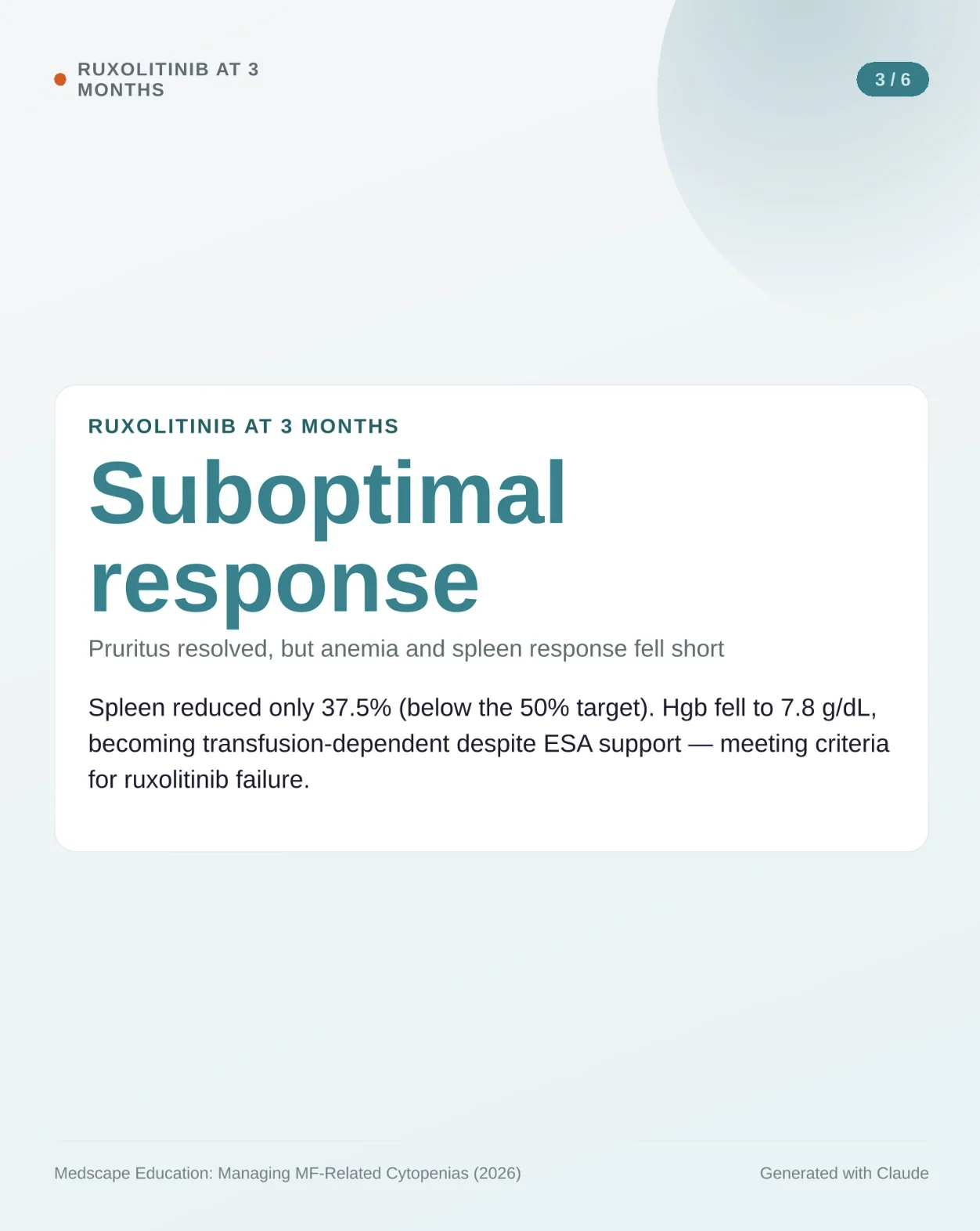
Ruxolitinib at 3 months: a partial story with a clear endpoint.
Pruritus resolved — that’s the win. But the spleen reduced only 37.5%, falling short of the 50% target that defines meaningful response. Hgb dropped to 7.8 g/dL. Transfusion-dependent despite ESA support. By any standard definition, this is ruxolitinib failure.
The switch to fedratinib — and the step most clinicians miss:
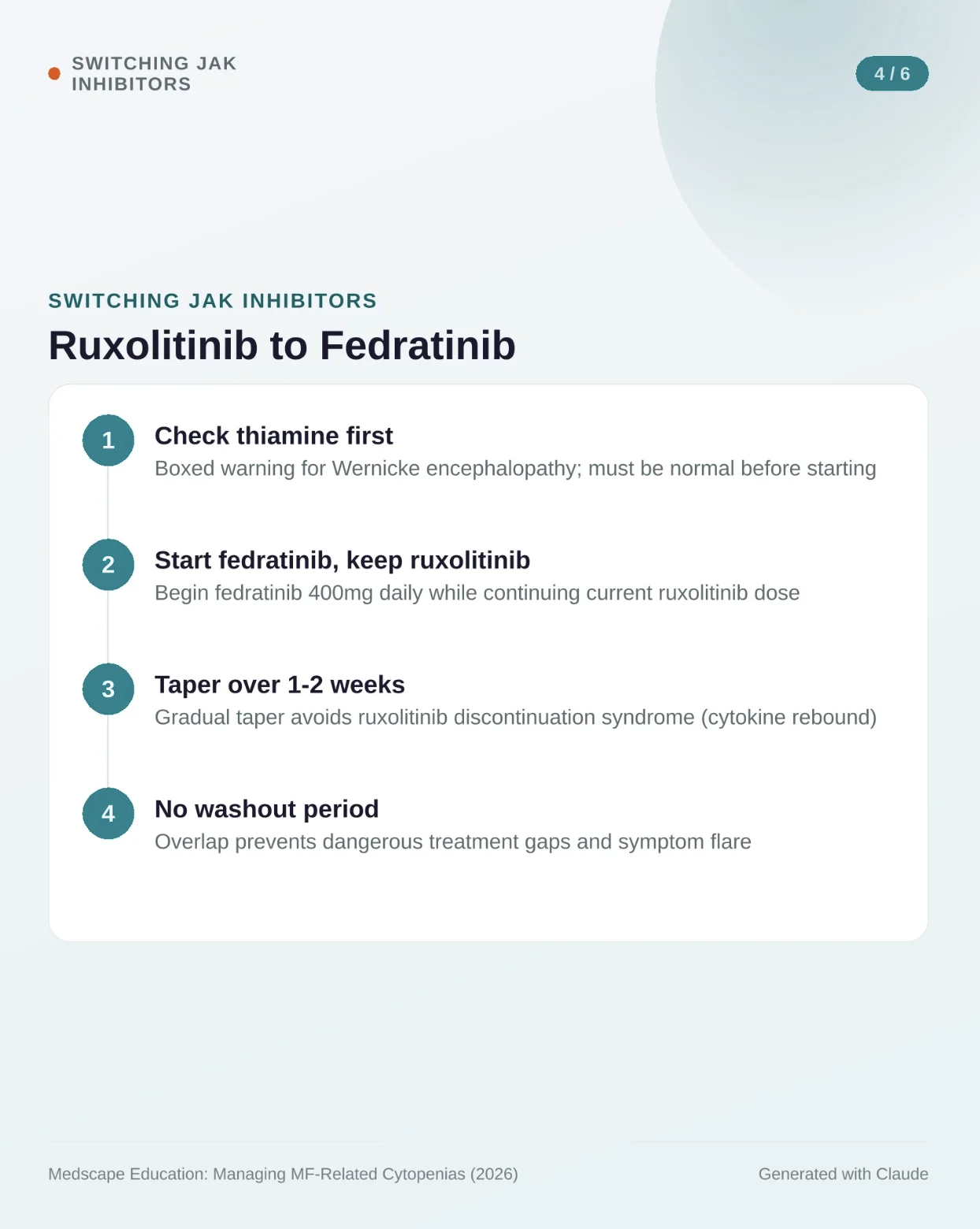
Checking thiamine levels before starting fedratinib is an absolutely essential step to prevent Wernicke encephalopathy.
Start fedratinib, tapering ruxolitinib over two weeks; overlapping them prevents cytokine rebound and symptom flares.
Abrupt ruxolitinib discontinuation syndrome is a clinical emergency. The taper is the safety net.
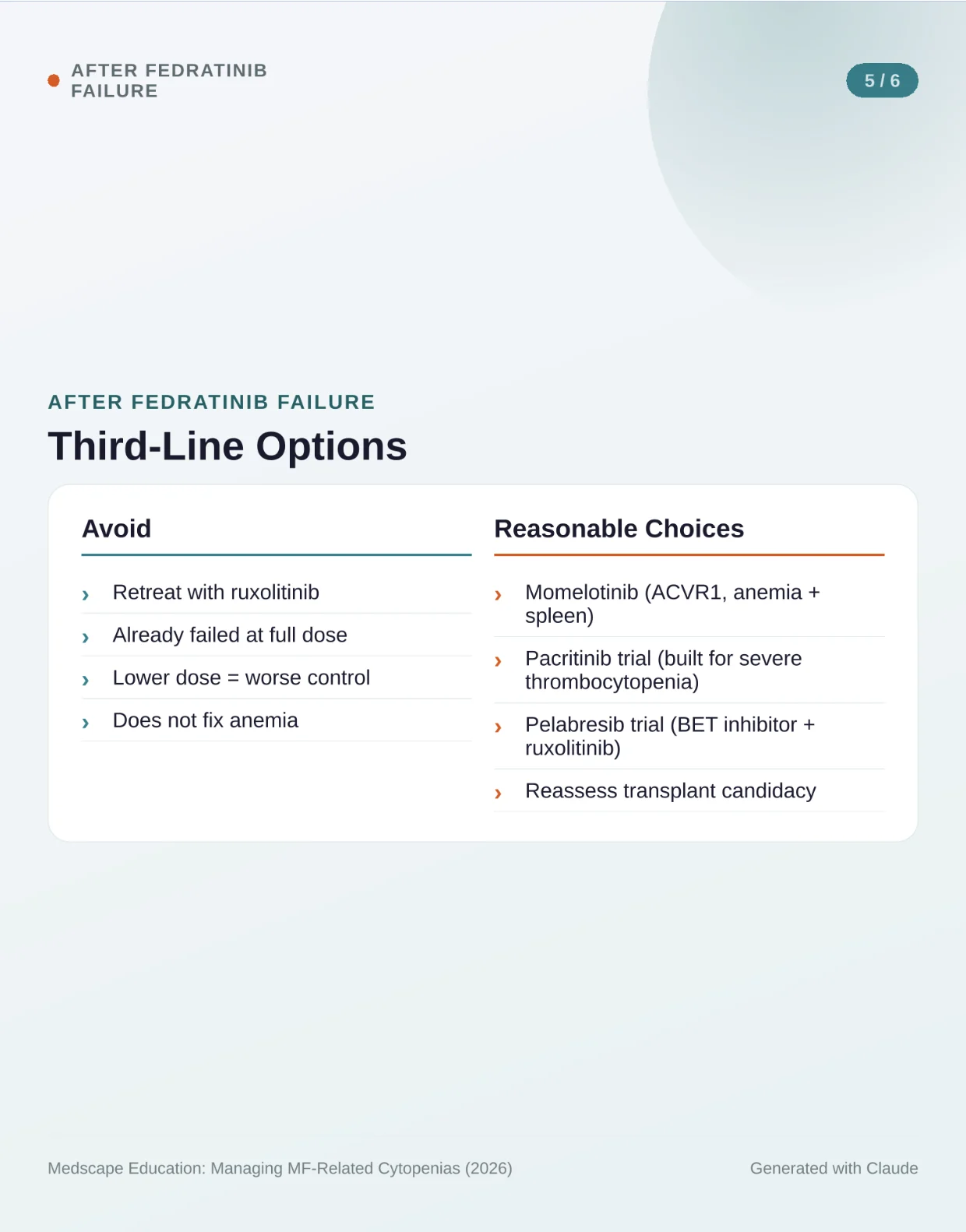
When fedratinib also fails — the third-line framework:
- Re-treating with ruxolitinib: already failed at full dose; lower doses mean worse control and don’t address anaemia
- Momelotinib — ACVR1 (Activin A receptor type 1, also known as ALK2) mechanism targets anaemia and spleen
- Pacritinib trial — purpose-built for severe thrombocytopenia
- Pelabresib trial — BET (Bromodomain and Extra-Terminal motif) inhibitor combination strategy
- Reassess allogeneic transplant candidacy — always on the table
Sandra’s 24-week outcome on pelabresib and ruxolitinib clinical trial:
- Spleen: 13cm to 6cm
- Hgb stable at 9.8 g/dL
- Transfusion-free for 12 weeks
- Back to full-time teaching
The lesson: in relapsed/refractory MF, the sequence of decisions — and the transitions between them — are as therapeutically important as the drugs themselves.
Know your switching protocol. Check the thiamine. Reassess transplant at every failure point.”
Stay updated with Hemostasis Today.


-
Sep 22, 2026, 19:02Blocking Histone-Induced Platelet-Erythrocyte Interactions With Polyanions – Platelets Journal
-
Sep 22, 2026, 18:49Abdul Rahman Hamad: Early Action for Better Outcomes in Deep Vein Thrombosis
-
Sep 22, 2026, 18:37Carmine Siniscalchi: Age-Adjusted D-Dimer Cutoffs in DVT Diagnosis
-
Sep 22, 2026, 18:37Stefano Romeo: The Cardiovascular Patient Journey is Still Full of Gaps
-
Sep 22, 2026, 18:11Bharath Kumar V.։ Advancing Safer Anticoagulation for Cancer-Associated Thrombosis
-
Sep 22, 2026, 18:10Fatima Zahra: ASH Released New Guidelines on the Diagnosis of Iron Deficiency
-
Sep 22, 2026, 17:49Nirav Dhanesha: Targeting FXI for Safer Anticoagulation
-
Sep 22, 2026, 17:17Eric Lambert: Intravascular Imaging and the Future of Precision PCI
-
Sep 22, 2026, 16:45Claudiu Stoicescu: Are We Starting Cardiovascular Risk Assessment Too Late?