


Tanmoy Debnath: Multiplexed Genetic Screening From a Single Newborn Blood Spot
Tanmoy Debnath, MEXT Scholar at The University of Tokyo, shared a post on LinkedIn about a recent article by Terence Diane Fabella et al, published in European Journal of Human Genetics, adding:
“What if one newborn blood spot could reveal more than 1,000 genetic signals?
A new study in the European Journal of Human Genetics introduces digitalMLPA EZtec MS, a highly multiplexed DNA-based platform capable of examining up to 1,200 DNA sequences in a single assay.
In 2,069 newborn dried blood spots from the Philippines, the method detected multiple types of genetic changes, including copy number variants, single nucleotide variants, inversions, methylation changes, and very low copy DNA sequences.
The targets included markers relevant to conditions such as spinal muscular atrophy, alpha thalassemia, Fragile X syndrome, SCID, Wilson disease, congenital CMV, and hemophilia A.
The reported turnaround time was approximately 36 to 40 hours, without conventional DNA purification.
This combination of high multiplexing, relatively simple workflow, and rapid analysis could be valuable for large scale molecular screening.
What makes the approach particularly interesting is its potential position between traditional biochemical newborn screening and broad genomic sequencing.
Rather than sequencing everything, targeted DNA screening can focus on clinically relevant markers while potentially reducing incidental findings and interpretation burden.
Importantly, this does not mean all tested conditions should automatically become part of routine newborn screening.
Screening decisions require evidence of clinical benefit, appropriate follow up, cost effectiveness, and healthcare capacity.
Still, the concept is exciting: one small blood spot, hundreds to thousands of genetic targets, and a rapid workflow potentially opening another pathway toward more accessible precision and genomic medicine.”
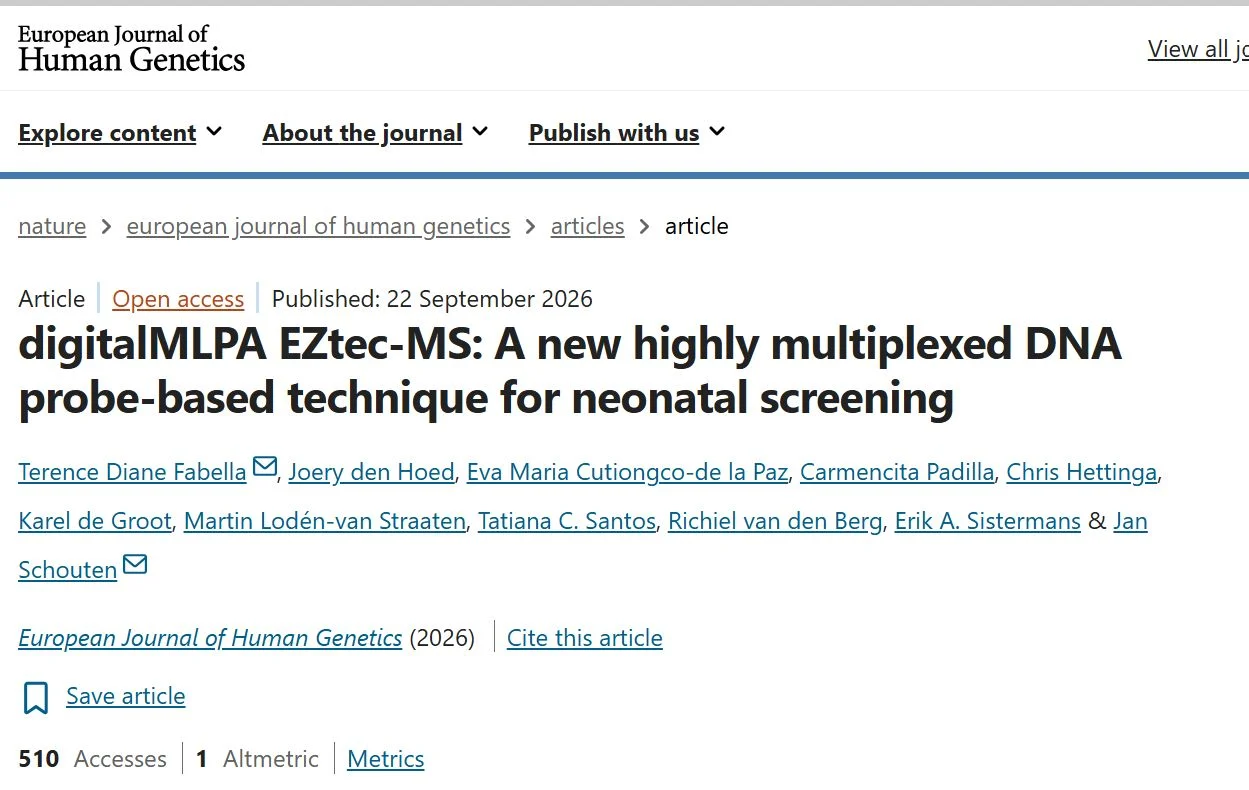
Title: digitalMLPA EZtec-MS: A new highly multiplexed DNA probe-based technique for neonatal screening
Authors: Terence Diane Fabella, Joery den Hoed, Eva Maria Cutiongco-de la Paz, Carmencita Padilla, Chris Hettinga, Karel de Groot, Martin Lodén-van Straaten, Tatiana C. Santos, Richiel van den Berg, Erik A. Sistermans,Jan Schouten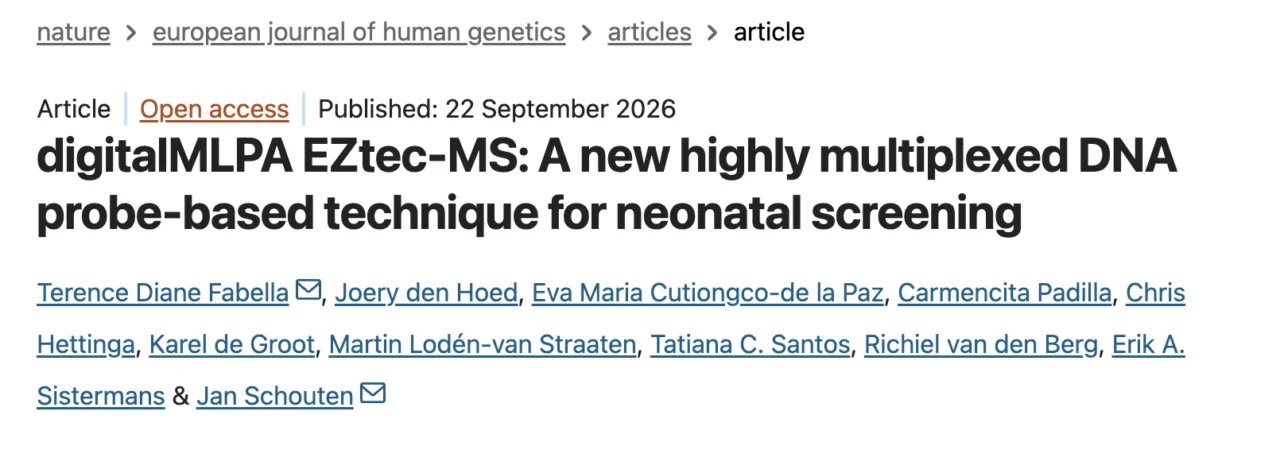
Stay updated on all scientific advances with Hemostasis Today.
-
Sep 27, 2026, 09:03Tareq Abadl: Hemoglobin Electrophoresis Patterns Across Thalassemia Syndromes
-
Sep 27, 2026, 08:33Vincent Serra: Beyond Oncology The Expanding Landscape of Immunotherapy
-
Sep 27, 2026, 07:57Christopher D: Personalized CRISPR Therapy and the Future of Rare Disease Care
-
Sep 27, 2026, 07:27Alexander Misono: Chronic Deep Vein Thrombosis and the Impact of Delayed Treatment
-
Sep 27, 2026, 07:17Emma Copperwaite: Back to BBTS With New Research and New Ideas
-
Sep 27, 2026, 05:58Alefiya B.: Imagine Treating a Genetic Disorder by Giving Cells the Instructions They are Missing
-
Sep 27, 2026, 04:5310 Posts Not to Miss This Week
-
Sep 27, 2026, 03:23Massimo Martino: VEN-DEC-GITMO – Advancing AML Treatment in Older Patients
-
Sep 27, 2026, 03:08Arrigo Francesco Giuseppe Cicero: Why Earlier LDL-C Lowering May Matter in Cardiovascular Prevention