


Ahmed Salah El-Deen: HELLP Syndrome – An Obstetric Emergency
Ahmed Salah El-Deen, Gynecologist at Ministry of Health Saudi Arabia, Specialist obstetrician and gynaecologist at Ministry of Health & Population – Egypt, shared a post on LinkedIn:
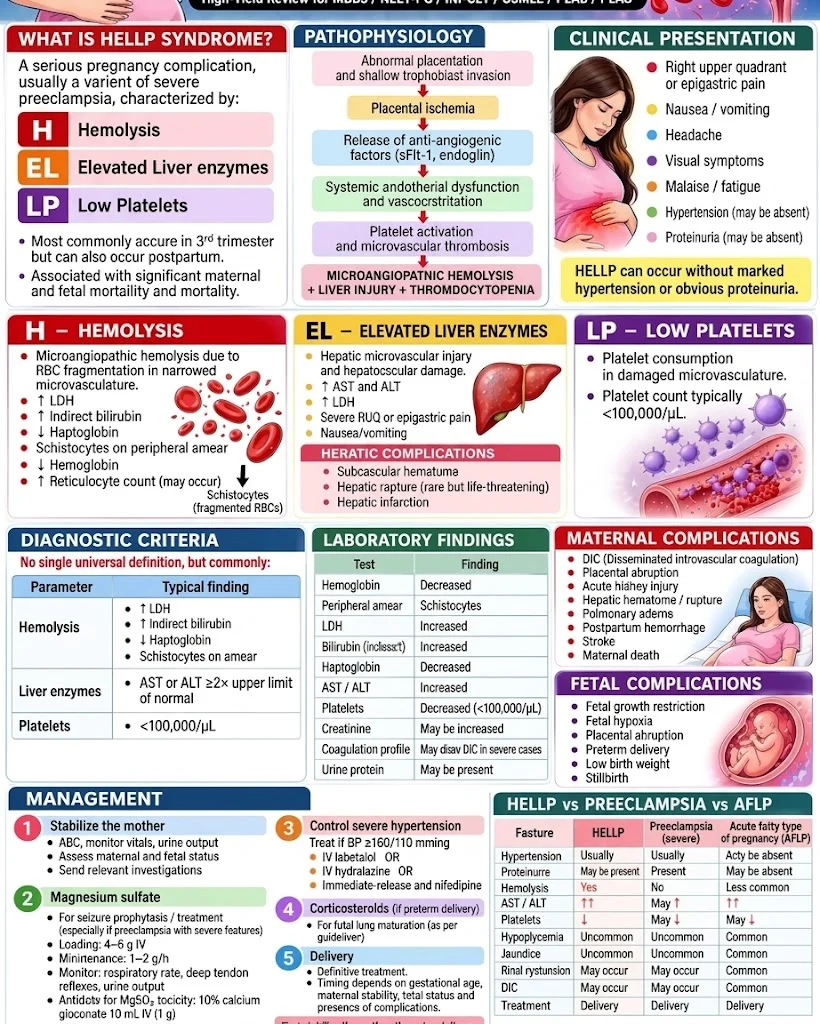
“HELLP SYNDROME — THE OBSTETRIC EMERGENCY YOU CANNOT MISS!
A pregnant patient presents with right upper-quadrant pain, nausea, thrombocytopenia and elevated liver enzymes.
What is the diagnosis?
HELLP SYNDROME
HELLP is a serious pregnancy complication characterized by:
- H — Hemolysis
- EL — Elevated Liver enzymes
- LP — Low Platelets
WHY DOES HELLP HAPPEN?
Abnormal placentation and placental ischemia can contribute to systemic endothelial dysfunction.
Leading to
Endothelial injury + platelet activation
Resulting in
Microvascular thrombosis
Causing
- Microangiopathic hemolysis
- Hepatic injury
- Thrombocytopenia
H — HEMOLYSIS
Typical laboratory clues:
• Increased LDH
• Increased indirect bilirubin
• Decreased haptoglobin
• Decreased hemoglobin
• Schistocytes on peripheral smear
• Reticulocytosis may occur
The hemolysis is generally microangiopathic.
EL — ELEVATED LIVER ENZYMES
Hepatic injury may produce:
• Increased AST
• Increased ALT
• Increased LDH
A classic clinical clue is:
Right upper-quadrant or epigastric pain
Severe hepatic involvement can rarely lead to:
- Subcapsular hepatic hematoma
- Hepatic rupture
- Hepatic infarction
LP — LOW PLATELETS
Platelets are consumed within the damaged microvasculature.
A commonly used diagnostic threshold is:
Platelets less than 100,000/µL
CLINICAL PRESENTATION
Patients may develop:
- RUQ/epigastric pain
- Nausea/vomiting
- Headache
- Malaise/fatigue
- Hypertension
- Visual symptoms
- Thrombocytopenia
- Abnormal liver enzymes
Important: HELLP can occasionally occur without marked hypertension or obvious proteinuria, so their absence does not completely exclude the syndrome.
1. STABILIZE THE MOTHER
Assess:
• Airway, breathing and circulation
• Blood pressure
• Oxygenation
• Urine output
• Neurologic status
• Maternal laboratory parameters
• Fetal condition
2. MAGNESIUM SULFATE
Used for seizure prevention/treatment when indicated, particularly in the setting of preeclampsia with severe features or eclampsia.
Remember:
MgSO₄ is not an antihypertensive.
It is primarily used for seizure prophylaxis/treatment.
3. SEVERE HYPERTENSION
For persistent severe BP:
160 or higher systolic OR 110 or higher diastolic
prompt antihypertensive treatment is required.
Common options include:
- IV labetalol
- IV hydralazine
- Immediate-release oral nifedipine
CORTICOSTEROIDS
When preterm delivery is anticipated, antenatal corticosteroids may be administered for fetal lung maturation, according to gestational age and current obstetric guidance.
Corticosteroids should not be considered a substitute for definitive maternal treatment of HELLP.
5. DELIVERY
Delivery is the definitive treatment for HELLP.
The timing and mode depend on:
• Gestational age
• Maternal stability
• Fetal status
• Laboratory abnormalities
• Presence of complications
The mother should be stabilized as much as clinically possible before delivery.”
Stay updated with Hemostasis Today.
-
Oct 2, 2026, 12:50Ravi C Dara: ADHAR 2026 – Red Cell Exchange in Sickle Cell Disease
-
Oct 2, 2026, 12:37David McIntosh: WeDonate Partners with Dr. Martens to Reward UK Blood Donors
-
Oct 2, 2026, 12:28Swapnil Hiremath: Transitioning from Idiopathic Thrombocytopenia to Antiphospholipid Syndrome in Recurrent Severe Preeclampsia
-
Oct 2, 2026, 12:08Austin Camp: Learn How to Treat HIT from an ICU Pharmacist in 60 Seconds!
-
Oct 2, 2026, 12:02Fahad Laghari: Flow Diversion for a Cavernous Internal Carotid Artery Aneurysm
-
Oct 2, 2026, 12:02Archil Jaliashvili: Exploring BHOC as a Complementary Oxygen-Delivery Strategy
-
Oct 2, 2026, 11:57Cornelia Elena Predoi: Peri-Interventional Prophylactic Plasma Transfusion in Anaesthesia and Critical Care
-
Oct 2, 2026, 11:41Daniel Pereira Monteiro: Why HbA1c Fails in Hemoglobinopathies – Modern Glycemic Monitoring and Therapeutic Approaches
-
Oct 2, 2026, 11:26Khaled Musallam: De-LIGHT Study Reveals Age-Related Multisystem Morbidity in β-Thalassemia