

Paul Tortland: What a New PRP Study Really Tells Us About Knee Osteoarthritis
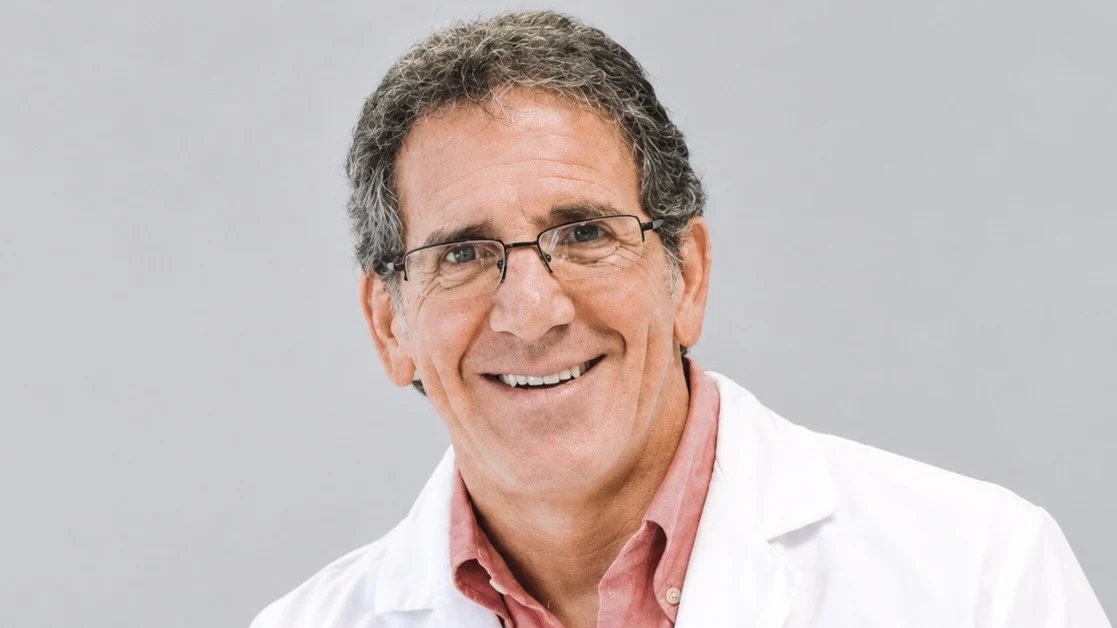
Paul Tortland, Medical Director at New England Stem Cell Institute, Associate Professor of Family Practice, Discipline of Sports Medicine at Edward Via College of Osteopathic Medicine, Owner of Valley Sports Physicians, shared a post on LinkedIn about a recent article by Gaurav Bir Bajracharya et al., published in BMC Musculoskeletal Disorders, adding:
“And here we go again, with another relatively poorly done PRP study that doesn’t add much to what to we already know.
I’m sorry to come across as a nattering nabob of negativity, but I’m getting so tired of PRP studies that keep getting published that I consider substandard, and that really add little to the current knowledge base, or worse, detract from it because of poor methodology.
In this new paper 61 knees (KL 2 and 3) received a single injection of 5 mL PRP. PRP was prepared via a 2-spin protocol by drawing 16 mL whole blood.
The resulting PRP contained a reported average of 8.8 plus or minus 1.1×10⁵/µL platelets, which, if I did my math correctly, yields a total of 4.4 billion platelets per treatment.
Injections were given blind (no US guidance) via the inferolateral portal. Patients were followed out to 6 months.
They showed a statistically significant improvement in primary end points – WOMAC and VAS.
Pros: At least they documented the actual platelet dose delivered, unlike so many other studies
Cons:
- No control group, which the authors readily admit
- No US guidance for the injections (again, which the authors admit as a limitation)
- Follow-up only to 6 months
Thoughts: First and foremost, this study really doesn’t add anything new to the existing knowledge base, except perhaps that a lower platelet dose (less than 10B) did seem to have a favorable result, which challenges the narrative that a minimum of 10B platelets needs to be delivered.
But more importantly, at least from where I sit, we see the same results with HA injections out to 6 months. Extending the follow-up period beyond 6 months, preferably to a year or more, would have been much more helpful.
Furthermore, if half the knees were injected with the 4.4B platelet dose, and the other half were injected with more than 10B, that would be easy to do in this setting, and would yield much more useful info.
Alternatively, injecting half the knees with the PRP and the other half with HA would help to determine if the lower platelet dose performed any better than HA.
On the other hand, the numbers don’t seem to add up. They report starting with a baseline whole blood platelet count of 2.1 x 10⁵/µL.
So, in 16 mL whole blood, that would be a starting load of 3.36 billion platelets. Yet they claim that their PRP had 8.8 x 10⁵/µL platelets, which, in 5 mL, would be 4.4 billion platelets. How can you end up with more platelets than what you started with?
I’m curious to hear what others think.”
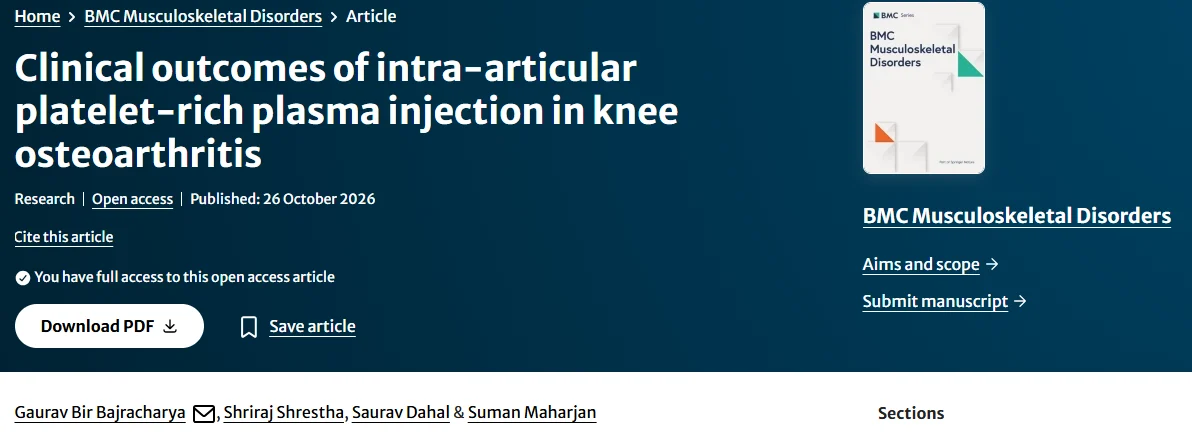
Title: Clinical outcomes of intra-articular platelet-rich plasma injection in knee osteoarthritis
Authors: Gaurav Bir Bajracharya, Shriraj Shrestha, Saurav Dahal, Suman Maharjan
Stay updated on all scientific advances with Hemostasis Today.
-
Oct 28, 2026, 23:34Jawad Derbas: Comparing Mechanical and Pharmacomechanical VTE Prophylaxis in Spine Surgery
-
Oct 28, 2026, 23:31Giulio Maria Pasinetti: Aspirin Use Linked to Lower Dementia Risk in Older Adults With Specific Genetic Characteristics
-
Oct 28, 2026, 23:27Ralf Ludwig: Targeting Neutrophil-Driven Autoimmunity Through CDK Inhibition
-
Oct 28, 2026, 23:26Houda Moustaide: Great Discussions During Our Training Day on Thrombocytopenia in Pregnancy
-
Oct 28, 2026, 23:22Keith Berelowitz: Building Better Medicines by Listening to Patients With Bleeding Disorders
-
Oct 28, 2026, 23:19Nickie Enos: Blood Clots in Arteries and Veins Differ in Symptoms and Treatment
-
Oct 28, 2026, 23:17David Rosenblum: Can Concentrated PRP Actually Cause Scar Tissue?
-
Oct 28, 2026, 23:15Shueh Hao Lim: Advancing Multidisciplinary Care for Venous Thromboembolism in Malaysia
-
Oct 28, 2026, 23:14Muhammad Umer Ali Ayub: Delighted to Present Two Research Posters at the 151st ANA Annual Meeting