


Anna Kajaste-Rudnitski: Presenting AAV-Induced p53 Signalling in Human CNS Cells at ESGCT 26
Anna Kajaste-Rudnitski, Full Professor at University of Pavia, shared Wolfgang Miesbach‘s post on LinkedIn:
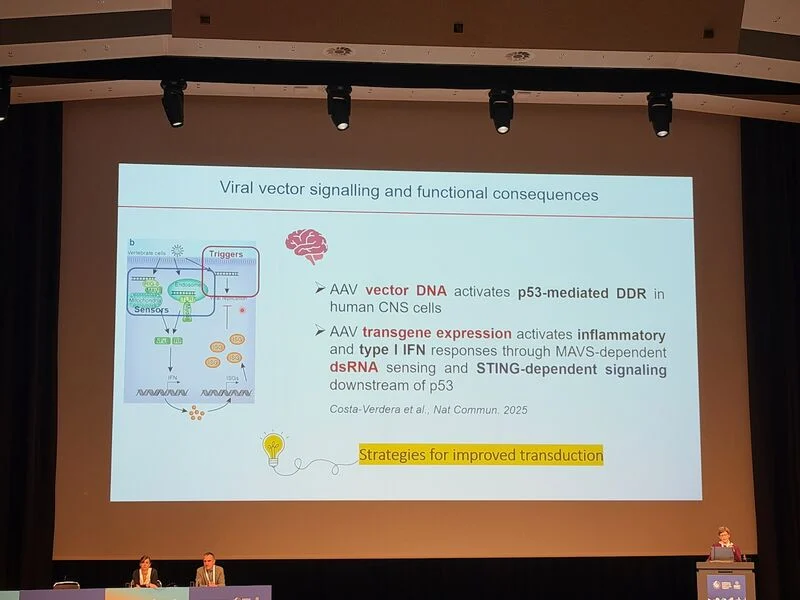
“Thank you Wolfgang Miesbach for the shoutout and summary of our work on AAV signalling in human CNS cells I presented at the recent European Society of Gene and Cell Therapy meeting in Hamburg.
For those of you interest in reading the full story, spearheaded at the time by Helena Costa Verdera and taken forward now by Silvia Piccolo in our lab at University of Pavia, you can find it here.
As a side note, we have seen similar genomic DNA-dependent p53 signalling with Francesco Piras at the time also in human hematopoietic stem cells, triggered both by AAV but also by lentiviral vectors, including non-integrating ones.
In this context however, the functional consequences are slightly different as no overt inflammation was detected but the p53 signalling affected HSC engraftment.”
Wolfgang Miesbach, Head of Hemostasis/Hemophilia Center at Medical Clinic 2 at University Hospital Frankfurt, shared a post on LinkedIn:
“Before the immune system reacts, p53 does. ESGCT 26, Anna Kajaste-Rudnitski on how brain cells respond to AAV gene therapy.
p53 is the cell’s own alarm system, the ‘guardian of the genome’ known from cancer biology.
It senses foreign or damaged DNA and decides what follows: repair, inflammation, or cell death. It acts inside the cell, before any immune cell arrives.
That matters because high-dose toxicity still occurs despite strong immunosuppression. If suppressing the immune system does not prevent it, the reaction starts elsewhere.
- The trigger is the genome, not the shell. Empty capsids were well tolerated and caused no appreciable signalling. What the cell notices is the incoming DNA.
- p53 registers that DNA as damage, across neurons, astrocytes and oligodendrocytes.
- Expression of the therapeutic gene then adds inflammation and type I interferon, through dsRNA sensing and STING signalling downstream of p53.
- The stronger the transduction, the stronger the response. In neurons it ends in cell death.
Blocking p53 or STING prevented that death in vitro and reduced gliosis in vivo. Druggable targets, not fixed limits.”
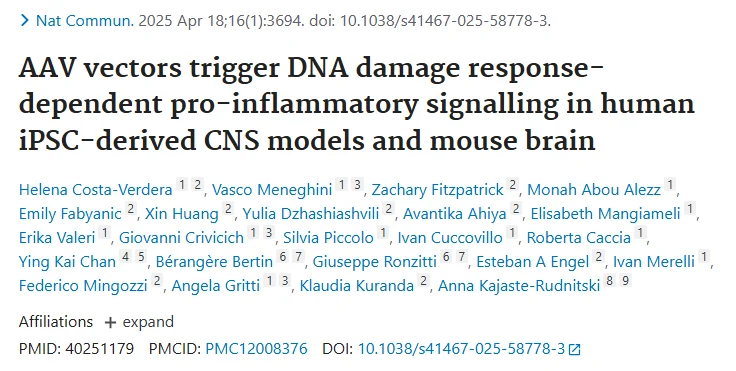
Title 1: AAV vectors trigger DNA damage response-dependent pro-inflammatory signalling in human iPSC-derived CNS models and mouse brain
Authors: Helena Costa-Verdera, Vasco Meneghini, Zachary Fitzpatrick, Monah Abou Alezz, Emily Fabyanic, Xin Huang, Yulia Dzhashiashvili, Avantika Ahiya, Elisabeth Mangiameli, Erika Valeri, Giovanni Crivicich, Silvia Piccolo, Ivan Cuccovillo, Roberta Caccia, Ying Kai Chan, Bérangère Bertin, Giuseppe Ronzitti, Esteban A Engel, Ivan Merelli, Federico Mingozzi, Angela Gritti, Klaudia Kuranda, Anna Kajaste-Rudnitski
Read the Full Article on Nature Communications
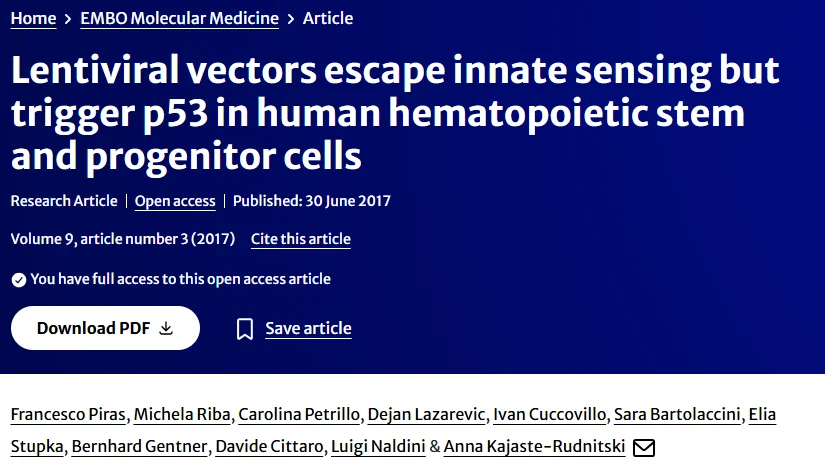
Title 2: Lentiviral vectors escape innate sensing but trigger p53 in human hematopoietic stem and progenitor cells
Authors: Francesco Piras, Michela Riba, Carolina Petrillo, Dejan Lazarevic, Ivan Cuccovillo, Sara Bartolaccini, Elia Stupka, Bernhard Gentner, Davide Cittaro, Luigi Naldini, Anna Kajaste-Rudnitski
Read the Full Article on EMBO Molecular Medicine
Other posts featuring Wolfgang Miesbach on Hemostasis Today.
-
Nov 8, 2026, 19:29David McIntosh: Cybersecurity Matters, but Blood Availability Remains the Bigger Challenge
-
Nov 8, 2026, 19:26Wenxue Ma: An Integrative Framework for Macrophage-Mediated Therapeutic Resistance in Cancer
-
Nov 8, 2026, 19:25Yildiz Yigit: Presenting a Polycythemia Vera Case at the MPN Subcommittee Session
-
Nov 8, 2026, 18:56Denis Oduor: Strengthening the Regulation and Delivery of Blood Transfusion and Transplantation Services
-
Nov 8, 2026, 18:28Raghavendra Rao: A Narrative Review on Chronic Venous Disease during Pregnancy
-
Nov 8, 2026, 17:57Dhiren Patel: PLD1-Derived Phospholipids Regulate NAD Kinase and ROS Production in Neutrophils
-
Nov 8, 2026, 17:48Andra T.: What Causes Antiphospholipid Syndrome? – Four Steps, not One Cause
-
Nov 8, 2026, 17:38Nasrin Samadi: Can a Normal Clotting Test Be Misleading?
-
Nov 8, 2026, 17:36Paschalis Evangelidis: The Multifactorial Nature of Cardiovascular Risk in People With Hemophilia