

AbQader Bedil/LinkedIn
Feb 25, 2026, 14:13
AbQader Bedil: 7 Urgent Red Flags in a Peripheral Blood Smear
AbQader Bedil, Medical Laboratory Technologist at French Medical Institute for Mothers and Children- FMIC, Laboratory Incharge at Stanikza Diagnostic clinic, shared a post on LinkedIn:
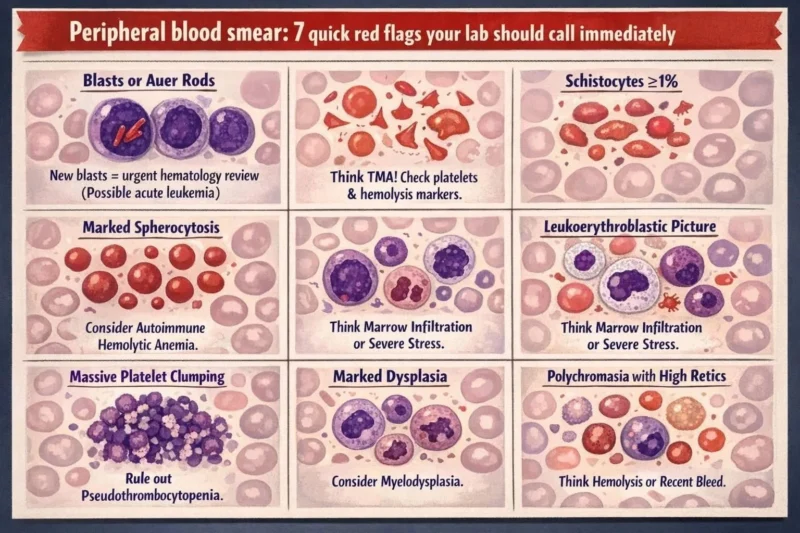
“Peripheral blood smear: 7 quick red flags
Automated CBCs are great — but the smear still saves lives. These seven findings on a peripheral blood film should trigger urgent action.
- Blasts or Auer rods — any new blasts plus urgent hematology review (possible acute leukemia).
- Schistocytes greater than or equal to 1% — think thrombotic microangiopathy (TMA); correlate with thrombocytopenia and hemolysis markers and phone the clinical team.
- Marked spherocytosis with hemolysis — suggests warm autoimmune hemolytic anemia; request DAT and hemolysis panel.
- Leukoerythroblastic picture (nucleated RBCs plus immature myeloid cells) — flag for bone-marrow infiltration or severe stress; consider urgent marrow referral.
- Massive platelet clumping or satellitism — likely pseudothrombocytopenia; repeat on warmed or citrate tube before making clinical decisions.
- Marked dysplasia (eg abnormal granulation, hypogranular neutrophils) — could signal myelodysplasia; recommend CBC trend and hematology input.
- Polychromasia with very high retic count — indicates brisk hemolysis or recent bleed; correlate with LDH/bilirubin/haptoglobin.
What the lab should do:
- Confirm visually and quantify (use ICSH guidance for schistocyte counting).
- Add a one-line interpretive comment in the report that names the likely concern and the recommended next test(s).
- Phone clinicians for combinations that are potentially life-threatening (eg schistocytes plus thrombocytopenia; blasts with cytopenias).
- Attach or include a de-identified smear image when possible — clinicians read images faster than paragraphs
Which smear finding makes you phone the clinician immediately?
- Blasts/Auer rods
- Schistocytesgreater than or equal 1% plus thrombocytopenia
- Massive platelet clumps (pseudothrombocytopenia)”
Stay updated with Hemostasis Today.
-
Oct 9, 2026, 12:48Santiago Cepeda Chafla: CereBleed Simplifies Brain Hemorrhage Assessment
-
Oct 9, 2026, 12:34Abdul Muqtadir Abbasi: Pancytopenia Is a Finding, Not a Diagnosis
-
Oct 9, 2026, 12:24Mercy Lung’aho: When Diet Quality and Nutritional Biomarkers Tell Different Stories
-
Oct 9, 2026, 12:22Eugene Fan: Bridging Therapeutic Breakthroughs and Equitable Thalassaemia Care
-
Oct 9, 2026, 12:14Brittany Busse: A New Focus on Iron Deficiency Before Anemia
-
Oct 9, 2026, 12:13Akshat Jain: A New Textbook Bringing Global Perspectives on Sickle Cell Disease
-
Oct 9, 2026, 12:03Heather Case: Bridging Awareness and Action in Women’s Hemophilia Care
-
Oct 9, 2026, 11:58Brandon Luu: Can Iron Deficiency Cause Fatigue Without Anemia?
-
Oct 9, 2026, 11:51Sumaiya Dickens: Marginal Zone B Cells in Transfusion Medicine and Hemophilia A Research