

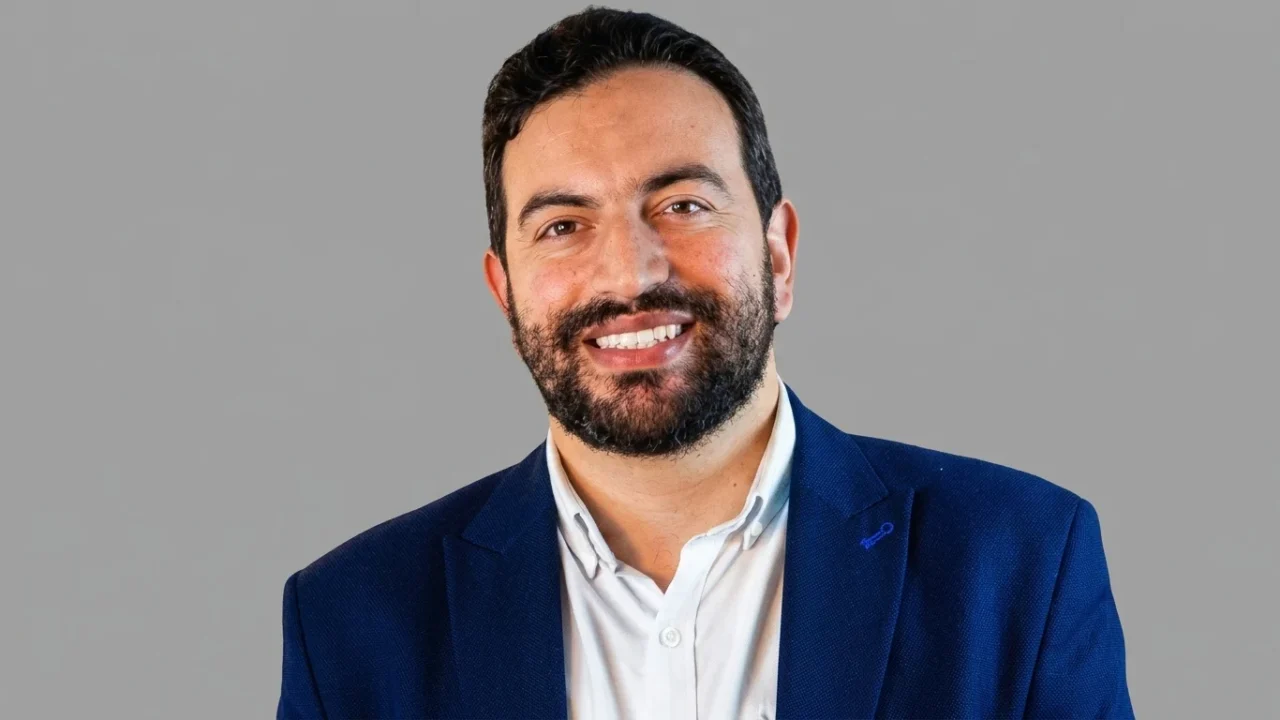
Ahmed Hawash: The Hawash Method for Managing Extreme ICU Complexity
Ahmed Hawash, Lecturer at Faculty of Medicine, Alexandria University and Critical Care Consultant at Gamal Hamada Central Hospital, shared on LinkedIn:
”When Stage IV Cancer, Septic Shock, STEMI, Severe Anemia, Thrombocytopenia, and Hypoxemia Collide in One ICU Patient.
One of the most dangerous situations in critical care is not a single diagnosis — it is the collision of several life-threatening problems that require contradictory treatments.
I recently structured the management of a complex ICU case using The Hawash Method — Bedside First. AI Second. Safety Always.
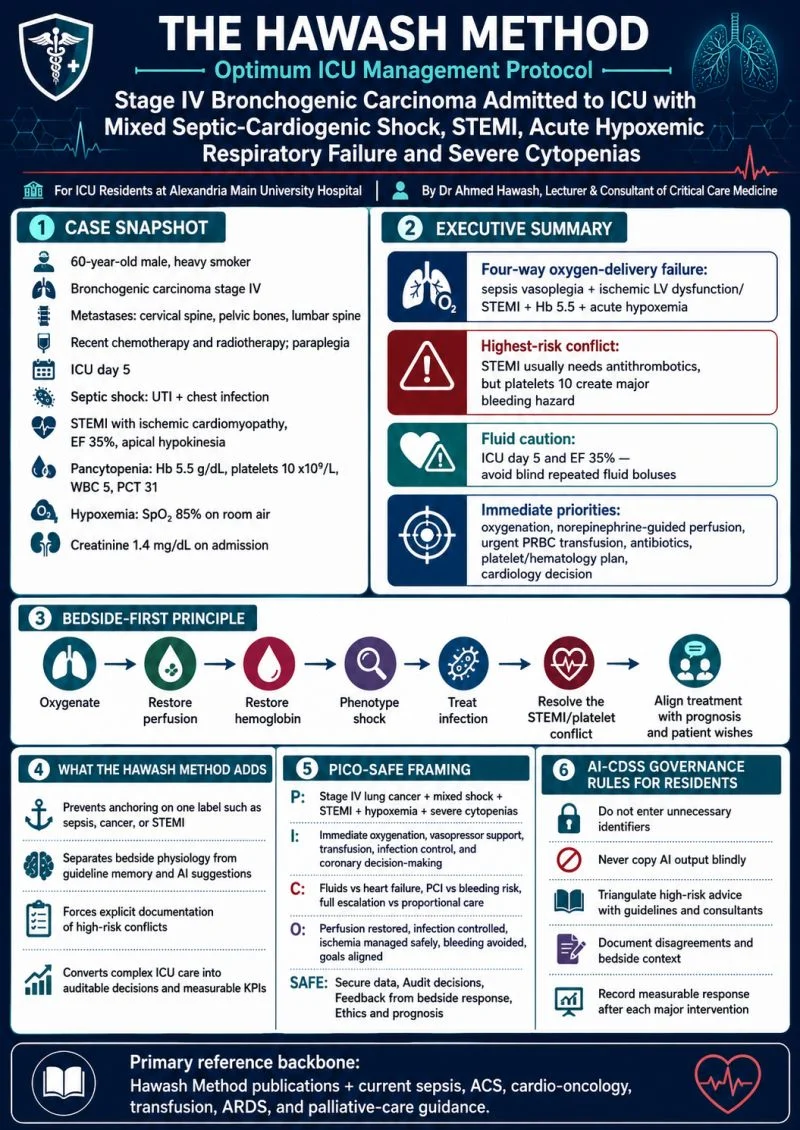
Case snapshot:
60-year-old man with heavy smoking history and Stage IV bronchogenic carcinoma with cervical, pelvic, and lumbar spine metastases. He had received chemotherapy and radiotherapy and developed paraplegia.
He was admitted to ICU with:
- Septic shock from probable UTI and chest infection
- STEMI with ischemic cardiomyopathy, EF 35% and apical hypokinesia
- SpO₂ 85% on room air
- Hb 5.5 g/dL
- Platelets 10 ×10⁹/L
- PCT 31
- Recent chemotherapy/radiotherapy.
The challenge was not simply ‘treat sepsis’ or ‘treat STEMI.’
The patient had four simultaneous causes of impaired oxygen delivery:
Sepsis-related vasoplegia
- ischemic LV dysfunction
- profound anemia
- severe hypoxemia
At the same time, routine STEMI treatment creates another danger:
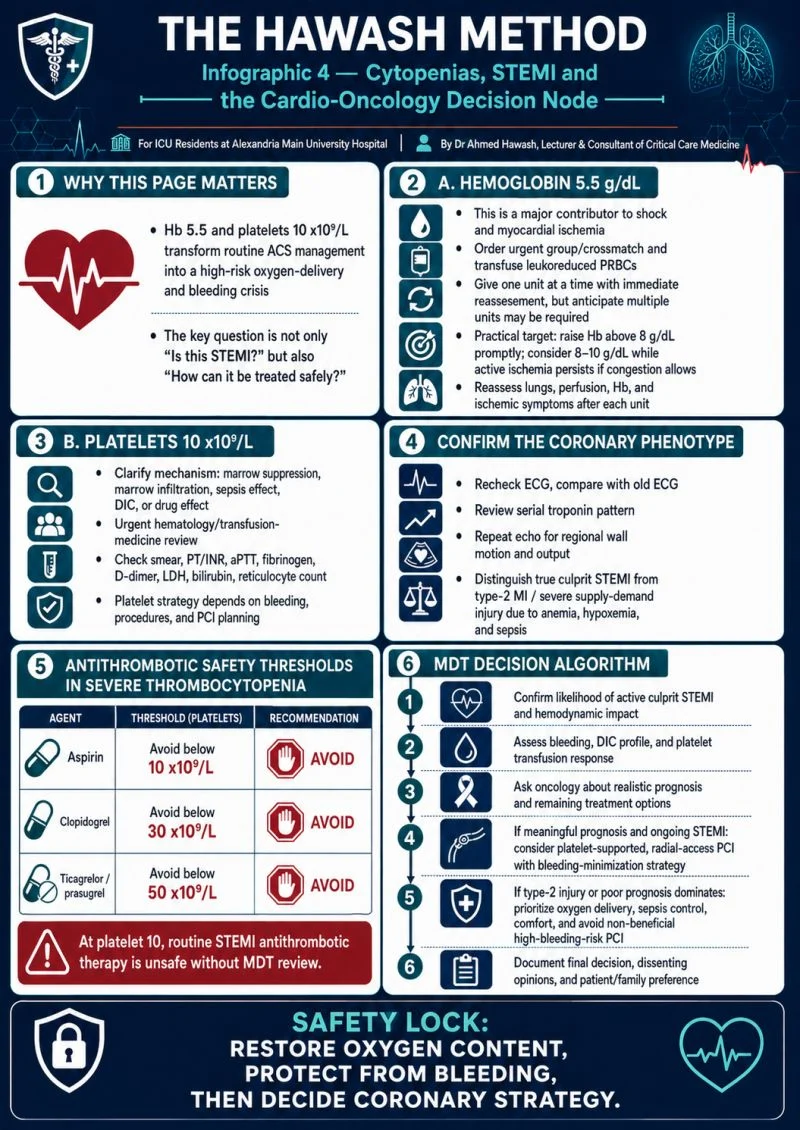
How do you treat coronary thrombosis when platelets are only 10 ×10⁹/L?
This is where structured bedside reasoning matters.
The Hawash Method sequence
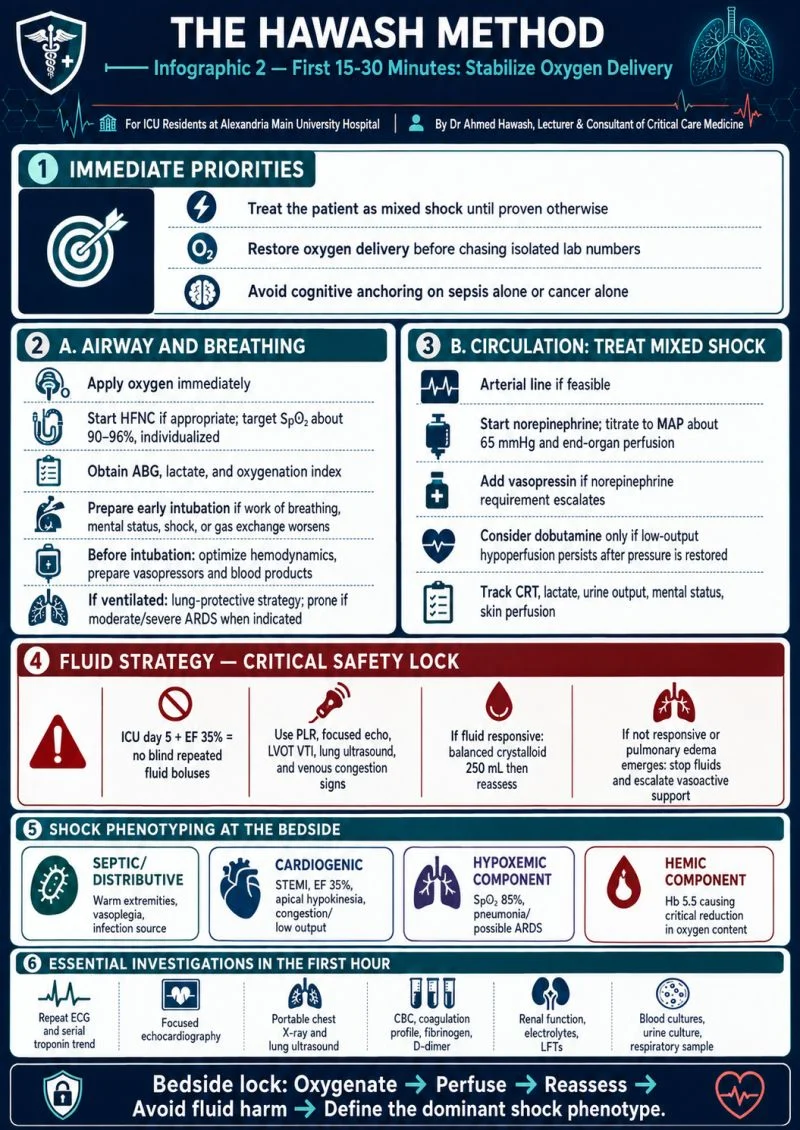
1. Oxygenate
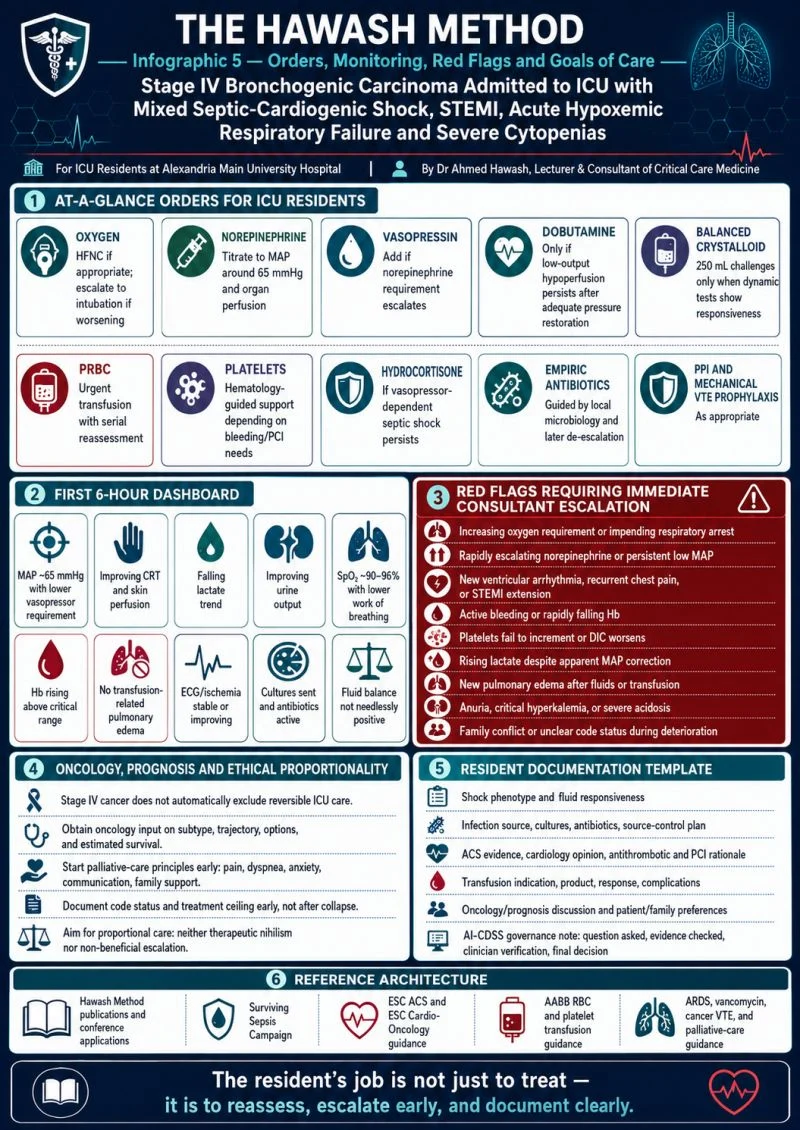
Immediate oxygen support, HFNC when appropriate, early intubation if respiratory failure progresses.
2. Restore perfusion
Norepinephrine-guided resuscitation with dynamic reassessment rather than indiscriminate fluids.
3. Restore oxygen-carrying capacity
Urgent PRBC transfusion because Hb 5.5 is itself a major contributor to shock and myocardial ischemia.
4. Phenotype the shock
Focused echo, LVOT VTI, lung ultrasound, CRT, lactate, urine output, and congestion assessment.
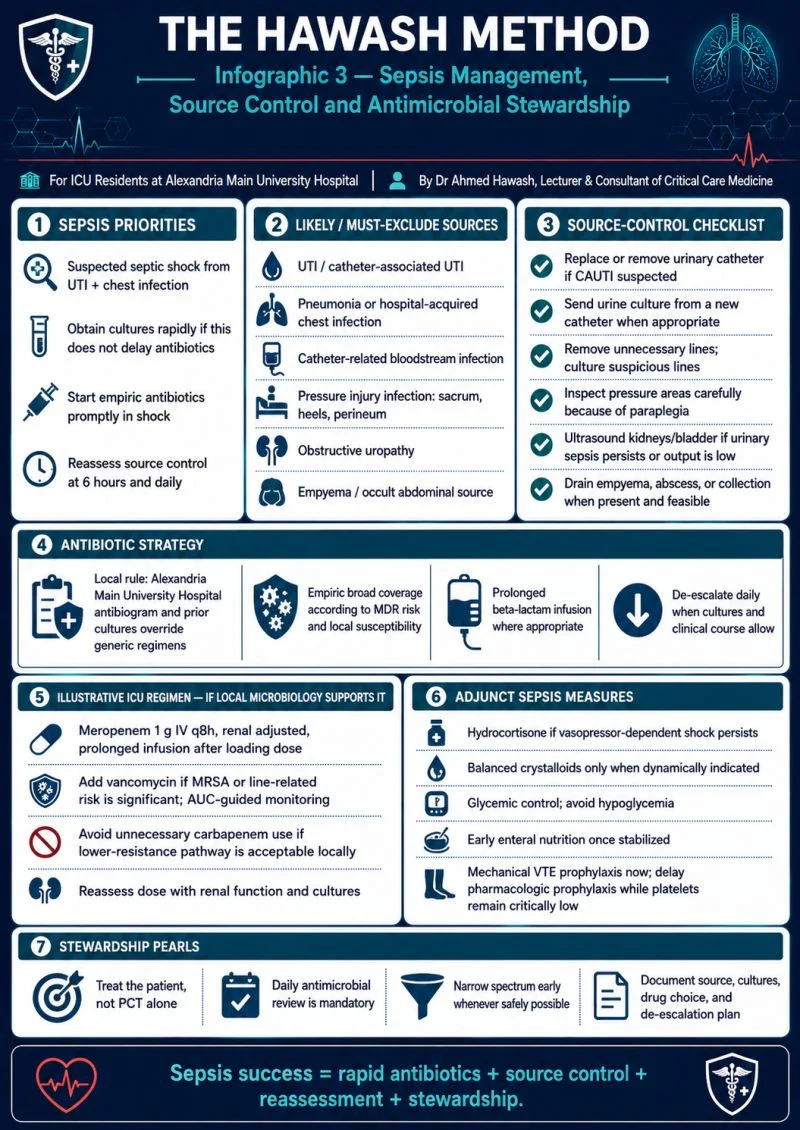
5. Control infection
Early cultures, empiric antibiotics, source control, and daily antimicrobial de-escalation.
6. Resolve the STEMI–platelet conflict
Repeat ECG/troponin/echo and urgent Cardiology–Hematology–Oncology–ICU discussion before routine DAPT or anticoagulation.
7. Align treatment with prognosis and patient wishes
Stage IV cancer should neither automatically deny reversible ICU care nor justify non-beneficial escalation.
The key lesson for ICU residents:
- Do not anchor on one diagnosis.
- Do not follow bundles blindly.
- Do not let AI replace clinical responsibility.
AI-CDSS should help us structure complexity, identify conflicts, triangulate evidence, document decisions, and measure response — but the final responsibility remains human and multidisciplinary.
This is the core philosophy of The Hawash Method:
Bedside First. AI Second. Safety Always.”
Stay updated with Hemostasis Today.
-
Sep 22, 2026, 19:02Blocking Histone-Induced Platelet-Erythrocyte Interactions With Polyanions – Platelets Journal
-
Sep 22, 2026, 18:49Abdul Rahman Hamad: Early Action for Better Outcomes in Deep Vein Thrombosis
-
Sep 22, 2026, 18:37Carmine Siniscalchi: Age-Adjusted D-Dimer Cutoffs in DVT Diagnosis
-
Sep 22, 2026, 18:37Stefano Romeo: The Cardiovascular Patient Journey is Still Full of Gaps
-
Sep 22, 2026, 18:11Bharath Kumar V.։ Advancing Safer Anticoagulation for Cancer-Associated Thrombosis
-
Sep 22, 2026, 18:10Fatima Zahra: ASH Released New Guidelines on the Diagnosis of Iron Deficiency
-
Sep 22, 2026, 17:49Nirav Dhanesha: Targeting FXI for Safer Anticoagulation
-
Sep 22, 2026, 17:17Eric Lambert: Intravascular Imaging and the Future of Precision PCI
-
Sep 22, 2026, 16:45Claudiu Stoicescu: Are We Starting Cardiovascular Risk Assessment Too Late?