

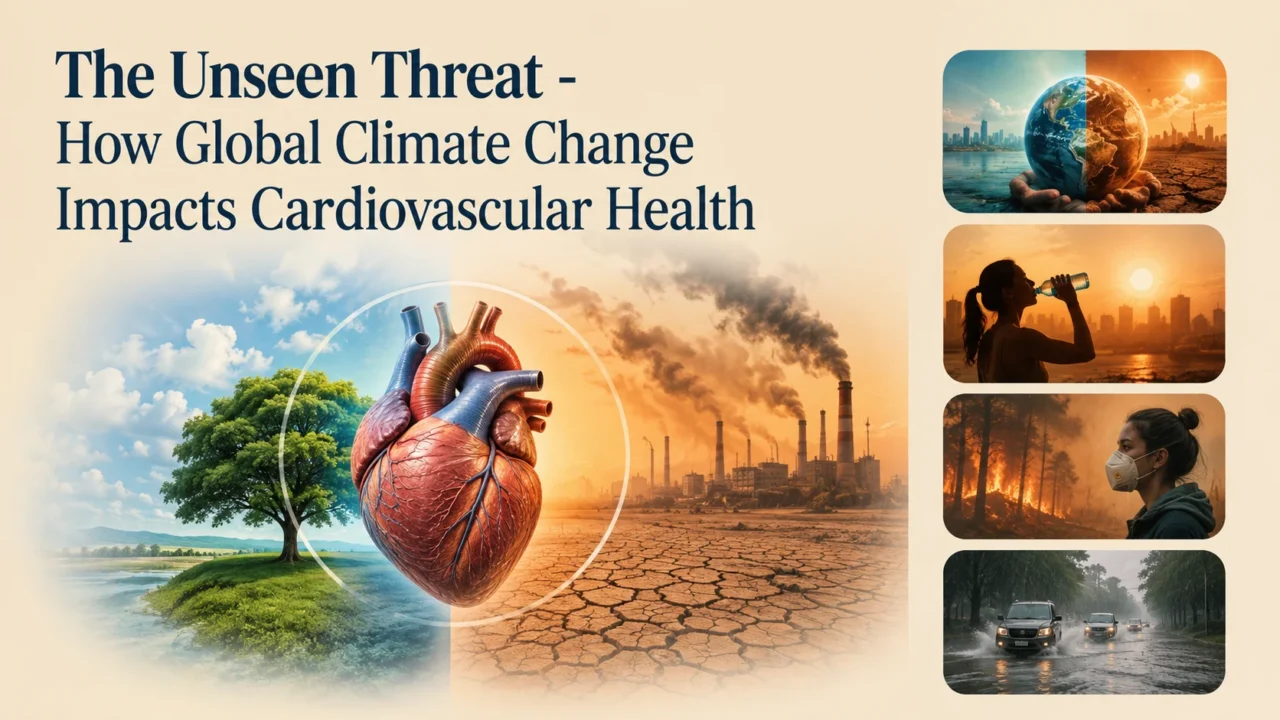
Anıl Güneş: The Unseen Threat – How Global Climate Change Impacts Cardiovascular Health
Anıl Güneş, Cardiology Resident, Medical Writer and Clinical Content Specialist, shared a post on LinkedIn:
“The Unseen Threat: How Global Climate Change Impacts Cardiovascular Health
As clinicians and healthcare leaders, our primary focus is managing traditional cardiovascular risk factors – hypertension, hyperlipidemia, diabetes, and smoking.
However, a growing body of evidence shows that environmental factors driven by climate change are emerging as critical non-traditional risk factors for cardiovascular disease (CVD).
Understanding these environmental drivers is no longer optional; it is essential for modern risk stratification and patient management.
Here is how climate change directly intersects with cardiovascular pathophysiology:
1. Extreme heat and hemodynamic stress
Rising global temperatures lead to prolonged heatwaves.
Prolonged exposure to extreme heat places significant strain on the cardiovascular system:
- Dehydration and hemoconcentration: Increased sweating causes fluid loss, leading to hemoconcentration, elevated blood viscosity, and an increased risk of arterial thrombosis.
- Thermal regulation and cardiac output: To dissipate heat, cutaneous vasodilation occurs, forcing the heart to increase cardiac output and heart rate – a dangerous burden for patients with existing heart failure, ischemic heart disease, or valvular defects.
2. Air pollution and vascular inflammation
Climate change exacerbates air quality issues, increasing ground-level ozone and fine particulate matter (\text{PM}_{2.5}).
Systemic inflammation: Inhaled \text{PM}_{2.5} penetrates the alveoli into the circulation, triggering systemic oxidative stress and endothelial dysfunction.
Atherosclerosis progression: Chronic exposure accelerates plaque instability and promotes a pro-thrombotic state, directly increasing the incidence of acute coronary syndromes (ACS) and ischemic strokes.
3. Extreme weather events and autonomic dysregulation
Severe storms, wildfires, and environmental displacement induce severe psychological and physiological stress.
Sympathetic activation: Acute stress elevates catecholamine surges, raising blood pressure, triggering ventricular arrhythmias, and increasing the incidence of Stress-Induced (Takotsubo) Cardiomyopathy.
Healthcare disruption: Flooding and infrastructure damage disrupt access to chronic cardiovascular care, medication adherence, and emergency cardiac interventions.
Clinical and strategic takeaways for healthcare professionals
Incorporate environmental history: Ask patients about extreme heat exposure and local air quality, particularly vulnerable populations like the elderly or those with underlying heart failure.
Patient education: Advise cardiovascular patients to monitor air quality indices (AQI) and stay hydrated during heatwaves.
Advocacy for climate-resilient health systems: Cardiologists and health advocates must lead discussions on sustainable healthcare practices and public health policies.”
Stay updated with Hemostasis Today.
-
Oct 4, 2026, 15:06Vasiliki Gkalea: Journal of Clinical Medicine Launches Special Issue on Hematologic Thrombosis and Bleeding
-
Oct 4, 2026, 14:55Quentin Brebant: What Defines a High-Quality Red Blood Cell Concentrate?
-
Oct 4, 2026, 14:47Rana Al-Hrout: Recognizing Non-Anemic Iron Deficiency – Why Iron Matters Beyond Hemoglobin
-
Oct 4, 2026, 14:41David McIntosh: International Plasma Awareness Week 2026 – Closing the Global Plasma Gap
-
Oct 4, 2026, 14:33Pete Stibbs: CleanerVac Real-World Study Presented at VIVA and The VEINS 2026
-
Oct 4, 2026, 13:56Maria Elisa Mancuso: EHC 2026 Highlights the Unmet Needs of Women with Bleeding Disorders
-
Oct 4, 2026, 13:53Nirmal Shaji George: Individualizing Anticoagulation in Complex APS and Thrombocytopenia
-
Oct 4, 2026, 13:5210 Posts Not to Miss This Week
-
Oct 4, 2026, 13:45Suswapna Singh Rawat: The Clinical Significance of Coronary Plaque Stability