


Ann Mullally: Expect to See Lots More Gene Therapy in Medicine in the Years Ahead
Ann Mullally, Professor at Stanford University School of Medicine, Division Chief of Hematology at Stanford Department of Medicine, Principal Investigator at Mullally Lab, shared Stanford Department of Medicine‘s post on LinkedIn:
“Expect to see lots more gene therapy in medicine in the years ahead!
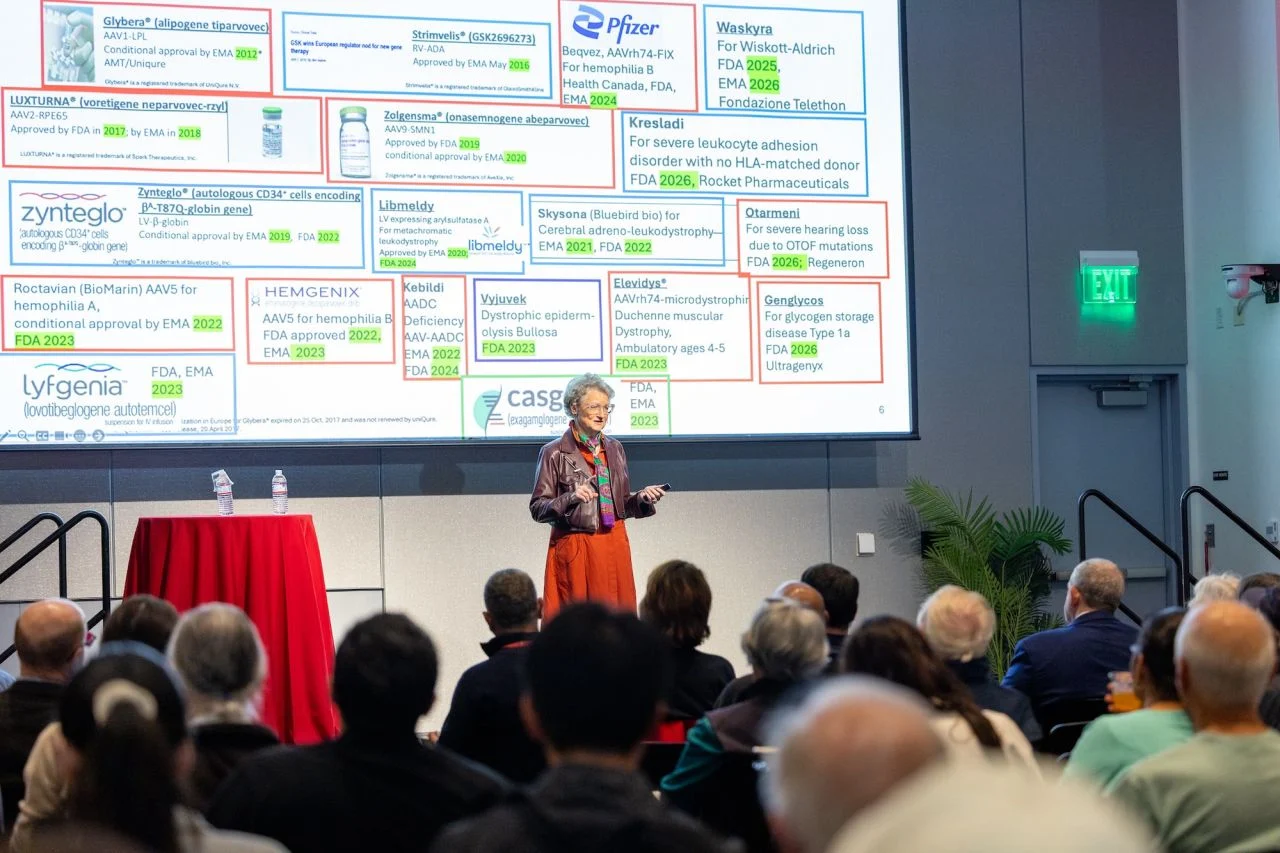
One of many inspiring messages from Katherine High during her visit to Stanford Division of Hematology this week – a trailblazer in treating hemophilia with gene therapy, it was an honor to host Dr. High with Stanford Department of Medicine and to learn more about her pioneering work and exciting career!”
Stanford Department of Medicine shared a post on LinkedIn:
“Gene therapy pioneer Katherine High, delivered the Stanley Schrier Lecture at this week’s Medicine Grand Rounds.
High is the co-founder of Spark Therapeutics, Inc., winner of the 2026 Breakthrough Prize in Life Sciences and leader of the team that won FDA approval for Luxturna, the first gene therapy for an inherited disease.”

Stay updated with Hemostasis Today.

-
Nov 8, 2026, 19:31Anna Kajaste-Rudnitski: Presenting AAV-Induced p53 Signalling in Human CNS Cells at ESGCT 26
-
Nov 8, 2026, 19:29David McIntosh: Cybersecurity Matters, but Blood Availability Remains the Bigger Challenge
-
Nov 8, 2026, 19:26Wenxue Ma: An Integrative Framework for Macrophage-Mediated Therapeutic Resistance in Cancer
-
Nov 8, 2026, 19:25Yildiz Yigit: Presenting a Polycythemia Vera Case at the MPN Subcommittee Session
-
Nov 8, 2026, 18:56Denis Oduor: Strengthening the Regulation and Delivery of Blood Transfusion and Transplantation Services
-
Nov 8, 2026, 18:28Raghavendra Rao: A Narrative Review on Chronic Venous Disease during Pregnancy
-
Nov 8, 2026, 17:57Dhiren Patel: PLD1-Derived Phospholipids Regulate NAD Kinase and ROS Production in Neutrophils
-
Nov 8, 2026, 17:48Andra T.: What Causes Antiphospholipid Syndrome? – Four Steps, not One Cause
-
Nov 8, 2026, 17:38Nasrin Samadi: Can a Normal Clotting Test Be Misleading?