


Arun Chervu: Most DVT Patients Do Well on Anticoagulation Alone
Arun Chervu, Physician at Hyperbaric Physicians of Georgia, Founder and CEO and Medical Consultant at AIC Medical Consultants LLC, shared a post on LinkedIn:
”Most DVT patients do well on anticoagulation alone.
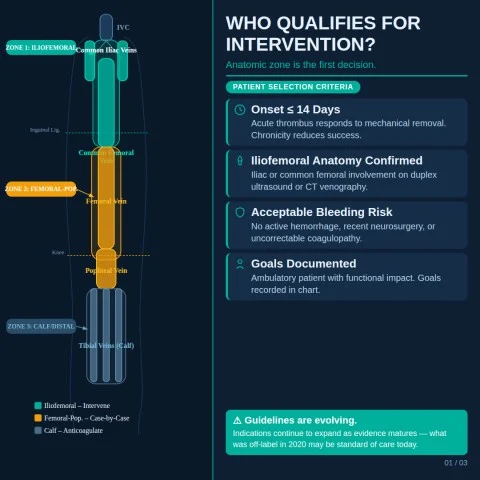
A small minority truly qualify for catheter‑directed thrombolysis (CDT) or mechanical thrombectomy (removing the clot with a device)
Those patients usually have:
- Iliofemoral DVT, not just calf or femoral clot.
- Symptoms under about 14 days.
- Significant pain/swelling or threatened limb.
- Acceptable bleeding risk and reasonable life expectancy.
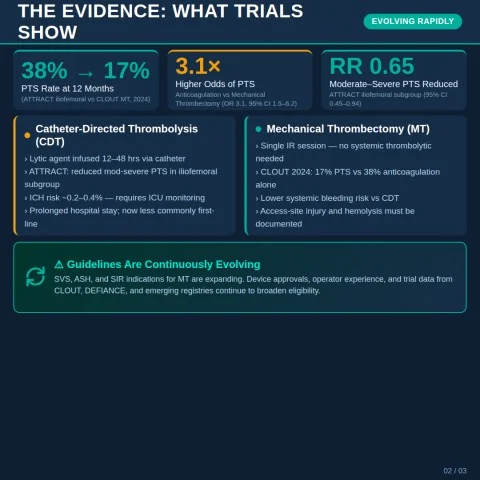
ATTRACT taught us something important.
No mortality benefit.
Modest reduction in moderate–severe post‑thrombotic syndrome.
Clear increase in major bleeding with lytic (clot dissolving) therapy.
Since then, the field has moved.
We are using more mechanical thrombectomy with little or no lytic in carefully selected iliofemoral DVT.
Propensity‑matched data now show lower post-thrombotic syndrome (PTS) rates and better Villalta scores with mechanical thrombectomy than with anticoagulation alone in these patients.
The benefit is functional: less long‑term leg damage, not ‘saving a life.’
Not all thrombectomy is the same.
Large‑bore, purely mechanical systems look safer and more efficient than older rheolytic or aspiration devices.
We are seeing lower transfusion rates, lower in‑hospital mortality, and fewer ICU days in some of these series.
But we still see complications: re‑thrombosis, access‑site bleeding, occasional PE, and the need for transfusion.
For plaintiff teams:
- Was this a true iliofemoral, high‑symptom, low‑bleeding‑risk patient?
- Was early thrombus removal even considered or documented?
- If intervention was done, did anyone explain that the goal was symptom and PTS reduction-not survival-and that device‑specific risks exist?
For defense teams:
Does the record show the team correctly classified the DVT and applied modern criteria?
Is there a clear note walking through:
- Anatomy.
- Symptom duration.
- Bleeding risk.
- And patient goals before choosing anticoagulation alone vs CDT vs mechanical thrombectomy?
If mechanical thrombectomy was used.
Is there a documented, thoughtful device choice tied to bleeding risk and long‑term limb function?
After three decades in vascular surgery, this is where I see cases turn.
Not on whether a hospital owned a specific device.
On whether the treating team:
- Recognized the right candidates.
- Understood the limits of the evidence.
- And documented their reasoning.
Indications and guidelines for iliofemoral DVT intervention and mechanical thrombectomy are evolving; what was experimental a decade ago may now be a reasonable option for carefully selected patients.”
Stay updated with Hemostasis Today.

-
Sep 29, 2026, 19:00Caitlin Raymond: Can Artificial Blood Solve Blood Supply Shortages?
-
Sep 29, 2026, 18:51Chaza Alaji: Dyslipidemia, Thrombosis and the DIC Diagnostic Trap
-
Sep 29, 2026, 17:31Rajnikant Patel: Bridging Ayurvedic Concepts and Modern Toxin-Mediated Disease
-
Sep 29, 2026, 17:13Nicholas Lang։ A Meaningful Case of Immune Thrombocytopenia
-
Sep 29, 2026, 16:55Ayatullah Gamal Wahab: When the CBC Lies
-
Sep 29, 2026, 16:35Jonathan Douxfils: Navigating the VTE Risk Continuum in Reproductive Medicine
-
Sep 29, 2026, 16:35Chaima Rajeh: Types of Anemia and Their Laboratory Features
-
Sep 29, 2026, 16:27Scott Isaacs: How GLP-1 RAs Target Systemic Inflammation to Drive Cardio, Autoimmune, and Gut Health
-
Sep 29, 2026, 16:21Yitshak Kreiss: From Treating Patients to Defining the Standard of Knowledge