


Danny Hsu: Can We Prevent VTE Without Increasing Bleeding Risk?
Danny Hsu, President of THANZ, shared Jecko Thachil’s post on LinkedIn, adding:
”Beyond Anticoagulation: Can We Lower VTE Risk Without the Bleed?
A great article by Gerard Gurumurthy and Jecko Thachil
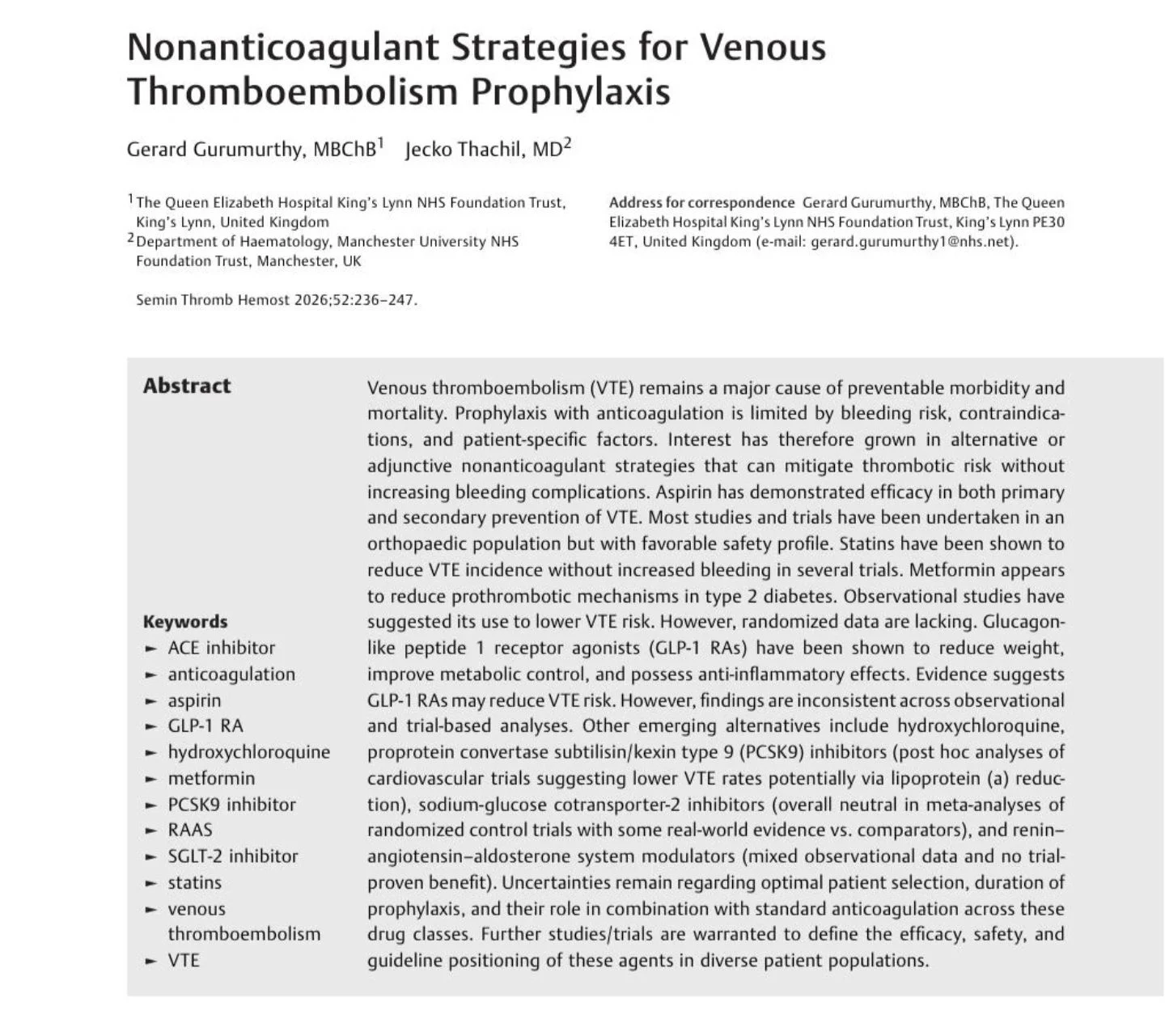
We all know the balancing act of VTE prophylaxis. While anticoagulation is the gold standard, it is often limited by bleeding risks, contraindications, and patient-specific factors.
Interest is rapidly growing in non-anticoagulant strategies—agents that might mitigate thrombotic risk without increasing bleeding complications.
The Potential Contenders:
- Aspirin: The old faithful. It has demonstrated efficacy in both primary and secondary prevention with a favorable safety profile, though most data comes from orthopaedic populations.
- Statins: Not just for arteries? Several trials have shown statins reduce VTE incidence without increasing bleeding.
- Metformin: In Type 2 Diabetes, it appears to reduce prothrombotic mechanisms. Observational studies suggest lower VTE risk, but we are still missing randomized data.
- GLP-1 Receptor Agonists: By reducing weight and improving metabolic control, these agents possess anti-inflammatory effects that may reduce VTE risk, though current findings are inconsistent.
Emerging and Uncertain:
- PCSK9 Inhibitors: Post-hoc analyses suggest lower VTE rates, potentially via Lipoprotein(a) reduction.
- SGLT2 Inhibitors: Currently show neutral results in RCT meta-analyses, despite some real-world evidence.
- RAAS Modulators: Mixed observational data with no trial-proven benefit yet.
The Verdict:
These are promising avenues, but uncertainties remain regarding optimal patient selection, duration of prophylaxis, and their role in combination with standard anticoagulation. We need further trials to define exactly where these agents sit in our guidelines.
Do you currently consider pleiotropic effects of these drugs when risk-stratifying patients for VTE?”
Jecko Thachil, Consultant Haematologist at the NHS, shared on LinkedIn about a recent article he and his colleagues co-authored, published in Seminars in Thrombosis and Hemostasis:
”Antithrombotic medications are used widely in the management of thrombosis. These include the heparins, DOACs and vitamin K antagonists. But are there more ? These non anticoagulant strategies are discussed in this publication
Nonanticoagulant Strategies for Venous Thromboembolism Prophylaxis.”
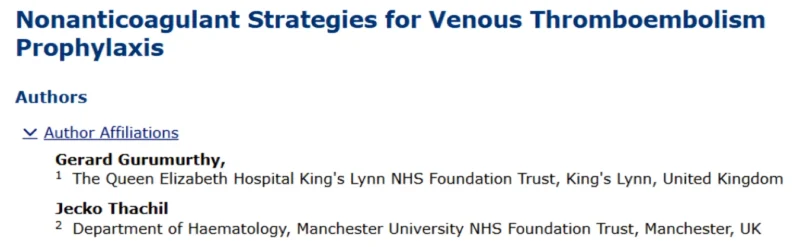
Title: Nonanticoagulant Strategies for Venous Thromboembolism Prophylaxis
Authors: Jecko Thachil, Gerard Gurumurthy
Read the Full Article on Seminars in Thrombosis and Hemostasis.
Stay updated on all scientific advances with Hemostasis Today.
-
Apr 4, 2026, 10:36Harprit Singh: Future – Ready Hospitals Will Have Apheresis Hubs, Not Just Dialysis Units
-
Apr 4, 2026, 09:21Moustafa Abdou: New Horizons in Hematology and Recent Drug Approvals
-
Apr 4, 2026, 09:13David McIntosh: From Western Dominance to LMIC Influence in Plasma Medicine with SK Plasma
-
Apr 4, 2026, 09:03Thomas Pincez: Mechanisms and Pathology of Immune Thrombocytopenia
-
Apr 4, 2026, 08:36Sylvain Perruche: Reactivating the Body Own Resolution Program in Inflammatory Disease
-
Apr 4, 2026, 08:27Daniel Pereira Monteiro: HbF Raised with HbC and HbA – What to Do Next?
-
Apr 4, 2026, 08:13Eoin McGrath: Common Language for Blood Transfer Across Organizations
-
Apr 3, 2026, 17:59A Free Hemoglobin Screening Camp for Kaikadi Vasti and Eramushti Community Women – Hope Foundation Sironcha
-
Apr 3, 2026, 17:53Carlos Henrique Del Carlo: HFpEF and Iron Deficiency – Why Treating the Mitochondrial Engine Matters More Than We Thought?