

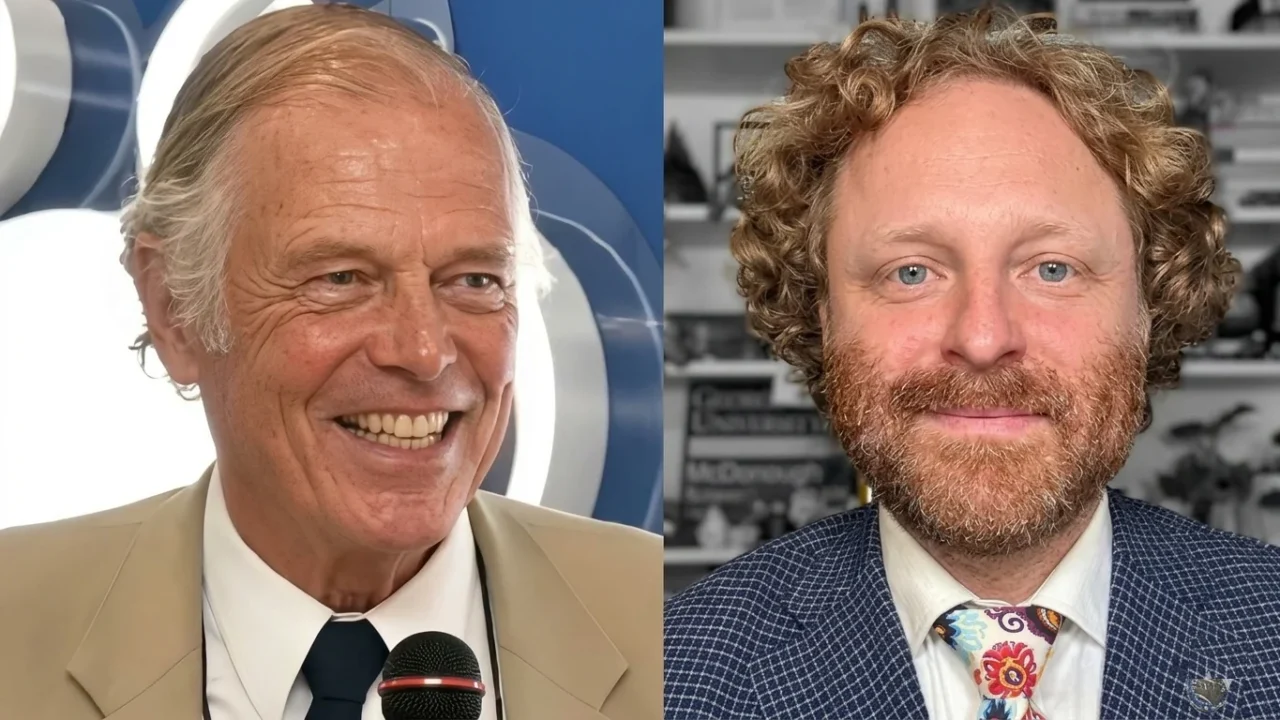
David McIntosh/LinkedIn; Peter Jaworski/Georgetown University
Apr 6, 2026, 14:08
David McIntosh: What Truly Determines the Safety of Plasma Donation
David McIntosh, Founder and Chair of United Plasma Action, shared a post on LinkedIn:
“The safety of plasma donation.
This interesting publication in Professor Jaworski‘s substack is full of relevant data – and hugely encouraging for anyone who might have been harbouring doubts about the safety of plasma donation by pheresis.
The footnote that I believe it may be helpful to add is as follows –
- the safety of all donations, both patient safety and donor safety – depends on good practice; thoroughly good practice all down the line, from donor health screening to patient treatment. Every step of the way, risk avoidance and mitigation must be top priorities.
- the safety of those processes is not affected by the colour of the donor’s socks. It is not affected by the brand of tea provided post-donation, nor the type of biscuit served. Nor is it affected by administrative details such as donor motivation, recognition or reward, or whether or not the collection organisation works for- or not-for-profit. All collectors are subject to the same rigorous Safety and Quality obligations.
- where there are safety risks – as in almost any human activity there are bound to be – these will not be mitigated by dispersing incense, sounding bells or burning candles. Nor will they be mitigated by preaching ‘altruistic’ donation. (By all means feel free to sing your favourite hymn while donating, but please be aware that there are much more scientific precautions already being taken on your behalf, as a matter of routine – precautions that have nothing to do with attitudes to donor motivation or reward….. )
- this most recent study was clearly motivated by some lingering notion that somehow the sector of the international plasma community that produces and delivers some 90% of the World’s current supplies for patients is – or might be – defective in some way; might pose a serious risk either to patients or donors, or both. This notion is patently utterly absurd, but is constantly propagated by not-for-profit sector interests, for reasons that are not always clear, but almost certainly have more to do with not-for-profit organisational funding and survival than they have to do with any genuine concern about safety of any kind.
- meanwhile – amidst all the earnest talk about irrelevant details – millions of patients in the World who desperately need plasma-derived medicines, simply aren’t getting any.
- could the commercial and the not-for-profit folks please get together and decide to tackle the real problems – not argue about illusory ones?”
Other posts featuring David McIntosh on Hemostasis Today.
-
Sep 30, 2026, 15:58Bernhard Merget: New Frontiers in Thrombosis and Stroke Research
-
Sep 30, 2026, 15:39Ifeanyichukwu Ifechidere: The Molecular Orchestra of Primary Hemostasis
-
Sep 30, 2026, 15:28Reassessing the Benefit–Risk Balance of Extended Anticoagulation in Cancer Patients – ESC Working Group on Cardiovascular Pharmacotherapy
-
Sep 30, 2026, 15:07Chiranjeev Sharma: Targeting Factor XIa with the Synthetic Inhibitor SB-01
-
Sep 30, 2026, 14:41Bruna Gigante: Balancing Thrombosis and Bleeding in Cardiovascular Care
-
Sep 30, 2026, 14:13Ashok Choudhury: Portal Vein Thrombosis and Outcomes in Cirrhosis
-
Sep 30, 2026, 13:57Leslye Conde Bazán: When Conventional Imaging Is Not Enough – The Role of IVUS
-
Sep 30, 2026, 13:41Huda Salah Eldin: The Challenge of Balancing Antithrombotic Therapy After PCI
-
Sep 30, 2026, 13:29Abdus Salam: What Can CT Venography Reveal About the Veins?