


Denis Oduor: Autologous Blood Transfusion – A Significant Moment in Patient Care and Choice
Denis Oduor, Nairobi County Blood Services Coordinator at Nairobi City County, shared a post on LinkedIn:
“Autologous Blood Transfusion: A Significant Moment in Patient Care and Choice
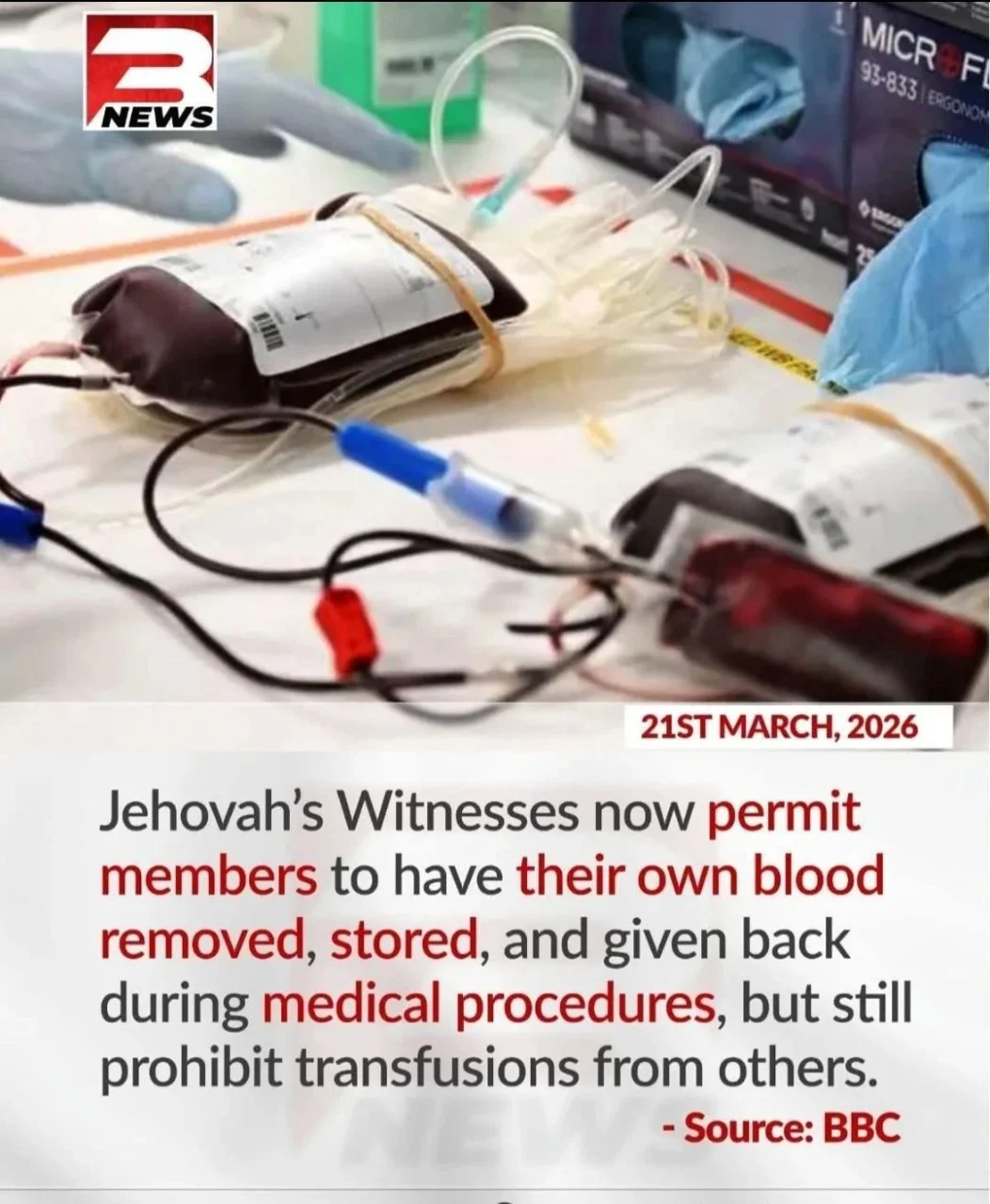
Whether the recent developments within the Jehovah’s Witnesses community have brought renewed attention to an important and evolving area of transfusion medicine—autologous blood transfusion or not..
With increasing openness toward members receiving their own blood (collected, stored, and reinfused during medical procedures), this indeed marks a meaningful shift in how healthcare can better align with patient beliefs while maintaining clinical safety.
Why this matters now?
For many patients who have historically declined donor blood transfusions due to personal or religious convictions, autologous transfusion offers a viable and respectful alternative.
It represents a bridge between medical science and individual values, allowing patients to access safer surgical care without compromising their beliefs.
Clinical significance
Autologous blood transfusion is not only ethically relevant, it is clinically advantageous:
- It eliminates the risk of transfusion-transmitted infections
- Removes compatibility concerns
- Reduces the likelihood of alloimmunization
- Supports modern Patient Blood Management (PBM) strategies
Techniques such as preoperative autologous donation, intraoperative cell salvage, and acute normovolemic hemodilution continue to play a critical role, especially in surgeries with anticipated blood loss.
A broader healthcare insight
This moment highlights a fundamental principle in modern medicine:
- patient-centered care must evolve to meet patients where they are.
When healthcare systems respect autonomy, beliefs, and informed choice, we not only improve clinical outcomes but also strengthen trust between patients and providers.
Final reflection
Autologous transfusion is not a replacement for voluntary blood donation, it is an important complement.
As we continue to advocate for safe and sufficient blood supplies, we must also embrace innovations that expand options and uphold dignity in care.
This is a powerful reminder that the future of healthcare lies at the intersection of science, compassion, and respect for human values.”
Stay updated with Hemostasis Today.
-
Oct 18, 2026, 17:11Owen McCarty: Understanding Prekallikrein and Its Role in Inflammation and Thrombosis
-
Oct 18, 2026, 17:04Emna Gouider Belhadjali: Don’t Miss GPAS 2026 on Bleeding Disorders
-
Oct 18, 2026, 16:53Mehran Ghasemzadeh: Microparticle-Associated Mitochondrial DNA in Stored Platelet Products
-
Oct 18, 2026, 16:38Edward Lee Carter: A 15-Minute Blood Test for Brain Hemorrhage?
-
Oct 18, 2026, 16:29Patrick Taylor: Oral vs Transdermal Estrogen and Cardiovascular Risk in Menopausal Women
-
Oct 18, 2026, 16:19Artangela Henry: A Meaningful Week at the SCDAA National Convention
-
Oct 18, 2026, 16:04Emília Araújo։ New Insights Into the Genetics of Hemophilia B Leyden
-
Oct 18, 2026, 15:43André Marcel Harris: Award-Winning Research on Texas Sickle Cell Data Collection
-
Oct 18, 2026, 15:21Eleonora Gambineri: First Results of the IEI-Haem Consortium at ESID 2026