

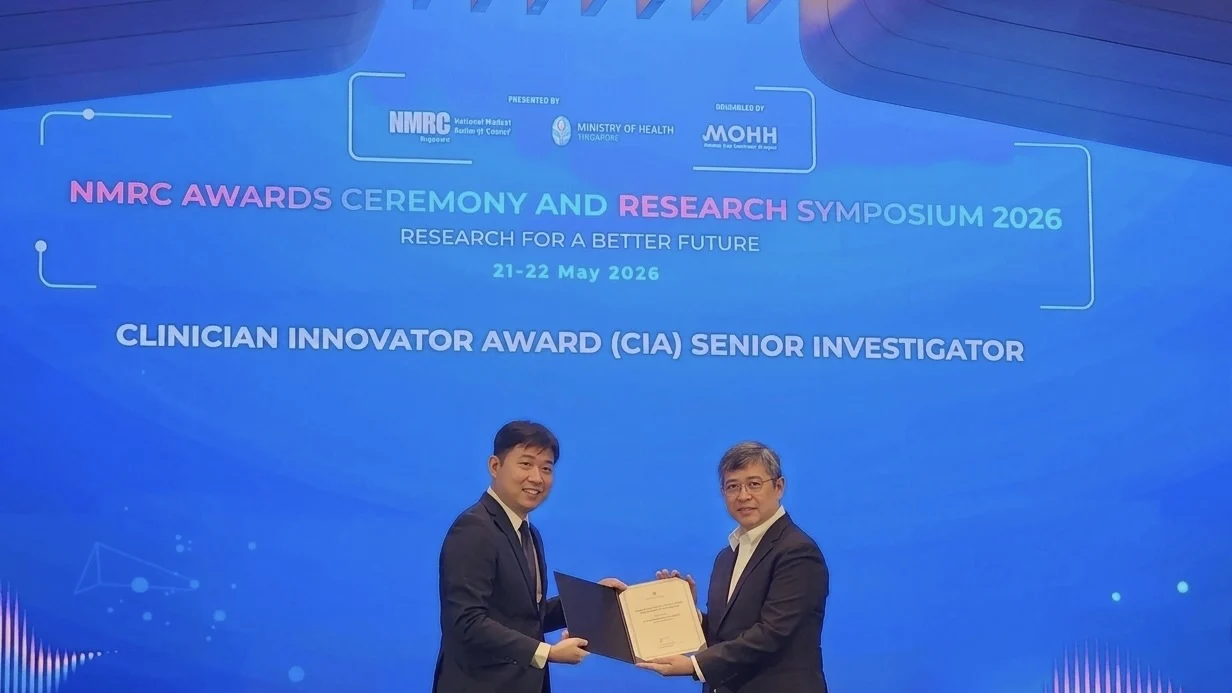
Eugene Fan: Advancing Peripheral Blood Film Analysis with Artificial Intelligence
Eugene Fan, Haematologist at Tan Tock Seng Hospital, Assistant Professor at Lee Kong Chian School of Medicine, shared a post on LinkedIn:
“Some patient journeys – and diagnoses – begin at the microscope.
The peripheral blood film remains one of the most elegant yet simple investigations in Haematology: a stained drop of blood smeared across a glass slide, a trained eye, and sometimes a life-changing diagnosis waiting in plain sight.
Yet behind that simplicity lies a very human challenge. Morphology expertise is variable with our heuristic biases, finite turnaround times, and interpretation and reporting does not always agree across laboratories and healthcare systems.
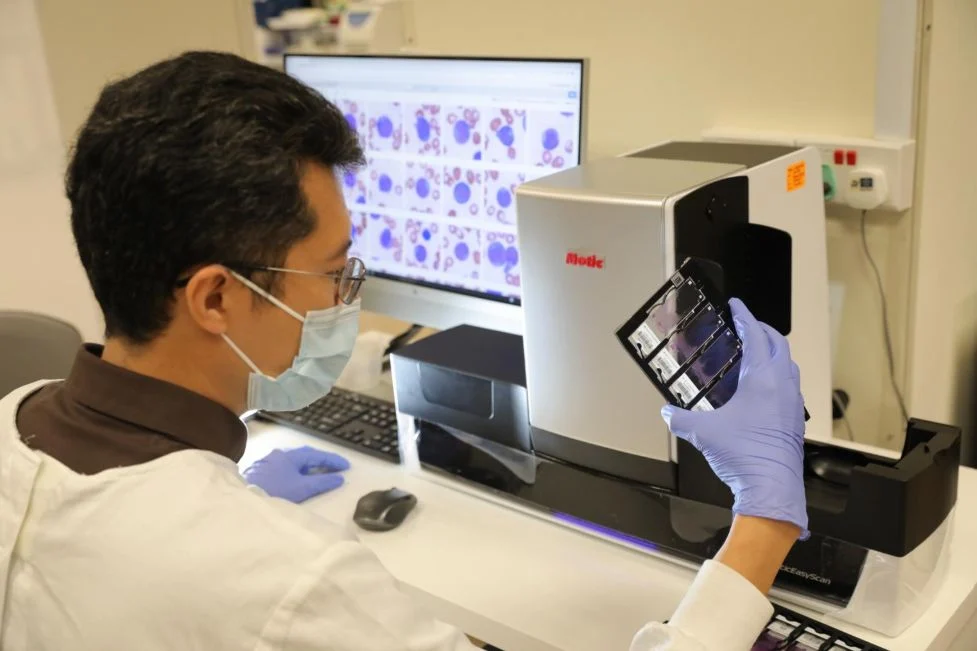
I am deeply grateful to receive the NMRC Clinician Innovator Award – Senior Investigator to support our work on Artificial Intelligence for the Peripheral Blood Film, and ASUS Blade, an AI-enabled platform for peripheral blood film analysis and telehaematology.
Blade was not conceived as a replacement for the laboratory medical technologist or the haematologist. It was built to support us — to bring greater consistency, speed, explainability, and confidence to haematology labs where morphological expertise is still essential. That means prospective validation, attention to workflow, understanding uncertainty, dealing with edge cases, and failure modes. That means capturing morphology know-how while building tools that allow it to reach further.
This award is an important encouragement — not just for the application of AI in medical images, but for the broader concept that clinician-led innovation has its place in laboratory medicine. The most meaningful innovations often come from the pain points we encounter every day: critical cases that were missed, differences in morphological interpretation between colleagues, and variation in reporting styles that could be made safer, faster, and more accountable.
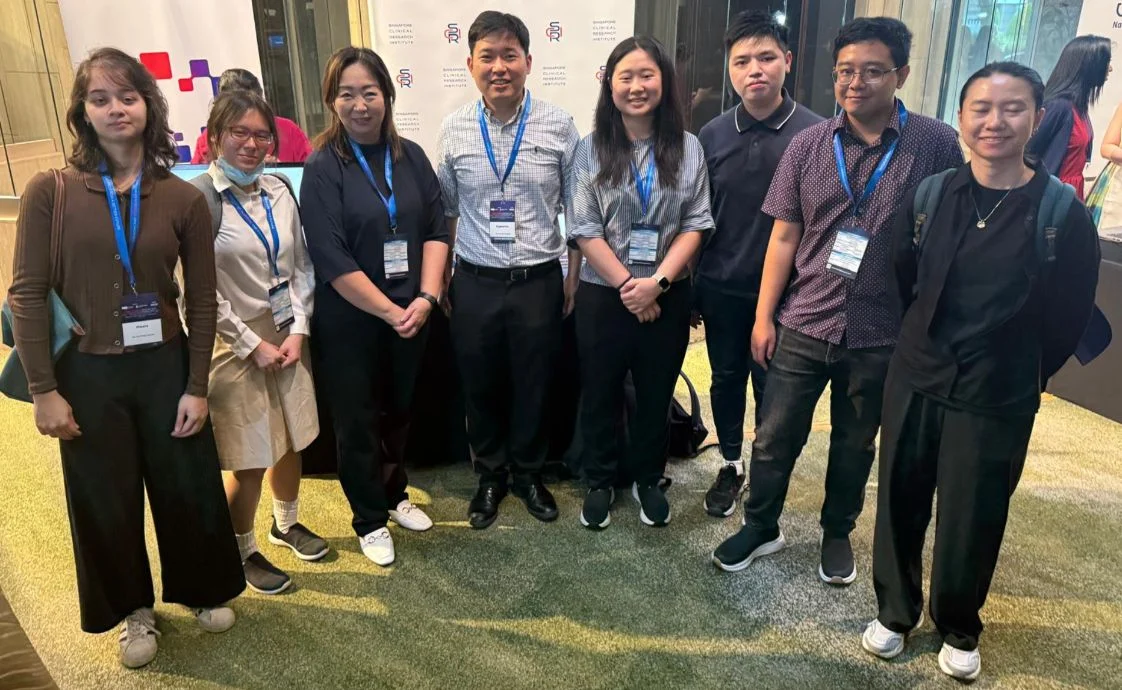
I am especially grateful to my mentor Ponnudurai Kuperan, colleagues and collaborators, the amazing team from AICS, solid technical expertise from Motic Microscopes (Worldwide), Biodesign training from Singapore Biodesign and the support from Centre for MedTech and Innovations (CMTi) and National Health Innovation Centre (NHIC) that have shaped our work.
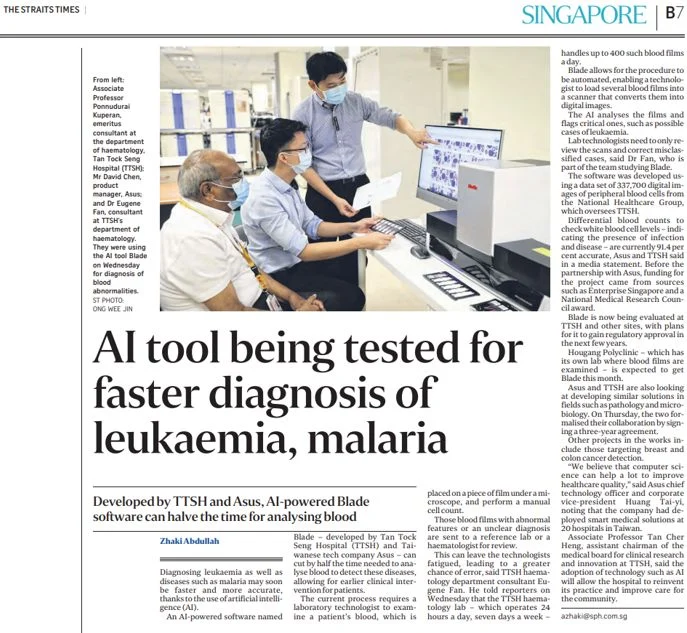
Blade is very much a team effort, sitting at the intersection of haematology, computer vision, digital pathology, regulatory governance and clinical implementation.
There is still much to do. But this support gives us the momentum to continue building carefully and confidently — with a clear focus on patient care.
From glass slide to AI algorithm, from morphology to medicine – our work continues.”
Stay updated with Hemostasis Today.
-
Oct 16, 2026, 15:18Carmine Liberatore: Limited Accuracy of VTE Risk Scores in Multiple Myeloma
-
Oct 16, 2026, 14:55Alex Borstein and the Bleeding Phenotype of Hemophilia A Carriers
-
Oct 16, 2026, 13:59Aya Akmal Amin: Antiphospholipid Syndrome Management and Risk Stratification
-
Oct 16, 2026, 13:10Emanuel Sueldo: CAHT 2026 Celebrates Scientific Progress and Team Achievements
-
Oct 16, 2026, 13:05Maha Othman: Queen’s Health Sciences Advances CAT Risk Models and Pediatric ISTH-BAT Cut-Offs
-
Oct 16, 2026, 13:03Thrombosis Awareness Must Lead to Timely Action – Roche
-
Oct 16, 2026, 12:49Wolfgang Miesbach: 5-Year CBDR Data Confirms Emicizumab Safety and Efficacy in Hemophilia A
-
Oct 16, 2026, 12:40Edward Lee Carter: How Factor XI Inhibition Could Transform Anticoagulation Therapy
-
Oct 16, 2026, 12:40Marc Carrier: Looking Ahead to ISTH 2027 in Vancouver