


Fredrick Chalinga: The Reality of Massive Transfusion in Emergency Medicine
Fredrick Chalinga, Medical Technologist at Aga Khan University Hospital, shared a post on LinkedIn:
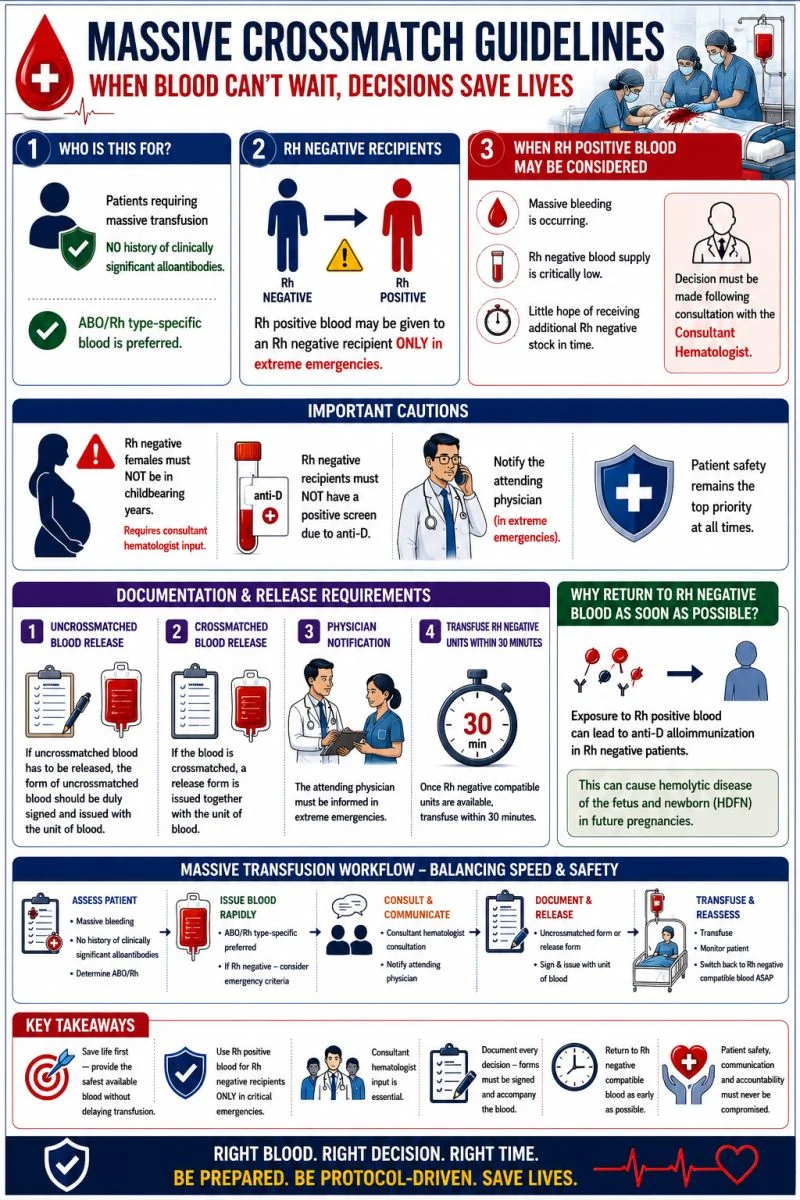
“When Blood can’t Wait: Massive Transfusion Decisions under Pressure.
‘Emergency transfusion is where science, speed, and clinical judgment meet.’
In massive hemorrhage, the priority is simple, keep the patient alive while minimizing transfusion risk.
When there is no history of clinically significant alloantibodies, ABO/Rh type-specific blood is usually issued rapidly to support ongoing resuscitation.
But real emergencies are rarely perfect.
There are moments when an Rh-negative patient may receive Rh-positive blood, not because it is ideal, but because delaying transfusion could cost a life.
This may occur when: Massive bleeding is ongoing, Rh-negative blood stocks are critically low, additional compatible units are unlikely to arrive in time.
These decisions are never taken lightly.
Consultation with the Consultant Hematologist is essential before issuing Rh-positive blood to an Rh-negative recipient.
Special caution must always be exercised in Rh-negative females of childbearing potential because of the risk of anti-D alloimmunization and future hemolytic disease of the fetus and newborn (HDFN).
Likewise, patients with existing anti-D antibodies should never receive Rh-positive blood.
In emergency-release situations:
- The attending physician must be informed
- All emergency-release documentation must be signed
- Uncrossmatched blood forms or blood transfusion monitoring chart forms must accompany issued units
- Transition back to Rh-negative compatible blood should occur as soon as possible
In trauma bays, operating theatres, maternity emergencies, and intensive care units, blood bank professionals make rapid high-stakes decisions every day.
The challenge is not just providing blood quickly it is providing the safest possible blood under extreme pressure.
Transfusion medicine is often a balance between ideal compatibility and urgent survival.
- Save life first
- Reduce avoidable immunization risks
- Maintain communication and documentation
- Return to compatible support as early as possible
- Never compromise patient safety principles, even during emergencies
Right blood. Right judgment. Right time.”
Stay updated with Hemostasis Today.
-
Oct 18, 2026, 17:11Owen McCarty: Understanding Prekallikrein and Its Role in Inflammation and Thrombosis
-
Oct 18, 2026, 17:04Emna Gouider Belhadjali: Don’t Miss GPAS 2026 on Bleeding Disorders
-
Oct 18, 2026, 16:53Mehran Ghasemzadeh: Microparticle-Associated Mitochondrial DNA in Stored Platelet Products
-
Oct 18, 2026, 16:38Edward Lee Carter: A 15-Minute Blood Test for Brain Hemorrhage?
-
Oct 18, 2026, 16:29Patrick Taylor: Oral vs Transdermal Estrogen and Cardiovascular Risk in Menopausal Women
-
Oct 18, 2026, 16:19Artangela Henry: A Meaningful Week at the SCDAA National Convention
-
Oct 18, 2026, 16:04Emília Araújo։ New Insights Into the Genetics of Hemophilia B Leyden
-
Oct 18, 2026, 15:43André Marcel Harris: Award-Winning Research on Texas Sickle Cell Data Collection
-
Oct 18, 2026, 15:21Eleonora Gambineri: First Results of the IEI-Haem Consortium at ESID 2026