

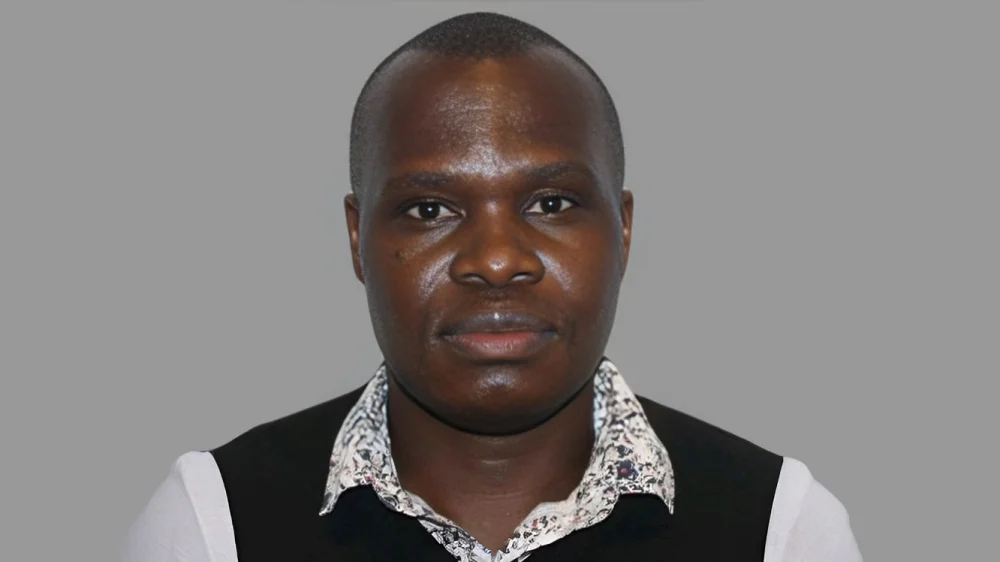
Fredrick Chalinga: The Science Behind Blood Group Immunogenicity
Fredrick Chalinga, Medical Technologist at Aga Khan University Hospital, shared a post on LinkedIn:
“O-negative is the universal donor.
Yes…but not always.
And surprisingly, Blood Group A is often considered less immunogenic than Blood Group B.
Why? Let’s break it down.
Why is Blood Group A less immunogenic?
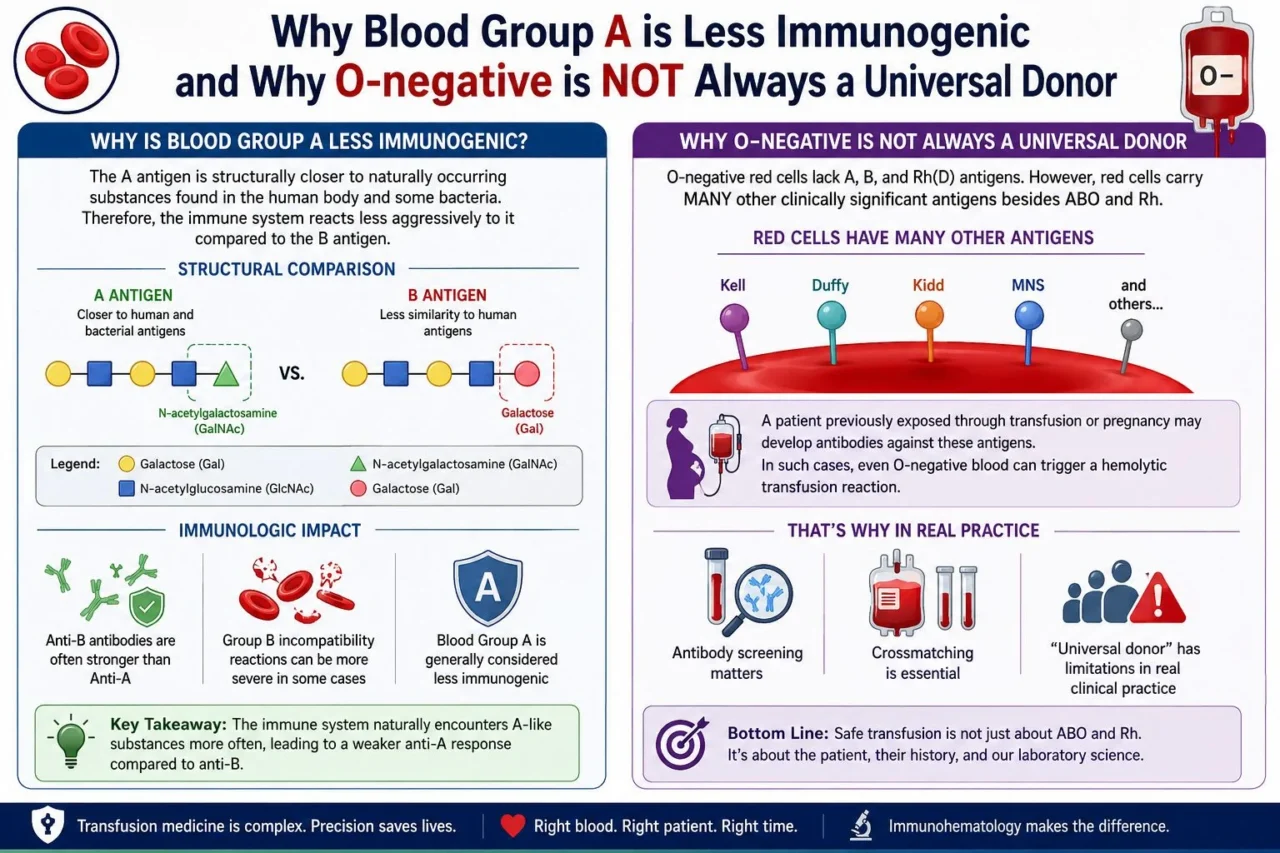
The A antigen is structurally closer to naturally occurring substances found in the human body and some bacteria.
Because of this, the immune system tends to react less aggressively against it compared to the B antigen.
This is one reason why:
- Anti-B antibodies are often stronger than Anti-A
- Group B incompatibility reactions can be more severe in some cases
- Blood Group A is generally considered less immunogenic
Why O-negative is NOT always a universal donor?
We usually say O-negative blood is ‘universal’ because it lacks A, B, and Rh(D) antigens.
But red cells carry many other clinically significant antigens besides ABO and Rh.
Examples include:
- Kell
- Duffy
- Kidd
- MNS and others
A patient previously exposed through transfusion or pregnancy may develop antibodies against these antigens.
In such cases, even O-negative blood can trigger a hemolytic transfusion reaction.
This is why:
- Antibody screening matters
- Crossmatching is essential
- ‘Universal donor’ has limitations in real clinical practice
Transfusion medicine is far more complex than just ABO and Rh typing- and that’s what makes Immunohematology fascinating.”
Stay updated with Hemostasis Today.
-
Oct 16, 2026, 16:22Shannon Farmer: Driving Patient Blood Management Forward in Australia and New Zealand
-
Oct 16, 2026, 16:01Obi Light Ogbonnia: The Greatest Reward Is Changing Lives, Not Winning Awards
-
Oct 16, 2026, 15:18Carmine Liberatore: Limited Accuracy of VTE Risk Scores in Multiple Myeloma
-
Oct 16, 2026, 14:55Alex Borstein and the Bleeding Phenotype of Hemophilia A Carriers
-
Oct 16, 2026, 13:59Aya Akmal Amin: Antiphospholipid Syndrome Management and Risk Stratification
-
Oct 16, 2026, 13:10Emanuel Sueldo: CAHT 2026 Celebrates Scientific Progress and Team Achievements
-
Oct 16, 2026, 13:05Maha Othman: Queen’s Health Sciences Advances CAT Risk Models and Pediatric ISTH-BAT Cut-Offs
-
Oct 16, 2026, 13:03Thrombosis Awareness Must Lead to Timely Action – Roche
-
Oct 16, 2026, 12:49Wolfgang Miesbach: 5-Year CBDR Data Confirms Emicizumab Safety and Efficacy in Hemophilia A